
 E-Paper



Minority schemes do not defy Hindus’ rights, Centre tells SC
The schemes are not against the principles of equality as enshrined in the Constitution, the Centre said.

 Prefer HTon Google


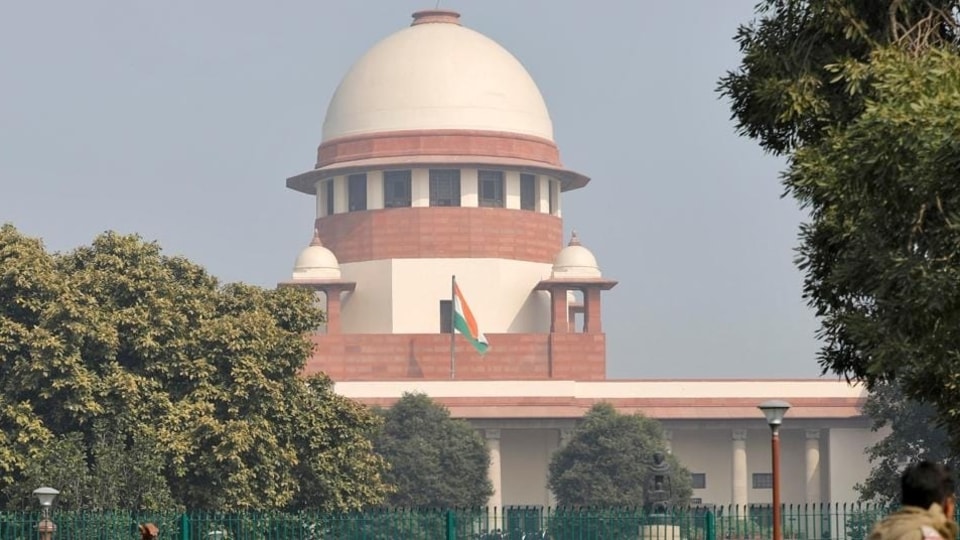
The Union government on Tuesday defended in the Supreme Court welfare schemes meant exclusively for religious minorities, stating that these schemes do not violate rights of the Hindus and are not against the principle of equality.
Submitting its affidavit in response to a petition filed jointly by six members of the Hindu community, the Centre maintained that the schemes framed by it are “legally valid” and aim at “inclusive growth” for the minority communities at various levels.
“The schemes being implemented by the ministry are to reduce the inequalities among the minority communities and to improve the level of education, participation in employment, skill and entrepreneurship development, reducing deficiencies in civic amenities or infrastructure,” said the affidavit filed by the Union ministry of minority affairs.
“The schemes are not in contradiction to the principles of equality as enshrined in the Constitution, and do not violate the rights of members of other communities. These schemes are legally valid as they are only enabling provisions so as to achieve inclusiveness and do not suffer from any infirmity,” said the affidavit, supporting 13 welfare schemes for the minorities that the Centre pays for.
According to the Centre, the support given to the disadvantaged candidates of minority communities cannot be faulted also because the schemes are meant for the underprivileged sections and women in the minority groups and not for everyone. “In addition, the scholarship scheme, coaching schemes, etc. have academic merit, as well as earmarking for girl students,” it submitted in court.
The petition, filed through advocate Vishnu Shankar Jain, contended that the petitioners are being unconstitutionally deprived of benefits available to similarly situated members of religious minorities in violation of their fundamental right to equality (Article 14), right against discrimination on grounds of religion (Article 15) and the right against paying taxes for the promotion or maintenance of any particular religion or religious denomination (Article 27). “The petitioners and other members of [the] Hindu community are suffering because they have been born in [the] majority community... The State cannot promote or give any benefit to any religious community whether minority or majority keeping in view the secular ethos embedded in the Constitution of India,” stated the petition.
The petition, filed by Neeraj Shankar Saxena and five others, has also made specific submissions against the welfare schemes for Waqf properties, contending that by giving such “undue advantage”, the Centre is treating the Muslim community above law and the Constitution since no such benefits are given to the institutions of Hindu community such as trusts, mutts and akhadas.
It has also sought the scrapping of the National Commission for Minorities Act, 1992, as there is already a Backward Classes Commission to find out the conditions of the backward classes that need aid. The petition has objected to the allocation of ₹4,800 crore in the Centre’s 2019-2020 budget for the implementation of such schemes.



