
 E-Paper



‘Govt disconnected’: CJP chief Dipke announces national campaign on youth issues
CJP founder Abhijeet Dipke announced the campaign after a two-day conclave of the party’s core committee members

 Prefer HTon Google


The Cockroach Janta Party (CJP) on Thursday announced the launch of a nationwide campaign, “Kya Bolti Public,” to understand the issues, concerns, and expectations of people, particularly the youth, in September, underlining that those in power are no longer willing to listen to people’s issues and have become disconnected.
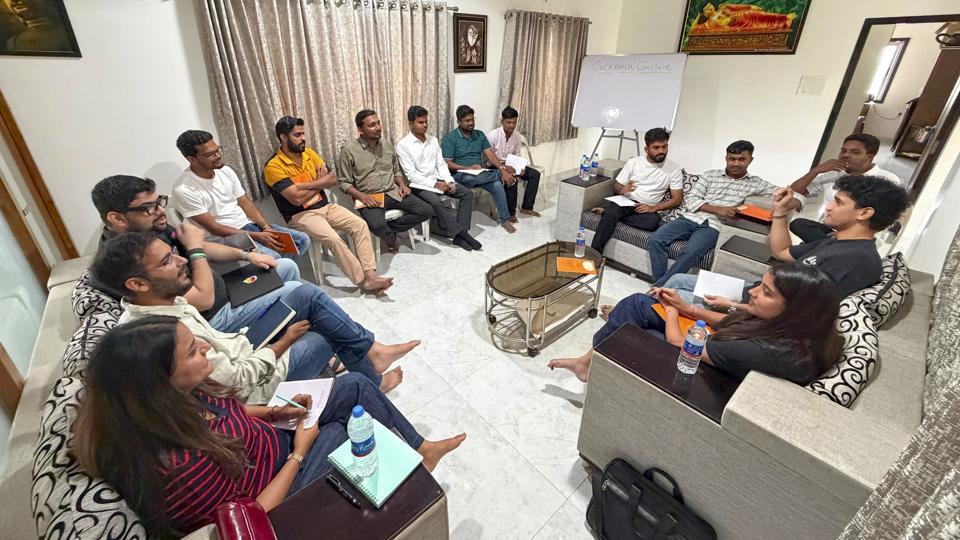
“We will travel across the country to understand the expectations, aspirations, and concerns of the people. We believe those in power are no longer willing to listen to people’s issues and have become disconnected from the public,” said CJP founder Abhijeet Dipke after a two-day conclave of the party’s core committee members at his residence in Maharashtra’s Chhatrapati Sambhajinagar.
Dipke called education reforms the CJP’s priority. He said that quality education has become increasingly unaffordable for ordinary families. “In many schools, annual fees for Class 1 range from ₹1 lakh to ₹2 lakh, excluding donations and other charges. The burden does not end there. College tuition and coaching fees have also risen sharply, forcing many families into debt. We want to change this,” he said.
Dipke said that no parent should feel financially burdened in providing quality higher education to their children. He added the CJP would make unemployment and education reforms central issues in the national political discourse.
“Nearly 80% of the unemployed are graduates. Many of them have begun to feel that pursuing higher education may have been a mistake because they see people without formal educational qualifications running the government and making decisions that shape their future.”
Dipke said this has created frustration among educated youth. “We want to make unemployment one of the country’s foremost public and political issues.”
Dipke said that unemployment and education could no longer be ignored and warned that young people would continue to mobilise if these issues remained unaddressed. “You will not be able to ignore these issues anymore. Gen Z has shown that it is willing to take to the streets and if these concerns continue to be ignored, they will do so again,” he said.
The CJP was formed after Chief Justice of India (CJI) Surya Kant’s remarks referring to some people as “cockroaches” and “parasites. The CJI maintained that his remarks were not directed at the youth but at individuals entering professions such as law and media using “fake and bogus degrees”.
The CJP garnered millions of followers on social media before launching a sit-in protest on June 6 demanding Union education minister Dharmendra Pradhan’s resignation over examination irregularities. The hunger strike and forcible removal of activist Sonam Wangchuk galvanised the movement before first-time agitators and young professionals defied heavy police and marched to the Parliament days before Pradhan stepped down amid outrage over police excesses against the marchers. The CJP called off protests after Pradhan quit.


