
 E-Paper



Modi’s three-pronged strategy to counter aggressive China
Last-mile connectivity to border villages in Himalayan states, raising of additional ITBP battalions to man Arunachal Pradesh border and a green signal to Shinkun La tunnel to Ladakh are all interconnected to cement Indian defences all along the 3488 km LAC with China.

 Prefer HTon Google


Prime Minister Narendra Modi’s decisions to raise seven more ITBP battalions, launch a vibrant village scheme and clear the Shinkun La tunnel are a three- pronged move to steel the Indian defences along the LAC and counter President Xi Jinping’s Fortress Tibet policy.
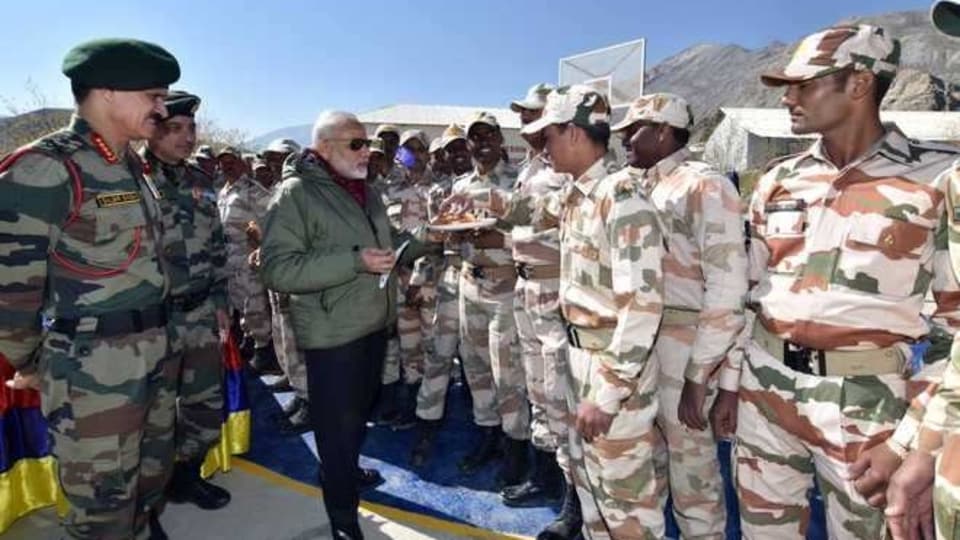
The three decisions taken by PM Modi are interconnected and are an answer to the three-tier border security organized by the PLA in the western theatre command in Tibet and Xinjiang. Just as China has come up with border villages with border guards, district police and PLA reserve in the depth areas, the decision to raise seven battalions of ITBP (8400 men approx) means that India will also have a three tier arrangement on the LAC like the LoC with Pakistan with BSF forming the front line. As part of “one border one force” policy, the 3488 km LAC will now have some 56 battalions deployed against China as the frontier force backed by local Indian Army formations and then the Army reserve. This means barring eight ITBP battalions deployed in anti-Naxal duties and as part of the force rotational drill the border force will purely focus on the LAC as this is the basic purpose for which the mountain force was raised in the first place. The ITBP is a specialized mountain force deployed in border states on heights more than 12000 feet and in sub-zero temperatures. And since the recruitment of the additional battalions will be done from all over India including border states of Uttarakhand, Sikkim, Arunachal Pradesh, Himachal Pradesh and Ladakh UT, this will give local youth incentive to stay put in their villages rather than move to big cities in search of jobs.
The newly raised battalions will be responsible for 47 border posts, with one in Ladakh, another in Uttarakhand and the remaining in the sensitive Arunachal Pradesh sector. A sector headquarter will be established in Arunachal Pradesh headed by a DIG rank officer and new staging camps will be established at rarefied heights to provide food, oil, arms and ammunition to the manned border posts.
Dovetailed into this raising of ITBP battalions to plug security gaps on the Arunachal Pradesh border is the ₹4800 crore Vibrant Village Scheme, which will fund nearly ₹2500 crore into providing last mile connectivity to the border villages so that the youth get gainful employment through tourism and trade. This decision of PM Modi is pathbreaking as national security planners found that youth were leaving the border villages and coming to cities for employment as a result of which the first line of LAC defence was weakened.
The third decision which will bolster the border defence of both the LAC and the Actual Ground Position Line (AGPL) with Pakistan in Siachen Glacier and beyond is the decision to have a all weather connectivity axis from Himachal Pradesh to Ladakh via Manali-Atal Tunnel-Darcha-Shinkun La tunnel-Padum-Nimu axis. This road and tunnel flanked by Zanskar on the west and Himalayas on the east cannot be targeted by enemy artillery or rockets and will become the main feeder route for the Indian Army to deploy on both frontiers. The next step for the government would be to clear the 12 kilometer tunnel under Saser La in Sub-Sector North to get alternate road connectivity to Daulet Beg Oldi if the existing Darbuk-Shyok-DBO road comes under fire from the PLA in the worst case scenario. The new tunnels at Se La, Nechiphu in Tawang sector and the sanctioned ones in Ladakh sector will not only project dominance of the Indian Army but also allow faster counter deployment in the worst case scenario. Prime Minister Modi’s decisions are a sea change from the past century when border roads were not encouraged lest the Chinese Army walks in. The decision to improve border road infrastructure was taken by the Atal Behari Vajpayee government despite reservations from the Indian Army.


