
 E-Paper



MoEFCC panel raises concern over exploratory mining in Odisha’s Khandadhar
The committee has asked Odisha to conduct a scientific study to ascertain the impact of ongoing mining activities in Bonai Forest Division


Bhubaneswar: The Ministry of Forest, Environment and Climate Change (MoEFCC) has expressed concerns on the Odisha government’s proposal for exploratory drilling in one of the blocks in the eco-sensitive region of Khandadhar area of Odisha’s Sundargarh district.
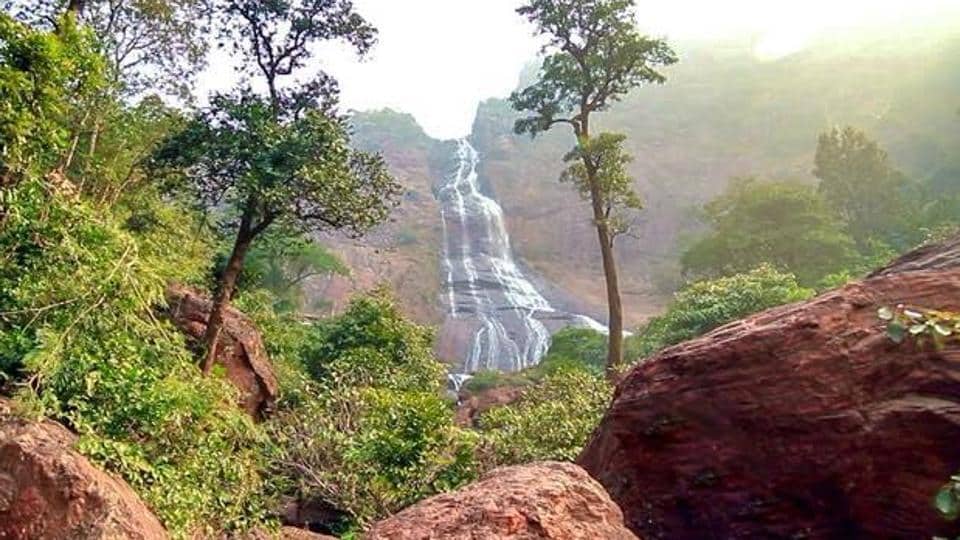
The ministry’s forest advisory committee has asked the state government to conduct a scientific study to ascertain the impact of ongoing mining activities in Bonai Forest Division and its impact on the water regime of the area along with flow of water in the waterfall in its catchment before considering approval to diversion of forest land for exploratory drilling.
The committee has also sought comments from the National Tiger Conservation Authority as the proposed area for prospecting was an elephant habitat and a Royal Bengal tiger was sighted in May last year.
The Odisha Mining Corporation, a state-run firm, had sought the Centre’s approval under the Forest Conservation Act for exploration/prospecting in 0.779 hectare of forest land within the total prospecting lease area of 432.8 hectare under prospecting license. Eight bore holes of four-inch diameter up to 70 metre depth have been proposed to be drilled in the forest land.
The committee, which discussed the proposal on December 26, said that fresh construction activity was visible within the area of prospecting lease as per decision support system (DSS) analysis and asked the state to revisit the proposal and submit well-reasoned comments on the issues raised by it.
It also observed that the proposed area came under a very dense forest category. It is a patch of pristine forest of Sal and Sal associates with good regeneration and the area is in the upstream of Khandadhar waterfall. “Any mining activity in the catchment of the waterfall will ultimately result in death of the waterfall itself,” the committee noted.
The proposed exploration area is close to Khandadhar waterfall, the lifeline of the local Pauri Bhuyan tribe that had opposed South Korean steelmaker Posco’s plan to mine iron ore in 2010. The tribe depends on the waterfall for cultivation, livelihood, tourism, and cultural practices.
Khandadhar, which is recognised for its iron ore reserves, has seven identified iron ore blocks that have been earmarked for exploration and potential mining activities.
The Khandadhar block is subdivided into six sub-blocks (A, B, C, D, etc.) as per geological surveys and explorations conducted in the area. The Odisha government’s geology directorate had earlier worked in part areas of the allotted blocks (Sub-block-A, B, C, D & E) of Khandadhar area over 10.56 sq.km. during 2002- 05 and estimated a mineable reserve of 155.96 million tonnes of iron ore.
When Posco signed an MoU with Odisha government in 2005 for a 12 million tonne per annum steel plant, it was promised the Khandadhar iron ore mine but the actual allocation never happened due to delays in regulatory approvals and opposition by Pauri Bhuyan tribals who alleged that mining would not just dry up of perennial streams and rivulets, but also violate provisions of the Forest Rights Act, which makes it mandatory to consider the habitation of indigenous tribes before converting their land to a revenue village.
In 2015, the Centre rejected Posco’s proposal of iron ore mining lease and asked it to come through auction route.



