The southwest monsoon finally arrived in Delhi on Tuesday, 16 days behind schedule, as it also covered the rest of the country, five days later than usual, the India Meteorological Department (IMD) said.
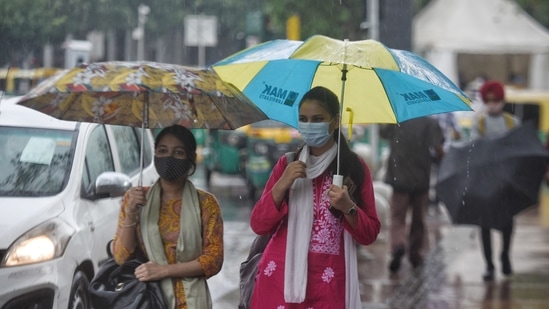
Beginning with a short spell in the morning, the showers brought not just respite from muggy heat, but also an end to a cycle of incorrect predictions for IMD. The weather office was on what seemed to be an unending streak of getting the arrival date wrong: after early estimates proved off the mark all through June, it forecast the arrival of the rains “in the next 24 hours” on July 9, and then made the same prediction every day after that.
On July 13, the ordeal was over.
Tuesday’s onset over Delhi is the most delayed arrival of monsoon in the Capital since 2002 -- that year, the first of the showers was on July 19. The usual date, IMD says, for monsoon onset in Delhi is June 27. The rains,which sweep in from India’s south-west, beginning from Kerala, typically cover the country by July 8.
The onset over Delhi this year has been fraught with delays.
{{/usCountry}}The onset over Delhi this year has been fraught with delays.
{{/usCountry}}An initial rapid advance raised hopes that monsoon will hit the Capital by June 15, which would have been one of the earliest arrivals. Instead, unfavourable weather conditions and an unusual “break” spell slowed the progression, prompting the Met department to shift the forecast to a June 29 arrival, which again was missed, and then July started on a dry note that extended till almost half the month.
The delays have meant a long period of hot and humid weather, which experts say can feel as bad, if not worse, than high degrees of dry heat. High humidity impairs the body’s ability to cool itself by sweating.
The delayed monsoon also meant that farmers in much of northwest India had to halt sowing their summer crops, raising the possibility of some impact on yields in a year when the economy has, for the second time, suffered due to the pandemic.
In the initial weeks, as the monsoon rains touched down on the Indian coast on June 3 (three days later than usual), it gathered pace and stayed ahead of schedule (by June 18, monsoon had covered all of Maharashtra, central India, east India and even parts of UP, a week ahead of its usual pace). It appeared set to break several previous coverage records, particularly at the pace it was barrelling towards Delhi.
However, just before it was to cover Delhi (along with Haryana, Uttar Pradesh, Rajasthan, and Punjab), it entered what IMD described as a “break spell” from June 29 to July 8. This “break spell”, which is not unusual for monsoon weather systems, ended up eventually causing it to drop behind schedule.
DS Pai, who heads IMD’s climate research and services, said that monsoon has now “completely revived”, and that their models are showing normal to above normal monsoon conditions till the end of July. “As we forecasted earlier, the monsoon started reviving from July 8, and many parts of north and north-west India started getting good rains, including Himachal Pradesh and Rajasthan. A small area however did not get rain. Today, even that area is covered,” he said.
IMD recordings show that the rain in Delhi occurred intermittently through the day with some regions even receiving three spells of showers on Tuesday. Safadarjung observatory, which is considered the official marker of the city, received 52.9mm of rains through the day, while Palam received 32.6mm and Lodi Road received 57.2mm rainfall.
The rains also paved way for lower temperatures on Tuesday. At Safdarjung, the maximum temperature on Tuesday was 30.9 degrees Celsius, five degrees below the season’s normal. The minimum temperature was 23.5 degrees Celsius, four degrees below what is considered normal for this time of the year. This was the lowest daytime temperature since May 21 this year.
Kuldeep Srivastava, head, IMD’s regional weather forecasting centre, said Delhi is likely to get “light to moderate” rain on Wednesday as well. “After July 14, the rain activity may slow down. It is expected to intensify again from July 17-19,” he said.
Forecasters said that Delhi is expected to receive patchy and intermittent showers till July 16, after which the intensity of rains will increase. Mahesh Palawat, vice-president (meteorology and climate change) at Skymet Weather, a private weather forecaster said, “We will see patchy rains, on and off for the next three days, after which the intensity will increase.”
(With inputs from Jayashree Nandi)