
 E-Paper



Prof MS Swaminathan distances himself from his anti-GM write-up
The article, co-authored with scientist PC Kesavan and published in Current Science journal, said that apart from causing environmental harm, some GM crops also exhibit geno-toxic effects (chemicals that can damage genetic information).

 Prefer HTon Google


Following flak for being scientifically flawed, Professor MS Swaminathan has distanced himself from a review article he co-authored and in which he raised serious concerns on the safety of genetically modified (GM) crops.
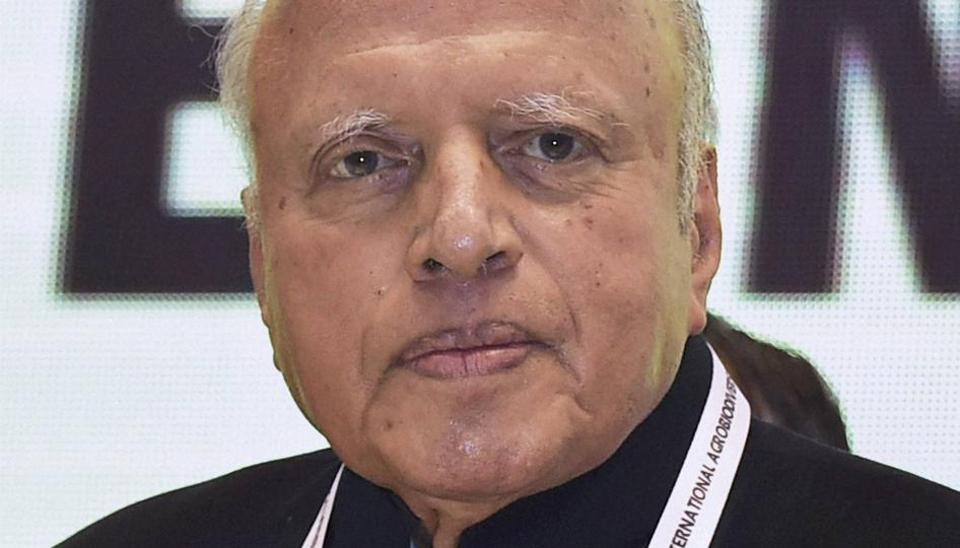
The article, co-authored with scientist PC Kesavan and published in Current Science journal, said that apart from causing environmental harm, some GM crops also exhibit geno-toxic effects (chemicals that can damage genetic information). But following criticism by bio-technology proponents and scientists like K Vijay Raghavan, principal scientific adviser to the government, Swaminathan has distanced himself from the authorship of the editorial.
In a letter to the editor of Current Science on December 20, Swaminathan wrote, “I wish to conclude by reiterating my total commitment and support to modern technologies including genetic modification and gene editing. Also, my emphasis has been on generating synergy between technology and public policy… In view of my extremely limited role in the paper, it would have been appropriate for Prof Kesavan to have been designated as the sole author of the paper.”
PC Kesavan told HT, “I am a radiation biologist and my article is based on all the material I have come across on the issue. I have not received any comments or criticism from the bio-technology industry on the edit.”
In the editorial, Swaminathan – he is known as the father of the Green Revolution that in the 1960s-70s gave farmers a pesticide- and technology-driven modern agriculture system -has called for an “Evergreen Revolution” that eliminates the negative aspects of the Green Revolution. Responding to Swaminathan’s mail clarifying his stand on GM technology, Vijay Raghavan said the review article has “selectively omitted, selectively represented or mis-represented” information.
“The review puts in one bin the four components of efficacy, safety, commercial interests and regulation. And, above this, the review seamlessly flows from one type of genetic modification to another, clubbing them all together. This is not only flawed scientifically, it has the implication that those who defend the science or the regulatory system are defending specific commercial interests or loss of biodiversity,” Raghavan said in a letter dated December 8.
He later told HT that “moving to sustainable agriculture, which uses pesticides, fertilisers and water in a calibrated ecofriendly manner is our goal. Traditional practices, the best of science and technology, understanding nutritional needs, preservation of biodiversity and an understanding of food security for our population are all important. Solutions to problems in agriculture come from science that addresses all these components together in a context-dependent manner.”
CS Prakash, professor of plant genetics at Tuskegee University (US) tweeted on Thursday that Professor Swaminathan has posted a note expressing his total support for genetic modification and that Kesavan should have been the sole author of the “flawed commentary attacking GM crops.” Swaminathan has, in fact, stood by some of the issues raised in the Current Science article in his clarification.
He said, “Genetic engineering technology has opened up new avenues of molecular breeding. What is important is not to condemn or praise any technology, but to choose the one that can take us to the desired goal sustainably, safely, and economically. GM is the technology of choice for solving abiotic problems like drought, flood, salinity etc. This is particularly important in the context of climate change. It may not be equally effective in the case of biotic stresses since new mutants of pests and diseases arise all the time,” he has said in his open letter to Current Science editor.
Anti-GM activists are not surprised at Swaminathan distancing himself from the article. “This comes as no surprise — MS Swaminathan’s cautionary words on the technology and the need for long-term assessment of technologies as seen in the Current Science piece, as well as the fact that MSSRF (MS Swaminathan Research Foundation) is the crop developer of a GM rice strain. What the proponents did... making him put out a statement which looks as though he is retracting something, is distasteful,” said Kavitha Kuruganti, convenor of Alliance for Sustainable & Holistic Agriculture.


