
 E-Paper



‘Split-second’ call: How Mumbai Police's Amol Waghmare ended hostage crisis, shot accused Rohit Arya
ASI Amol Waghmare's bullet hit Rohit Arya in the chest, following which he was taken to a hospital, where he was declared dead.

 Prefer HTon Google


Rohit Arya, the man who took 17 children hostage at a theatre studio in Powai, was shot dead by a Mumbai police officer after a tense rescue operation to save the kids.
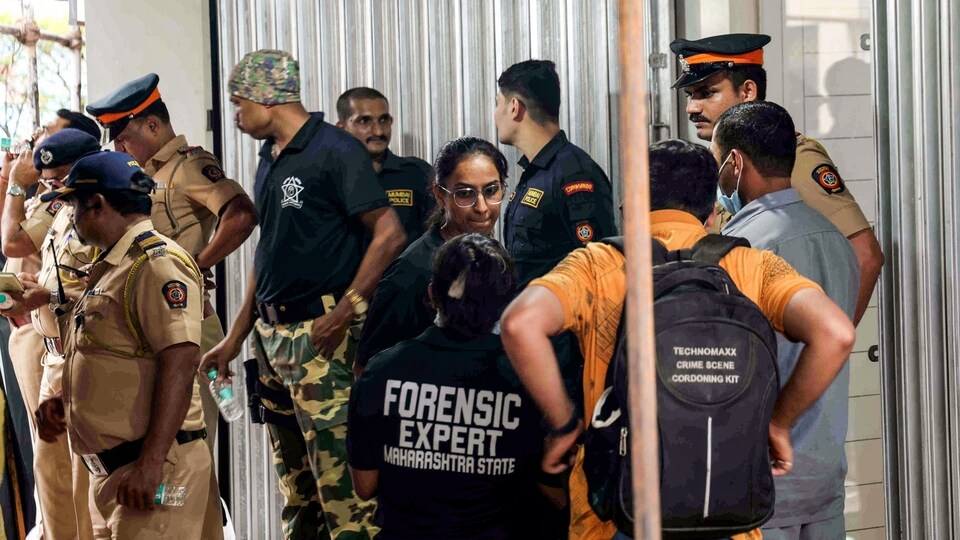
Amol Waghmare, an officer of the Powai police station's anti-terrorist cell, was the one who fired a round at Rohit Arya, a resident of Pune. He was declared dead at a hospital where he was rushed after the bullet hit his chest.
How Rohit Arya took children hostage
Rohit Arya, described as a filmmaker and an activist, purportedly rented RA Studio at Mahavir Classic in Powai to audition children for roles in a web series. When the children reached the studio with their parents on Thursday morning, he took them to the first floor. By 1 pm, neither the kids had come down for lunch nor could their parents reach them.
At 1:45 pm, local police were alerted after people in the neighbouring building saw some children crying and pleading from behind the closed glass windows of the theatre studio.
ALSO READ | ‘Unpaid’ dues, Swachhata Monitor project: Story behind Rohit Arya, the Mumbai hostage-taker
Rohit Arya locked the children in with two female and one young male assistant, and allegedly secured the theatre's doors with theft sensors to ensure that he would be alerted if anyone tried to enter, HT reported.
Arya also threatened to use an inflammable chemical spray to set the place ablaze if police tried to barge in. He was also carrying an air gun.
Arya reportedly divided the children into two groups and threatened to shoot them one by one. He went ahead and recorded a video to claim that he just wanted to talk to certain people to recover the money owed to him by the Maharashtra education department, adding that he had no desire to harm the children.
How police entered the scene
Local police, a bomb disposal squad and a Quick Response Team asked the fire brigade to enter from the back of the building while they tried to negotiate with Arya.
Once they engaged him in negotiations, two police teams climbed up the duct line of the building with the help of the fire brigade. One team entered the first-floor hall where the children were kept in the bathroom, while the other team cut the glass wall and stormed the hall from the other side.
Amol Waghmare's 'split-second decision'
Amol Waghmare, an officer with the anti-terrorist cell of the Powai police station, entered the studio hall from the bathroom and opened fire at Rohit Arya, hitting him in the chest.
Shooting the accused was reportedly never part of the plan. But the safety of the children took precedence in the moment Arya rushed towards the cops and was shot at by the assistant sub-inspector.
ALSO READ | Inside Mumbai’s 3.5-hour hostage ordeal and the rescue of 17 kids from duct pipe
"Shooting him was never part of the plan. When we reached the spot, we realised all the kids and adults were being held hostage inside the studio. We sought help from local residents and security guards to map the layout since the main door was locked," Mid-day quoted a senior officer from the Powai police station as saying.
He said that as the officers kept talking to Arya, police teams entered the hall after moving the duct line. "As soon as we entered, Arya rushed towards us. Our first priority was to save the children. One of our officers fired -- it was a split-second decision. All hostages were rescued safely," the senior police officer added.
Waghmare's bullet hit Rohit Arya in the chest, following which the accused was taken to the Hindu Hridaysamrat Balasaheb Thackeray Hospital in Jogeshwari, where he was declared dead.
Amol Waghmare has garnered much praise for his brave and timely action, which saved the children in that situation.
Another officer described Waghmare as a "quiet officer" who is "well-trained in firearms". He added that officers undergo refresher training every six months on decision-making over when to fire and when to hold back.
A senior official said that the team was prepared for any situation. He reportedly said that the decision to shoot at the accused was made "on the spot" and termed it as the "right call".


