
 E-Paper



Muslim artisans in Agra unite to craft stone portrait of PM Modi as tribute to Operation Sindoor | Video
One of the artisans said they want to show that in difficult times, Indian Muslims stand united with the nation and are ready to strongly respond to Pakistan.

 Prefer HTon Google


Six Muslim artisans in Uttar Pradesh's Agra have come together to create a stone portrait of Prime Minister Narendra Modi as a tribute to his leadership during Operation Sindoor, symbolising their solidarity with the nation.
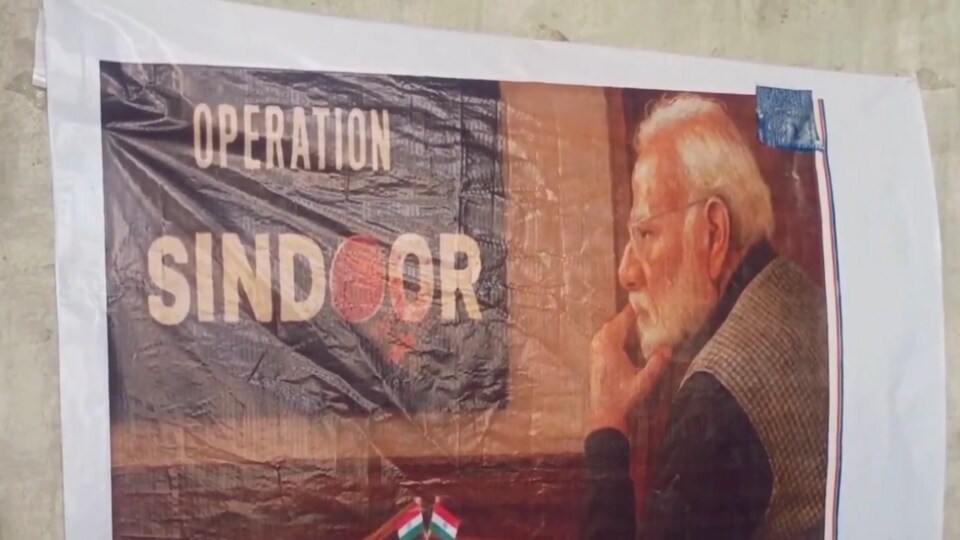
“We, the artists, are creating a portrait of Prime Minister Modi as a tribute to his hard work and dedication during Operation Sindoor. The artwork is being crafted using natural stones, and all six of us, are from the Muslim community. We are working together on this project,” handicraft businessman Adnan Sheikh told PTI.
He said that they want to send a message that in difficult times, Muslims in India always stand united with the country and want to give a strong response to Pakistan.
“Through this gesture, we want to convey that in times of national crisis, the Muslim community stands firmly with India. We hope to personally present this portrait to Prime Minister Modi,” Adnan Sheikh added.
Defence minister Rajnath Singh on Friday revealed that the name “Operation Sindoor” was suggested by Prime Minister Narendra Modi and praised the Indian Air Force personnel for successfully completing the mission in just 23 minutes.
Under this operation, the Indian armed forces carried out precision strikes on specific terror bases in Pakistan and PoK, which were used to plan and launch attacks against India.
Terror headquarters of the banned Jaish-e-Mohammed, Lashkar-e-Taiba, and Hizbul Mujahideen were targeted, with the Indian Air Force conducting night raids on nine hideouts in Pakistan and Pakistan-occupied-Kashmir, officials confirmed on Wednesday.
Among the precise targets hit were the Markaz Subhan Allah at Bahawalpur, Sarjal at Tehra Kalan, Markaz Abbas in Kotli, and Syedna Bilal camp in Muzaffarabad, all linked to the banned Jaish-e-Mohammed.
Other targets included the Markaz Taiba at Murdike, Markaz Ahle Hadith at Barnala, and Shwawai Nalla camp at Muzaffarabad, all associated with the banned Lashkar-e-Taiba.
Additionally, Makaz Raheel Shahid in Kotli and Mehmoona Joya in Sialkot, belonging to Hizbul Mujahideen, were also hit.
Of the nine targets, four were located in Pakistan and five in Pakistan-occupied-Kashmir.


