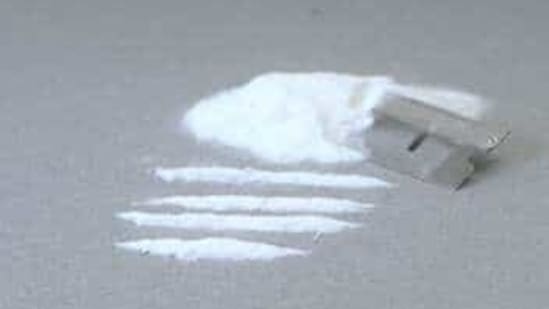
The Narcotics Control Bureau (NCB) has red-flagged Mumbai as the cocaine capital of India saying that other metropolitan cities are not lagging behind with the drug mafia spreading its tentacles in India, Canada and Australia. As much as 2499 kilograms of cocaine seized in the past two years in Sri Lanka, Port Elizabeth and Panana had India as its destination. The international market for this lethal drug is ₹5 crore per kilogram.
As one of the biggest manufacturers of potassium permanganate, a precursor chemical, there is a growing suspicion that the processing of cocaine may be shifted by drug cartel from South America to India. This is primarily due to the US Drug Enforcement Agency, the UK’s National Crime Agency, the Royal Canadian Mounted Police (RCMP) and Australian drug enforcement agencies pressure on the South American coca-producing countries.
According to top NCB officials, backtrack drug investigations have now confirmed that no less than 300kg of cocaine (worth ₹1500 crore in the international market) landed in Mumbai in December 2018 through a syndicate with links in India, Australia and Canada. The same syndicate was involved in the smuggling of 200kg of methamphetamine from Canada to Australia.
With all the drug enforcement agencies pooling their intelligence and resources on this network (not disclosed as it is an ongoing operation), as much as 20kg of cocaine was seized in India, 29kg of methamphetamine was recovered in the US, 55kg of cocaine and 200kg of methamphetamine was seized in Australia.
{{/usCountry}}With all the drug enforcement agencies pooling their intelligence and resources on this network (not disclosed as it is an ongoing operation), as much as 20kg of cocaine was seized in India, 29kg of methamphetamine was recovered in the US, 55kg of cocaine and 200kg of methamphetamine was seized in Australia.
{{/usCountry}}According to NCB, the syndicate was uncovered after an Indian internet protocol was involved in the smuggling of 200kg of methamphetamine from Canada to Australia. The said IP address was traced to one Akshinder Singh Sodhi of Punjab, who was later arrested with 422kg of cocaine in India.
The backtrack investigations of 55kg of cocaine concealed in a plasma cutting machine seized in Australia in June 2019 led the NCB to uncover the syndicate bases in India. Investigations revealed that the drug syndicate had floated fake companies for the drug to be smuggled and then concealed at Rudrapur in Uttarakhand. Working on this intelligence, the NCB conducted raids in Rudrapur, Ghaziabad, UP, Punjab and Delhi to cumulatively seize 20kg of cocaine with a number of arrests in these states including Indonesian and Nigerian nationals.
NCB investigations into the smuggling of 300kg of cocaine in Mumbai led to the arrests of mastermind Harpal Singh aka Amrinder Chenna aka Laadhi and his associate Sandeep Deol, who arranged all the paperwork and logistics while in India during the landing of the drug. The other members of this syndicate have been identified with the accused both in India and Canada.