E-Paper



Compensatory afforestation in certain degraded forests cleared
HT reported on August 27, 2020 that the Union environment ministry allowed central agencies to take up compensatory afforestation in degraded forest

 Prefer HTon Google


New Delhi: Following requests from the National Highways Authority of India (NHAI) and the Sikkim government, the union environment ministry has clarified that compensatory afforestation can be carried out in degraded forest land, unclassed forests, and the so-called orange lands of central India, in an area that is double that being developed, based on a certificate issued by states with more than 33% forest cover.
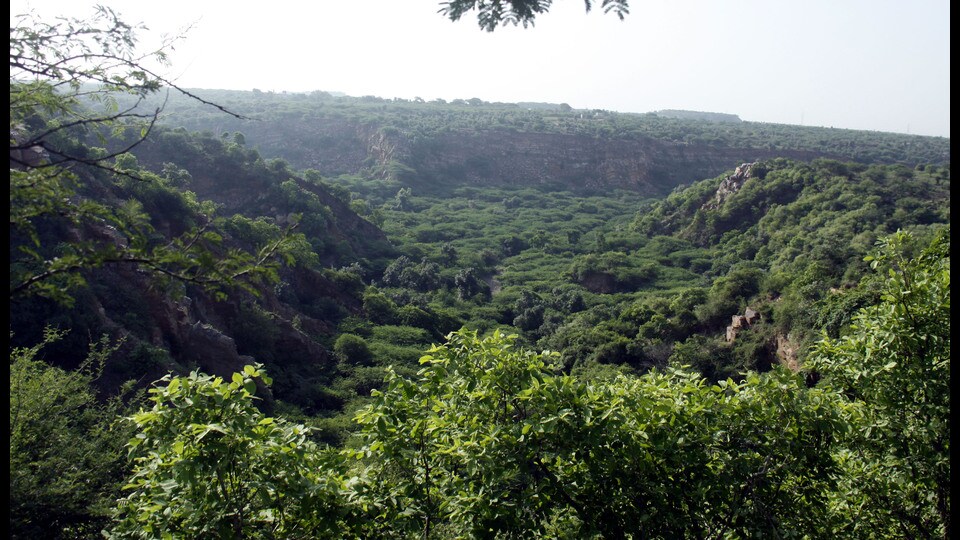
Compensatory afforestation is a means to offset the loss of forests due to diversion for various infrastructure and development projects by planting trees over the same extent of area in non-forest land.
The Forest Conservation Rules 2022 state that a user agency (of any infrastructure project) shall provide land which is neither notified as forest nor managed as forest by the forest department and it shall also bear the cost of raising compensatory afforestation over such land.
Only in exceptional circumstances, when the suitable non-forest land is not available and a certificate to this effect is given by the state government, compensatory afforestation may be considered on degraded forest land which is twice in extent to the area, for Central Government agencies or Central Public Sector Undertakings, and only on a case-to-case basis, it adds.
HT reported on August 27, 2020 that the Union environment ministry allowed Central agencies to take up compensatory afforestation in degraded forest land instead of non-forest land. But the 2022 rules removed the provision allowing it only for exceptional cases.
The Chairman, NHAI on March 3, 2023 requested the ministry to restore the provision for projects implemented by the Central government. NHAI said proposals submitted after September, 2022 are stalled at the level of Project Screening Committee/CF/DFO (forest department) due to the demand for non-forest land for compensatory afforestation. Forest Officials, it added, are insisting that NHAI provide suitable non-forest land as per the Forest (Conservation) Rules, 2022 dated June 28, 2022.
NHAI’s request was considered by the ministry’s Forest Advisory Committee on March 24. On June 13, in a letter to all state governments and UTs, seen by HT, the ministry has clarified that degraded forest land can be utilised for compensatory afforestation in states with high forest cover.
Experts said the clarification indicates that there is an extreme paucity of non-forest land which is impacting acquisition of land for compensatory afforestation.
They also said use of so called degraded forests can impact rights of local people and biodiversity in the region. Earlier this year , the ministry’s decision to allow compensatory afforestation for the loss of forests in Great Nicobar Island in Haryana’s Aravallis was criticised by ecologists. The Forest Conservation Rules 2022 do have a provision to make way for loss of forests in states with forest cover of more than one-third of its geographical area to be compensated in states with less than 20% forest cover.
In the June 13 letter, the ministry added: “The non-availability of suitable non-forest land for compensatory afforestation in the State/Union Territory will be accepted by the Central Government only on the basis of a Certificate of the State Government /Union territory Administration to that effect in respect of States/UTs having forest area more than 33% of the geographical area in the prescribed format.” The ministry has said it will consider any degraded forest land for the purpose of CA selected by the state provided it has less than 40% crown density. Crown density refers to the ratio of vegetation to ground as seen from the air.
Further, revenue lands/zudpi jungle/chhote/bade jhar ka jungle/jungle-jhari land/civil-soyam/orange lands and all other such categories of forest lands not under management and/or administrative control of the State/UT Forest Department, on which the provisions of FC Act, 1980 are applicable, can be considered for the purpose of compensatory afforestation, the letter said. More than half the villages of Madhya Pradesh and Chhattisgarh are affected by a peculiar issue of tenurial ambiguity because of overlapping claims by revenue and forest departments. This issue impacts nearly 1.2 million hectares that are called orange lands and 1.5 million, largely poor, landless and tribal families, that depend on these lands for food, fuel, fodder and other sources of income according to an analysis by World Resources Institute.
In Arunachal Pradesh, Degraded Unclassed Forests (USF) can be considered for compensatory afforestation and in Himachal Pradesh wasteland which come under the category of Protected Forests but has neither been demarcated on the ground nor transferred and mutated in the name of forest department in the revenue records, shall be considered for the purpose, the letter explained. The cost of plantation of ten times the number of trees likely to be felled will have to be paid for by the user agency.
“This clarification once again brings to light the need for making land available for compensatory afforestation to accommodate the loss of forest land for industrial and infrastructure expansion. This issue of land deficit has been a legacy concern in operationalising compensatory afforestation. The lands referred to in the clarification are often fraught with ownership disputes and access rights,” said Kanchi Kohli, legal and policy researcher.
“Unclassed forests basically mean forests that are not notified. Degraded forests do not have a definition or guideline. So, these categories can be misused. They may have a sparse canopy cover but such lands may be important ecological entities also. They support local ecosystems and biodiversity in many cases. Such plantations will then involve clearing of existing vegetation and undergrowth to make way for plantations at industrial scale of just one or two species. But this shouldn’t be done at the cost of local biodiversity, micro flora and fauna. Forests are not just standing trees, they are much more,” said Debadityo Sinha, Lead- Climate & Ecosystems, Vidhi Centre for Legal Policy.