The National Investigation Agency (NIA) did not press for US national Mathew Aaron VanDyke and six Ukrainians remaining in India while keeping open its Unlawful Activities Prevention Act or UAPA probe against them , and agreed to the accused travelling back to their home countries after furnishing personal undertakings, and providing residential address and contact details.
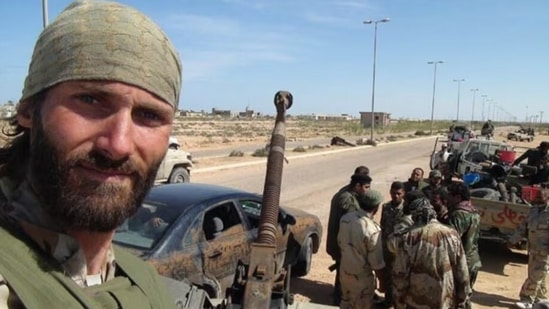
A Delhi court on Friday allowed VanDyke and the six Ukrainians to travel to their respective countries for a month on condition that they will join the investigation through video-conferencing, whenever required by the NIA. VanDyke left for Washington on Friday evening and has booked a return flight for October 21 to India.
The development has triggered a political controversy with the Congress questioning the circumstances leading to VanDyke’s release.
The federal anti-terror agency had alleged that VanDyke and the six others, for nearly three months, gave training in drone warfare, drone operations, assembly and jamming technology to the members of Myanmar-based ethnic armed groups, including the Chin National Front (CNF) and the Kachin Independence Army (KIA). It had also claimed that VanDyke and others received logistical support from the members of CNF and the mission was financed through funds arranged by a commander of a Myanmar-based rebel group.
Also Read | Myanmar Training Camp Case: Court Orders Release Of Passports To Foreign Nationals | HT India
{{/usCountry}}Also Read | Myanmar Training Camp Case: Court Orders Release Of Passports To Foreign Nationals | HT India
{{/usCountry}}The special public prosecutor, Rahul Tyagi, who appeared for the agency, citing “instructions” (from the agency), told the court that the UAPA probe will take time to complete. Meanwhile, necessary undertakings may be taken from the accused persons along with their residential address, phone number and emails, the NIA prosecutor said.
An NIA spokesperson did not respond to queries regarding the position it has taken and allegations by the Congress.
However, an officer familiar with the developments, who didn’t want to be named, said,“The terror conspiracy is difficult to conclusively establish without obtaining evidence from Myanmar as the alleged acts took place there. This means we don’t have a definite timeline to conclude the UAPA probe. And they have already been discharged under the immigration and Foreigners Act”.
The court also noted in its order on Thursday, seen by HT, that NIA had not argued for the accused being physically present in India in the immediate future.
Also Read | NIA court denies bail to man accused in funding Hizbul activities in J&K
“Admittedly, investigation with respect to offences under UAPA is going on. NIA will take some time to conclude said investigation and this court cannot direct NIA to conclude said investigation, within a particular time, as per law. It is not the case of the NIA that physical presence of VanDyke and co-accused persons in near future is required to complete the investigation in this case,” the court said, while asking the accused persons to return within one month.
Earlier, NIA had filed a charge sheet against the accused on September 8 under the immigration and foreigners Act, which was compounded by the foreigners regional registration office (FRRO) for a ₹5.5 lakh fine each. The court subsequently discharged them under the immigration and Foreigners Act and granted them default bail. VanDyke was represented in court by advocates Rohit Gour and Rohit Dandriyal.
A second person familiar with the developments said that after VanDyke and the six Ukrainians were released from Tihar jail on Thursday night, relevant formalities were being completed for their return. “This includes getting them an ‘exit permit’ from the FRRO since their travel documents had expired after their arrest in March,” he said.
VanDyke was arrested at Kolkata airport under section 18 of UAPA, which relates to conspiracy, advocacy, abetment or incitement to commit a terrorist act. The six Ukrainians, Hurba Petro, Taras Slyviak, Ivan Sukmanovskyi, Marian Stefankiv, Maksim Honcharuk and Viktor Kaminskyi, were arrested at Delhi and Lucknow airports the same day.
The NIA had earlier alleged that the seven had illegally entered Myanmar through Mizoram without valid travel documents and participated in a pre-scheduled training programme involving drone warfare, drone operations, assembly and jamming technology for Myanmar-based ethnic armed groups targeting the Myanmar military junta.
Also Read | NIA files charge sheet against 13 in Pakistan espionage case
The Congress attacked the government on Friday, alleging that US pressure determined this outcome and that Prime Minister Narendra Modi failed to protect India’s national security.
Congress general secretary in-charge communications Jairam Ramesh hit out at VanDyke being allowed to return home. Citing US diplomatic pressure, Ramesh questioned what India got in return, how the seven got visas and were allowed to travel through India to Myanmar in the first place. “The HM must answer this,” Ramesh said on X.