The Indian Army’s traditions that are a fountainhead of its “regimentation, morale and motivation” will stay outside the purview of an upcoming review of British influence on the army’s culture, and changes will be introduced only after extensive deliberations within the organisation, with veterans also having a say in the matter, top officials aware of the development said on Wednesday.
“Customs and traditions which contribute to the army’s regimentation, morale and motivation will never be disturbed. Any decision on reviewing British-era practices will only be taken after extensive consultations and deliberations with all stakeholders including the top brass, serving officers, soldiers and, veterans,” said one of the officials cited above, asking not to be named.
Veterans had reacted sharply to the proposed review after an overarching draft agenda for internal discussions on the matter found its way to social media last week. It encompassed names of regiments, the Beating Retreat ceremony, uniforms and accoutrements, pre-Independence battle honours, appointing senior officers as colonels of the regiment, grant of honorary commission to junior commissioned officers, and roads, buildings and institutions with colonial names.
The leaked draft agenda, prepared by a junior officer, indicated that a review of British customs might require a wide sweep. “Someone jumped the gun,” said a second official who also asked not to be named.
{{/usCountry}}The leaked draft agenda, prepared by a junior officer, indicated that a review of British customs might require a wide sweep. “Someone jumped the gun,” said a second official who also asked not to be named.
{{/usCountry}}“The names of regiments will remain the same. There’s no question of doing away with the Beating Retreat ceremony. The officer’s mess culture, the system of appointing colonels of the regiment and battle honours also stay. Changes in the army are not done without detailed deliberations,” he added. The post of colonel of the regiment is a British legacy, with a senior officer being elected for the role to provide guidance to his regiment.
To be sure, the army has not yet officially shared any details of the colonial practices it plans to dump or even commented on the review, even though discussions on it are slated to start in the coming weeks under adjutant general Lieutenant General C Bansi Ponnappa.
“Post-Independence, the Indian Army has evolved into a fine professional force. Many irrelevant practices prevalent during the colonial era have already been done away with over the decades as part of this evolution, without hampering the professional efficiency of the force,” said the first official.
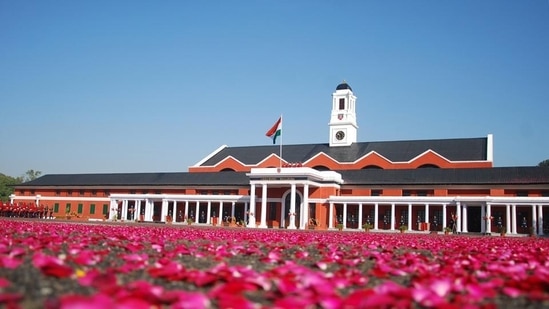
Will the army rename the iconic Chetwode building, named after a British Field Marshal, at the Indian Military Academy in Dehradun? What will happen to the Chetwode’s motto (…Your own ease, comfort and safety come last, always and every time…) that Indian Army officers swear by?
“There is no question of diluting this legacy,” said the first official.
A decision on renaming some companies at IMA named after famous World War II battles such Meiktila, Alamein, Sangro and Cassino may fall within the purview of the review, the official said, stressing that deliberations will determine the final outcome. Some roads, buildings and a few institutions are likely to be renamed, HT has learnt.
The call for doing away with colonial customs in the armed forces was made by Prime Minister Narendra Modi in March 2021 during the Combined Commanders’ Conference at Kevadia in Gujarat, when he asked the three services to rid themselves of legacy systems and practices no longer relevant.
The PM’s remarks at the top conference were the first indication that colonial practices in the armed forces were on their way out. He underlined the importance of enhancing indigenisation in the national security system, not just in sourcing equipment and weapons, but also in doctrines, procedures and customs.
Speaking from the ramparts of the Red Fort on August 15, PM Modi spoke of the “panch pran” or five pledges for India to become a developed country by its 100th year of independence in 2047 — one of those resolutions was to uproot all signs of colonial slavery from mindset and habits.
On September 2, the PM unveiled a naval ensign at the commissioning ceremony of aircraft carrier Vikrant, with the new flag drawing inspiration from the seal of Maratha king Shivaji Maharaj and the Cross of St George being dropped, a move that the PM described as getting rid of the burden of a colonial past.