
 E-Paper



No coercive action against 9 protesters of SC stray dog order: Delhi HC told
The Delhi Police, represented by Additional Public Prosecutor (APP) Naresh Kumar Chahar, submitted before a bench of Justice Swarana Kanta Sharma on Thursday

 Prefer HTon Google


New Delhi: The Delhi high court was informed on Friday that no coercive action would be taken against nine people who had protested against the Supreme Court’s directive requiring civic authorities to confine all stray dogs in dedicated shelters without releasing them back onto the streets.
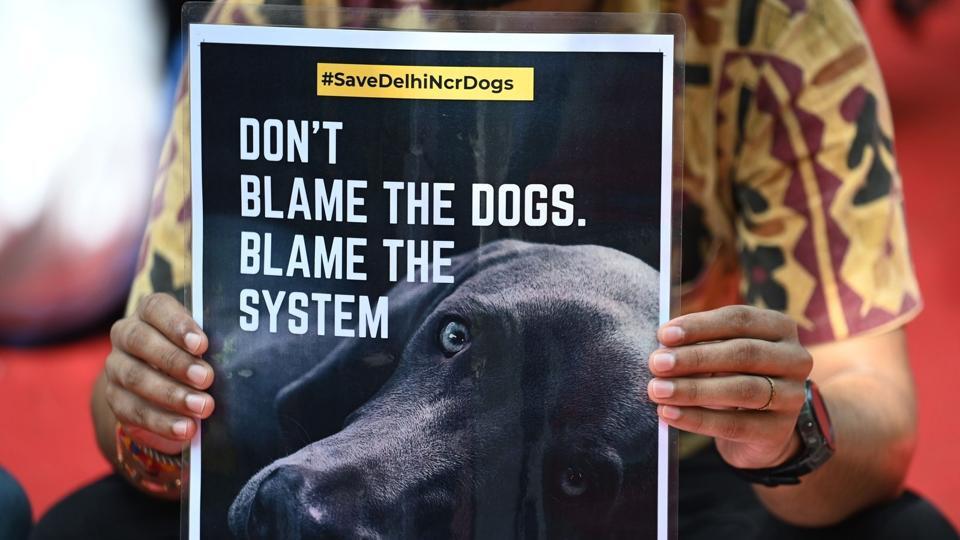
The Delhi Police, represented by Additional Public Prosecutor (APP) Naresh Kumar Chahar, submitted before a bench of Justice Swarana Kanta Sharma on Thursday that this assurance was conditional upon the individuals cooperating with the ongoing investigation.
“On instructions from the Investigative Officer (IO), the learned APP for the state submits that no coercive action is being contemplated against the petitioners, subject to them joining the investigation,” the court said in its Thursday order.
The submission was made in a petition moved by nine individuals seeking to quash the FIR registered against them on August 16 at the Connaught Place police station.
The FIR, under various sections including 223 (Threat of injury to induce person to refrain from applying for protection to public servant), 221 (Disobedience to order duly promulgated by public servant), 121 (Causing hurt by means of poison, etc., with intent to commit an offence) and 3(5) of the Bharatiya Nyay Sanhita, stemmed from the individuals’ protest against the Supreme Court’s August 11 ruling at Central Park.
The August 11 order, passed by justices J.B. Pardiwala and R. Mahadevan, required the Municipal Corporation of Delhi (MCD) and civic agencies in Noida, Ghaziabad and Gurugram — later expanded in a written order to include Faridabad — to round up all stray dogs within eight weeks and keep them in dedicated shelters, with no re-release onto the streets. The authorities were also directed to establish shelters with capacity for at least 5,000 animals within eight weeks.
A detailed written order, issued on August 13, reiterated those directions while also laying down welfare safeguards for dogs kept in shelters. However, the sweeping measures quickly became contentious, drawing strong objections from animal welfare groups, who warned of potential cruelty and statutory violations.
A three-judge bench on August 22 modified its earlier directive, clarifying that canines picked up under its August 11 order would be released after sterilisation and immunisation, except those suffering from rabies or displaying aggressive behaviour.
In their petition, the individuals claiming to be dog lovers asserted that the protest was a bona fide, lawful exercise undertaken in the exercise of their fundamental rights, and that the FIR was nothing but a “circuitous device” engineered to criminalise lawful and peaceful protest. “The demonstration was symbolic, issue-based and non-violent, with no damage to public or private property or harm to any individual,” the petition stated.
Drawing the court’s attention to the August 22 order, the petition stated that the Supreme Court in the very same proceedings had recognised the constitutional and statutory protections for animals and the rights of citizens engaged in animal welfare, and thus their assembly was not only justified but squarely protected by law. “Any attempt to criminalise such dissent amounts to an assault on the fundamental rights guaranteed under Part III of the Constitution,” the petition stated.
It went on to add that although the entire foundation of the FIR was based on the alleged violation of prohibitory orders, there was not an iota of evidence to show the issuance of any such promulgation or public notice. The entire action of the police is unconstitutional and illegal, the plea argued.


