The Supreme Court on Tuesday directed the Centre and the Insurance Regulatory and Development Authority of India (IRDAI) to evolve a pilot project under which uninsured vehicles could be denied fuel at petrol pumps, while also ordering a technology-driven enforcement mechanism to automatically identify and penalise such vehicles.
In a landmark bid to tackle the menace of uninsured vehicles and ensure timely compensation for road accident victims, a bench of justice Sanjay Karol and Prashant Kumar Mishra issued a slew of directions, including integration of Automatic Number Plate Recognition (ANPR) cameras with insurance databases to generate automatic e-challans for uninsured vehicles, provision of handheld devices to traffic police for real-time verification of insurance status, enhancement of mandatory third-party insurance tenure for new vehicles, and expeditious disposal of old motor accident compensation cases.
Observing that nearly 56% of vehicles plying on Indian roads remain uninsured, the bench said that the statutory safeguard of compensating road accident victims was often “delayed, if not defeated”, forcing victims and their families into prolonged litigation.
Also Read | Insurer not liable to pay compensation for accidents if driver's licence invalid, says SC
{{/usCountry}}Also Read | Insurer not liable to pay compensation for accidents if driver's licence invalid, says SC
{{/usCountry}}“The object behind mandatory insurance under Section 146 of the Motor Vehicles Act is not just that victims of road accidents are compensated, it is also that they are not drawn into prolonged litigation,” it noted.
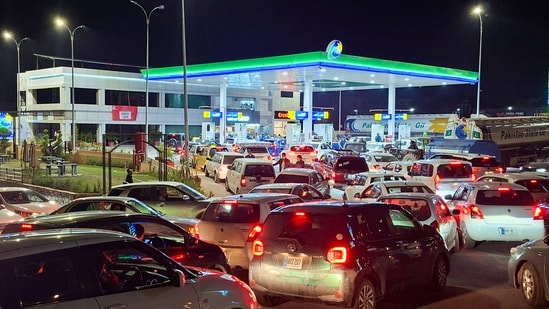
The court directed the Ministry of Road Transport and Highways (MoRTH) and IRDAI to examine a pilot project under which fuel supply would be linked to a vehicle’s insurance status. “In the absence thereof, the vehicle concerned would be refused fuel at petrol pumps until such time that valid insurance is obtained,” ordered the bench, noting that the Ministry of Petroleum and Natural Gas had, in principle, expressed no objection to the proposal.
Also Read | Time restrictions on filing insurance claims are void: HC
The bench underlined that such a mechanism would help identify uninsured and unregistered vehicles while nudging owners to maintain valid insurance. It suggested that the project could be implemented using ANPR cameras.
To strengthen enforcement, the court directed that ANPR cameras already deployed on highways and city roads for detecting traffic violations be integrated with the Insurance Information Bureau database and the VAHAN portal to enable automatic issuance of e-challans to uninsured vehicles. It also directed States to equip traffic police with handheld devices or mobile applications linked to these databases to verify insurance status on the spot and issue challans.
The court further directed strict implementation of the proposed amendment to Section 196 of the Motor Vehicles Act, which prescribes steeper penalties for driving uninsured vehicles once notified by the Centre.
Also Read | Insurers can deny claim over hiding drinking habit, says SC
In a significant change affecting new vehicle buyers, the bench directed that the mandatory third-party insurance cover be enhanced from three years to four years for new private cars and from five years to six years for new two-wheelers. The court said it was extending the period by one year despite IRDAI and the General Insurance Council recommending against such a move, holding that the measure was necessary in the interest of road safety.
The direction builds upon the Supreme Court’s ruling in S Rajaseekaran Vs Union of India (2018), which had mandated long-term third-party insurance at the time of registration of new vehicles.
The judgment also overhauls the structure of motor insurance policies. Accepting IRDAI’s proposal, the court directed implementation of a uniform four-layer framework comprising a mandatory third-party policy, an optional legal liability cover for occupants and pillion riders, an optional personal accident cover for the owner, driver and occupants, and an optional own-damage cover.
Also Read | Better ride quality, lower fuel average: Nitin Gadkari to Parliament on how E20 petrol affects vehicles
With a view to ensure informed consumer choice, every purchaser of motor insurance -- online or offline, will have to be provided with a standardised customer option form allowing them to opt into additional covers, along with a consumer-friendly information sheet explaining the mandatory and optional components of motor insurance. The court also directed IRDAI, in consultation with the General Insurance Council and insurers, to formulate uniform policy wordings for the optional covers while allowing insurers flexibility in pricing and innovation.
The bench additionally directed insurance companies to prominently display the benefits of comprehensive motor insurance policies on their websites in an easy-to-understand format.
Concerned over delays in compensation cases, the court further revived earlier directions governing motor accident claims for accidents that occurred before March 31, 2022, when the Detailed Accident Report (DAR) regime became operational under the Central Motor Vehicles Rules.
Also Read | Union cabinet approves scheme to replace old trucks, buses to curb air pollution
Relying on a clutch of previous rulings, the bench directed State police to promptly file DARs along with all relevant documents before motor accident claims tribunals (MACTs) in pending pre-March 2022 cases and ensure production of witnesses to facilitate speedy disposal.
The court noted that more than half of MACT cases continue to remain pending for over four years and stressed that road safety forms an integral part of the right to life under Article 21.
The bench directed all stakeholders to comply with its directions and file affidavits by August 14, and listed the matter for monitoring compliance on August 18.
The directions came while disposing of an appeal filed by National Insurance Company Ltd against a Telangana High Court judgment awarding compensation to the family of a man who died in a 1996 road accident while travelling in his own Maruti 800 car. The insurer had argued that the comprehensive insurance policy did not cover the owner’s risk. Affirming the high court’s view, the bench held that a comprehensive policy covered the owner travelling in the vehicle and declined to interfere, reiterating that courts should not adopt a hyper-technical approach in motor accident compensation matters.