India is undergoing a new phase of energy transition. It does not need to add more coal capacity than its existing National Electricity Plan (NEP) 2032 targets, neither for reliability nor peak coverage, energy think tank Ember has said.
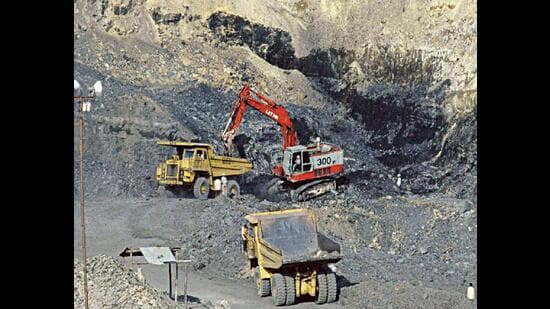
For the fiscal year 2031-32, if India meets its NEP targets for renewable energy and storage, 10% of additional coal units from FY 2024-25 will be entirely unutilised by FY 2031-32, while nearly 25% of the fleet will be heavily underutilised.
Ultimately, coal-based electricity will get 25% more expensive in FY 2031-32 than in FY 2024-25, owing to falling utilisation rates driving up fixed costs and expenses associated with additional part-load inefficiencies, higher auxiliary consumption, and retrofit needs, the Ember analysis has found. The finding is premised on the assumption that India meets its NEP 2032 capacity addition targets for solar, wind and storage.
“India’s power system is entering a new phase of transition. As renewables gain a bigger share of the country’s generation mix and storage becomes cheaper, coal’s role diminishes. Building coal beyond the current pipeline is neither necessary nor economical for the country,” Neshwin Rodrigues, Senior Energy Analyst - Asia at Ember and author of the report.
Renewable energy coupled with battery storage are becoming increasingly competitive, with tariffs between ₹4.3–5.8/kilowatt-hour (kWh) (USD 49-67/MWh) and a proven ability to meet availability and performance obligations. As a result, India can achieve reliability and flexibility without resorting to new coal builds, it has added.
{{/usCountry}}Renewable energy coupled with battery storage are becoming increasingly competitive, with tariffs between ₹4.3–5.8/kilowatt-hour (kWh) (USD 49-67/MWh) and a proven ability to meet availability and performance obligations. As a result, India can achieve reliability and flexibility without resorting to new coal builds, it has added.
{{/usCountry}}This has been driven partly by the success of large-scale auctions, falling prices and improvements in battery technology. Dave Jones, Ember’s Chief Analyst said that the lifetime of grid scale batteries runs into decades and the latest sodium-ion batteries use zero critical minerals.
“Already, India’s auctions are incorporating more hours of battery, and ultimately, batteries will work with solar to make 24/365 electricity. There’s no reason why India can’t copy its success from solar manufacturing to become self-sufficient in battery manufacturing, and so energising India with home-grown solar and battery,” he added.
HT reported on July 16 that India has surpassed its target of installing 50% of its power capacity from non-fossil fuel sources, achieving a key nationally determined contribution (NDC) under the Paris Agreement five years ahead of the 2030 target.
Last year a statement by the Power ministry said while India aggressively pursues energy transition goals, ensuring energy security remains paramount. Union Minister, Manohar Lal Khattar also informed that to meet the peak demand and base load requirements of a rapidly expanding economy, Ministry of Power has prioritized thermal capacity addition. Currently, the total thermal capacity: Coal and Lignite based stands at 217 GW. In addition, 28.4 GW capacity is under construction, out of which 14 GW capacity is likely to be commissioned by FY 2025. Further, 58.4 GW is at various stages of; planning, statutory clearances and bidding.