
 E-Paper



‘None likely to discuss it’: SC slams parties on poll freebies
No political party is likely to want a debate in Parliament on freebies since all want it to continue, the Supreme Court observed on Wednesday, even as the Union government termed such hand-outs the “road to an economic disaster” and urged the Election Commission of India (ECI) to devise ways to deal with them.

 Prefer HTon Google


No political party is likely to want a debate in Parliament on freebies since all want it to continue, the Supreme Court observed on Wednesday, even as the Union government termed such hand-outs the “road to an economic disaster” and urged the Election Commission of India (ECI) to devise ways to deal with them.
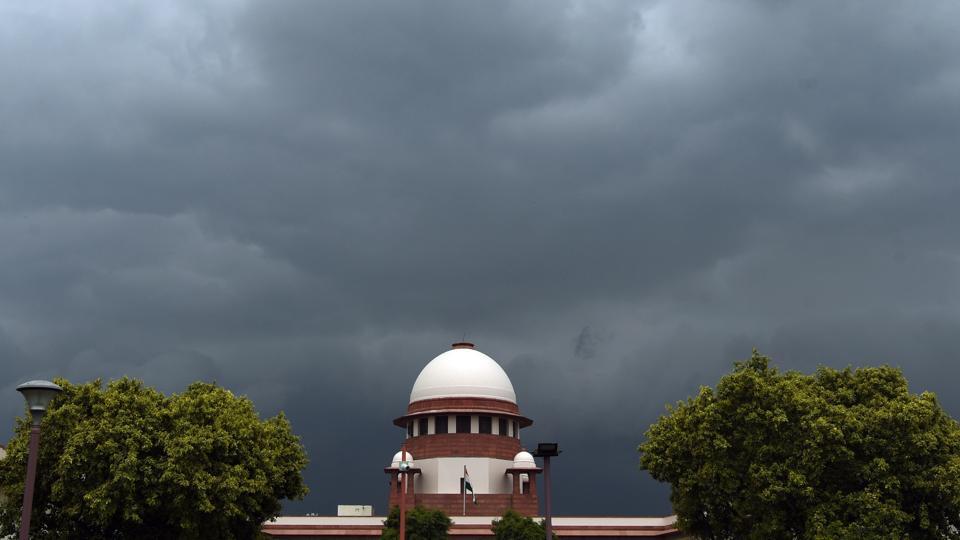
Suggesting a dialogue between all the stakeholders, a bench headed by Chief Justice of India NV Ramana, lamented that neither ECI nor the central government has taken steps in last several years after the top court, in a 2013 judgment, flagged that the freebies shake the root of free and fair elections to a large degree.
“This is a serious issue. The Election Commission and the government cannot say that ‘we cannot do anything’... We are not looking only at elections but their effect on the entire economy of the country,” said the bench, which included justices Krishna Murari and Hima Kohli.
Also read: Myths being spread on GST: FM in Parliament
To a suggestion that Parliament should have a discussion on the issue, the bench retorted: “Do you think Parliament will even debate this? Which political party will want a debate on freebies? There is no political party which will want to take it out. Every political party wants freebies to continue.”
The court’s comment came as solicitor general Tushar Mehta, appearing for the Centre, emphasised that the country will head to an economic disaster if freebies are not controlled through some measures that, he said, ECI should evolve. “It distorts the decision-making of voters. Voters do not know what is going to fall upon them in a few years after these freebies...It’s like putting something in their left pocket only to take out more from their right pocket in a few years,” Mehta added.
At this, the bench noted that ECI has already indicated its helplessness and that therefore, a consultative process appears to be the way forward.
“We are not going to hear some lengthy arguments and pass guidelines. We don’t want the court to be used as a forum for this. But this is an important issue. All the stakeholders should deliberate and submit a report to ECI and the government of India, which they should consider... We would want some people to look at this dispassionately and we can ask them to give a report in a timebound manner,” added the bench, listing the matter after a week to receive suggestions from the parties in the case.
The court is hearing a public interest litigation by advocate Ashwini Kumar Upadhyay, who sought a direction for issuance of stringent guidelines to deregister errant political parties and seize their election symbols for offering “irrational freebies” ahead of polls.
On July 16, while speaking at an event in Uttar Pradesh, Prime Minister Narendra Modi hit out at the culture of freebies. “The ‘revadi culture’ is very dangerous for the development of the country...Those behind this ‘revadi culture’ do not believe in building expressways, airports and defence corridors,” Modi said, calling on people to not fall for this culture.
The Prime Minister used the term ‘revadi’, a popular north Indian sweet often distributed during festivals, as a metaphor for freebies being promised by various parties to grab power. In April, a team of senior bureaucrats warned PM Modi during a review that the culture of freebies could bankrupt state exchequers. In response to the PM’s comments, his Bharatiya Janata Party asked state units in the last week of July to refrain from offering freebies during elections.
Also read: Parliament: Family courts act, anti-doping bill on agenda
In the matter before the top court, ECI has taken a position that the poll body cannot regulate distribution of freebies and that it is for the voters to decide whether they should elect leaders even if such hand-outs could harm the economic health of a state.
On July 26, the court pulled up ECI, observing that only God could save the statutory body if it cannot control “unrealistic” poll promises and freebies despite the 2013 judgment asking it to regulate electoral promises and distribution of freebies by political parties using public funds.
On that day, the court also took a grim view of the Centre not taking a categorical stand on the issue, and said that they must come clear on whether the government considers freebies a serious issue to be dealt with or not.
On Wednesday, SG Mehta began his submissions by pointing out that the Centre substantially supports Upadhyay’s PIL in principle and would implore ECI to revisit the issue for devising a method to regulate the practice.
At this, the bench said that there are a variety of issues involved. “There are some measures for the welfare of downtrodden people who need some help...To what extent, this can be done and how this case be done...everything will have to be seen,” it remarked.
However, senior advocate Kapil Sibal, who has been requested by the bench to assist in the matter, contended that leaving out ECI would be better. “ECI is currently the MFI...most favoured institution. Please, make it an economic issue or it would only become political,” he said.
Sibal’s submissions were countered by SG Mehta and senior advocate Vikas Singh, who appeared for Upadhyay. Singh, on his part, favoured a “model manifesto” where ECI can ask every party to also indicate the total debt of a state, freebies being promised and the source of funding such freebies.
But the bench was unimpressed with this suggestion. “I remember about model manifesto that there would be no violence but what happened? They end up being empty formalities,” responded the bench, directing the petitioner, Centre, ECI and Sibal to submit their written suggestions on the way forward within a week.
Reacting to the development, Delhi chief minister and Aam Aadmi Party (AAP) national convener Arvind Kejriwal said there should be no prohibition on political announcements, but suggested that introducing a limit to the amount of freebies that can be given from the government’s budget can be thought over.
“Providing free facilities to the public will not cause an economic crisis. There will be a financial crisis if free benefits of lakhs of crores of rupees are given to ‘friends’. Why are political announcements being stopped prior to elections? How will announcements lead to an economic crisis? Their (the BJP’s) target is somewhere else. There should be no prohibition on (political) announcements. Discussion can be done to provide freebies only up to a certain portion of the government’s budget,” Kejriwal said in a series of tweets in Hindi.
The AAP chief further added that while considering “freebies”, decision makers should also include the free facilities given to ministers and loan waivers and free or cheap services offered to any company.
“Should our children get free good education, should every Indian get good health treatment or should those who looted banks be forgiven and given loan waivers - the country should think about this as well,” Kejriwal said.
Also read: ‘Monkeypox not a new disease’: Health minister allays concerns in Parliament
While issuing notices on Upadhyay’s petition on January 25, the bench asked for explanations from the Centre and ECI on steps taken by them since the court’s 2013 judgment. “This is no doubt a serious issue. Budget for freebies is going above the regular budget. As the Supreme Court said before, this disturbs the level playing field,” the bench observed then.
The 2013 judgment of the Supreme Court in S Subramaniam Balaji vs Government of Tamil Nadu & Ors delved on the issues of election manifestos and freebies. In this judgment, the top court said that distribution of freebies of any kind, undoubtedly, influences all people.
“It shakes the root of free and fair elections to a large degree. The Election Commission through its counsel also conveyed the same feeling both in the affidavit and in the argument that the promise of such freebies at government cost disturbs the level playing field and vitiates the electoral process and thereby expressed willingness to implement any directions or decision of this Court in this regard,” the 2013 judgment held.



