E-Paper



Number of govt medical colleges surpasses private ones: Data
In the academic year 2014-15, there were 215 private medical colleges and 189 government medical colleges, showed the five year comparative data (2014-2019) from the Ministry of Health and Family Welfare.

 Prefer HTon Google


With 90 new government medical colleges opening in the past five years, the number of government-run medical colleges have surpassed private medical colleges for the first time in India, according to government data.
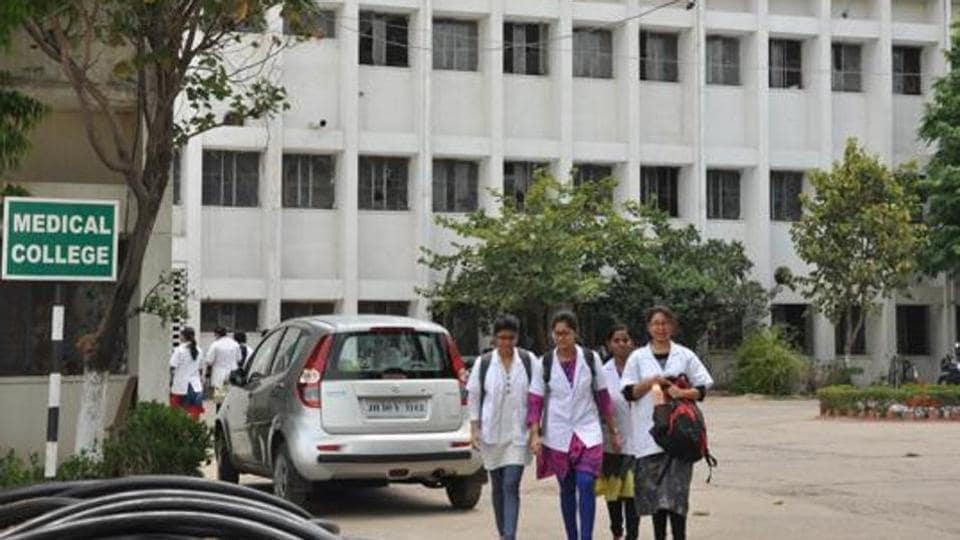
In the academic year 2019-20, 279 government medical colleges offered MBBS courses, against 260 private ones.
In the academic year 2014-15, there were 215 private medical colleges and 189 government medical colleges, showed the five year comparative data (2014-2019) from the Ministry of Health and Family Welfare.
There has been a 47% rise in government medical colleges during 2014-19, compared to a 33% increase in the total number of medical colleges in the past five years, from 404 in 2014-15 to 539 in 2019.
“The improvement is a result of the current government’s focus on strengthening the medical education system in the country, for which several concrete measures have been taken in the past few years such as converting certain district hospitals into medical colleges. Many states have also chipped in and opened medical colleges, which also helped,” said Dr VK Paul, chairman, board of governors, Medical Council of India.
It costs ₹300-400 crore to establish a medical college; the recurring cost annually is around ₹50 crore. “Another reason could be that it is mandatory to run a hospital attached to a medical college for training purposes, which can be very cost intensive. Many private players fizzle out after a point as they aren’t able to meet the recurring cost,” according to Paul.
The number of undergraduate medical seats has also seen a jump of 48%, from 54,348 in 2014-15 to 80,312 in the academic year 2019-20. Post graduate seats have also increased by 18,704 (a 65% jump) during the corresponding period.
“We are aiming to bring the MBBS seats up to around 1.2 lakh since according to estimates that figure should put us at a comfortable place in terms of numbers. Once that is achieved then the focus will be on other areas that are deficient,” said Arun Singhal, special secretary, health ministry.
The Medical Council of India has also amended regulations to increase the number of teachers in medical colleges. “Faculty numbers will also improve gradually as we have made changes, including allowing DNBs to teach. There is also a large pool of doctors in defence services (at any given time 250-300 doctors) as they retire early but are eligible to teach up to 70 years. All these measures will bring change that’s necessary over time,” Paul said.
According to experts, the challenge will be to find good faculty for new colleges.
“In the long run it will help but for the time being it’s going to be an uphill task to maintain quality of these new colleges as finding good teachers isn’t easy. There’s immense shortage of quality faculty, especially for medical colleges in remote areas. Ideally, the government should think rationally, and instead of opening new colleges consolidate what they have,” according to Dr MC Misra, former director, AIIMS, Delhi.