The odd-even road rationing scheme came into force in Delhi from 8 am on Monday as the national capital continued to be engulfed by a dense, toxic smog.
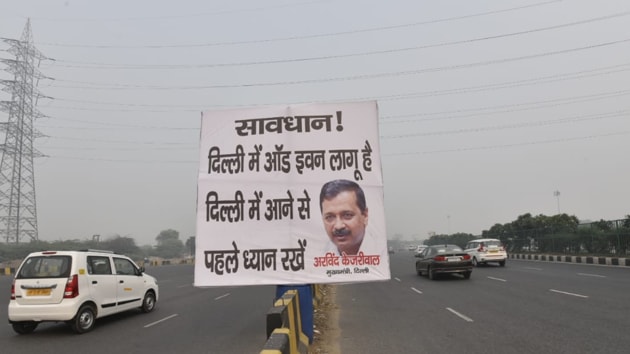
Only private cars having registration numbers ending with 0,2,4,6,8 are allowed to ply on Delhi roads on Monday between 8 am to 8 pm. Odd-numbered private cars will ply on odd dates.
The third edition of the odd-even scheme will be carried out from November 4 to 15 barring Sunday. The road rationing scheme was introduced in 2016 in an effort to control vehicular pollution in the capital. As per various studies, vehicular emissions contribute anywhere between 20 and 30% to Delhi’s air pollution.
Also Watch | Delhi pollution: CM seeks neighbour states’ help; issues appeal on Odd-Even
According to government estimates, 1.2 million of over 11 million registered vehicles in Delhi will be off road every day during the 12-day drive.
Delhi chief minister Arvind Kejriwal tweeted urging people to follow the odd-even scheme and make it successful.
Five things to know about odd-even scheme:
Who will be a part of odd-even?
All private petrol, diesel, compressed natural gas (CNG) and hybrid cars, including those entering the city from other states, are required to be a part of the drive. Only CNG-fuelled commercial vehicles such as auto-rickshaws, taxis, trucks, buses, tempos and gramin sewas will be allowed to ply during the 12-day arrangement. The scheme will also cover ministers and officers of Delhi government, including the chief minister and other cabinet members.
Exemptions and exceptions
{{/usCountry}}Exemptions and exceptions
{{/usCountry}}Two-wheelers, commercial vehicles, cars driven by women or carrying only women passengers, specially-abled people or school children will be exempted from the drive. Parents returning after dropping their children to school or going to pick them and vehicles carrying patients will be allowed on “trust” basis. On the directions of the Prime Minister’s Office, private electric vehicles will also be exempted from the drive.
Fines for violations
The fines have been doubled this time and violators will have to pay Rs 4,000. However, a person will be fined only once a day by the enforcing agencies, which include traffic police, SDMs, tehsildars, transport department and assistant traffic inspectors.
Challenge for public transport
The fleet of Delhi’s state-run buses has been increased to 5,658. Till 7pm on Sunday, the Delhi Transport Corporation (DTC) managed to get over 837 private CNG buses against its target of 2,000 and the transport department received another 100 cluster buses, in addition to the 129 buses added last week.
The Delhi Metro would be conducting 61 additional trips every day, increasing the total daily trips to 5,100 trips through 294 trains. While the government has asked 95,000 registered auto-rickshaws not to overcharge or deny rides, cab aggregators such as Ola and Uber said there would be no surge pricing during the 12-day drive.
Enforcement agencies
Government has engaged 5,000 civil defence volunteers who were given a day-long training on Sunday. These volunteers will be deployed with placards at major traffic intersections and Delhi’s borders to inform motorists about the scheme. There will also be at least 20 teams of photographers and videographers to keep documentary evidence of violators.
Stay updated with all top Cities including, Bengaluru, Delhi, Mumbai and more across India. Stay informed on the latest happenings in World News along with Delhi Election 2025 and Delhi Election Result 2025 Live, New Delhi Election Result Live, Kalkaji Election Result Live at Hindustan Times.
Stay updated with all top Cities including, Bengaluru, Delhi, Mumbai and more across India. Stay informed on the latest happenings in World News along with Delhi Election 2025 and Delhi Election Result 2025 Live, New Delhi Election Result Live, Kalkaji Election Result Live at Hindustan Times.