The Odisha assembly on Thursday passed the Odisha Universities (Amendment) Bill 2024, which seeks to give more autonomy to universities for recruitment of its faculty and help fill the large number of vacancies in the 15 state universities.
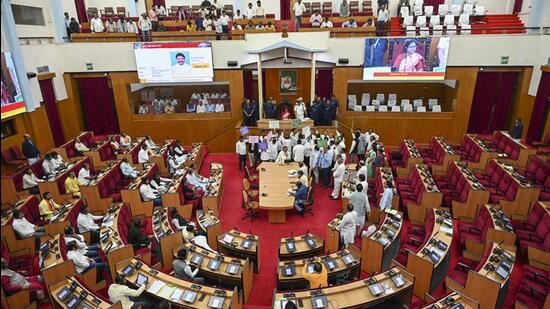
The bill was passed by the assembly at about 4:30am at the end of a marathon discussion of more than 12 hours. It replaced the Odisha Universities Amendment Act 2020 which was passed during the tenure of the previous Naveen Patnaik government but its implementation has been stayed by the Supreme Court since May 2022 following a petition by the University Grants Commission (UGC).
The 2020 law empowered the Odisha Public Service Commission to select the university faculty, stripping the Academic Senate of the universities of this power.
“The University Amendment Bill 2024 will help fill vacancies in the universities. This bill will restore autonomy in universities and help implement the New Education Policy,” said state higher education minister Suraj Suryabanshi.
The Biju Janata Dal opposed the bill, saying there was no point in enacting the new law since the high court had already upheld the 2020 law and the UGC’s appeal was before pending before the Supreme COurt.”I suggest the state government wait for the Supreme Court judgment and then bring an amendment Bill,” former education minister Arun Kumar Sahoo told the assembly.
{{/usCountry}}The Biju Janata Dal opposed the bill, saying there was no point in enacting the new law since the high court had already upheld the 2020 law and the UGC’s appeal was before pending before the Supreme COurt.”I suggest the state government wait for the Supreme Court judgment and then bring an amendment Bill,” former education minister Arun Kumar Sahoo told the assembly.
{{/usCountry}}Suryawanshi rejected the suggestion, saying the 2020 Act already needed amendments to ensure seamless administrative and academic functioning of universities.
The Odisha Universities (Amendment) Bill 2024 restores the role of the Academic Senate, from matters relating to academics, to financial management and research. The Bill authorises the university’s syndicate rather than the state government to nominate one member of the selection committee. The UGC can also nominate one member while the Chancellor can nominate the third member.
It also allows the outgoing vice chancellors to re-apply for the job provided they do not participate in selection of the syndicate’s nominee. It also raises the retirement age of vice chancellors from 67 to 70 years.
The new bill also excludes the Odisha Public Service Commission from the responsibility of recruiting faculty members for universities. Instead, a committee of academicians including the V-C or their nominee, a nominee of the Chancellor, three subject experts chosen by V-C, heads of the departments concerned and an academician from SC/ST/OBC/women/minority/PwD backgrounds would select the faculty members.
The 2020 legislator had abolished the senates and restructured syndicates (two decision-making bodies in universities) in public universities, arguing that the senate had become ‘ornamental’.
The new law is expected to help address the vacancies in state universities. In February this year, the state government said 65% of the 2003 faculty positions in state’s public universities were lying vacant since no appointments had been made for five years.
Utkal university, considered the state’s premiere higher education institution, has 136 vacant posts against the sanctioned 239. Ravenshaw University in Cuttack, which earned the coveted NAAC A++ grade last year, has only 110 faculty members against a strength of 267. Sambalpur and Berhampur universities also have 60% vacancies.
The higher education department has attempted to tide over the crisis by getting 963 guest teachers, primarily at the assistant professor level. The Odisha State Open University does not have any sanctioned positions and has been run by guest teachers since its inception in 2015.