
 E-Paper



On Labour Day, Americans enter the decisive electoral season of their lifetimes
Kamala Harris has the momentum, but don’t underestimate Donald Trump’s support. This remains a close election and either outcome is possible

 Prefer HTon Google


Labour Day, the first Monday of September, historically marks the moment when the American presidential election enters its final stretch and American voters are said to begin paying attention to what’s happening in politics.
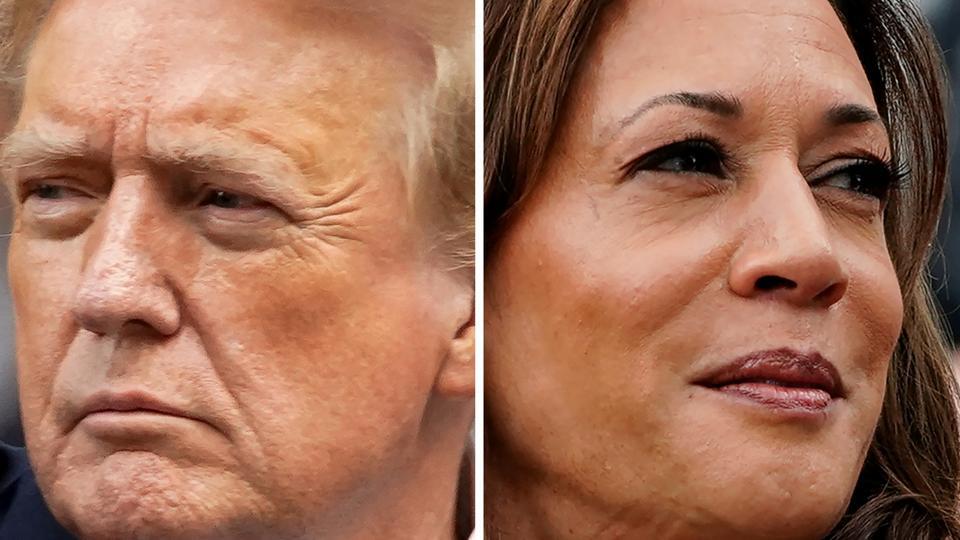
But given the unprecedented developments of the past 45 days — the Republican presidential nominee faced an assassination attempt; a debate debacle forced out the presumptive Democratic nominee, who also happened to be the incumbent president, from the race; the election is now between a former president and the sitting vice president; and this is the shortest election campaign cycle in recent American political history — voters are perhaps already closely attuned to what is happening around them.
But no one is any wiser about what will happen. Polls, donations, volunteer signups, and the general political mood suggest an extremely tight race. There is an almost equal chance that, on November 5, Americans may return to a Donald Trump presidency or usher in a Kamala Harris presidency.
In either cases it will be a first. It will either be the first time a former president who is now a convicted felon returns to the White House for a non-consecutive term with the promise to redo American governance and international role. Or it will be the first time a woman, and the first time a woman of Black and Indian heritage, becomes the occupant of 1600, Pennsylvania Avenue with the promise to take forward an inclusive American dream for all citizens and sustain American global leadership.
The contours of the 2024 election
The parties have their nominees, Donald Trump for Republicans and Kamala Harris for Democrats. And the contrast couldn’t be more stark.
Trump, a New York real estate developer and television showman, recast American politics when he strode down an elevator to announce his candidacy for the 2016 elections. He tapped into the working class angst at the economic dislocation caused by globalisation, the White conservative angst spurred by demographic changes in the country due to immigration, the conservative angst triggered by a change in racial dynamics and sexual mores, and the desire for an outsider from outside the establishment. Despite a presidential term that was marked by arbitrary decision making, rampant misgovernance during Covid-19, the refusal to accept the legitimacy of an election that he lost, and four criminal cases including a conviction, Trump today is more popular than he ever was in America.
Harris, the daughter of Jamaican and Indian immigrants, rose from being San Francisco district attorney to California attorney general to a senator and vice president; in each role, she was the first of her background to attain the position. While her own presidential campaign in 2019-2020 collapsed before even the primaries, and her term as vice president has drawn mixed reviews, Harris came into her own after Biden dropped out of the race and endorsed her. She is now tapping into the energy of Democratic base that seeks an unapologetic and fierce counter to Trumpism, the desire for inclusion among Black voters as well as immigrant communities who see her as their own, the anger among women furious at the reversal of abortion rights of which she is a champion, the determination of LGBTQ community to advance their rights, the fear among union workers that a return to Trump will mean anti-labour policies, and the yearning among moderates for politics of normalcy.
The vice presidential candidates have been picked. JD Vance, the junior senator from Ohio and the author of a book on the trauma of middle America, completes the Trump ticket. While his selection was seen as a masterstroke for his roots and possible role as the successor to Trump, Vance has faltered on the campaign trail as his past comments, especially on the role of women, have cast him as exactly the kind of patriarchal chauvinist that Republicans are at pains to suggest they don’t represent. Tim Walz, the governor of Minesota and a veteran who also worked as a school teacher and football coach, is Harris’s running mate and his record, warmth and humour represents a conscious Democratic attempt in a national election to reclaim the mantle of championing midwestern values.
The conventions are done, both in a festive environment but different contexts. In Milwaukee in July, at the party fest held before Joe Biden dropped out of the race, the mood was of jubilation as Republican delegates anticipated a Trump landslide. In Chicago in August, at the party fest held after Harris had already locked in the nomination, the mood was of jubilation as Democratic delegates felt they were back in the race, coupled with a degree of caution at the memory of the 2016 defeat to Trump.
The campaigns have narrowed down on a set of seven states where they are investing money, mobilising volunteers, registering voters, buying air-time, deploying candidates and their surrogates, organising get-out-the-vote campaigns, and hope to win, to cross the threshold of 270 votes in the electoral college. In a country that is divided between blue and red states, Democrats and Republicans have their areas of stronghold, these states will vote for their dominant parties in what is a rather predictable pattern, and the electoral college votes from these states will stack up in that candidate’s column. The election then boils down to the outcome in Pennsylvania, Michigan, Wisconsin, North Carolina, Georgia, Arizona and Nevada.
Securing the base, appealing to the centre
Both candidates have defined their core issues and what they believe the election is about. For Harris, it is freedom, as she frames Republicans as attacking personal and political freedoms and paints a vision of Trump as a convicted felon now out to overturn America’s constitutional and democratic order and way of life. For Trump, it is making America Great Again (MAGA), as he paints the Joe Biden-Harris administration as having eroded American economy and got America entangled in foreign wars and paints a vision of Harris as a dangerous San Francisco radical and communist.
And while both understand the need to hold on to their base, Trump and Harris also know this election will be fought and won in the middle, among swing voters. And that is why, in their own ways, both candidates are moving to the centre. For Trump, the biggest issue is abortion. He wants to take credit for nominating judges who reversed the national protection to abortion to retain the support of his Christian conservative base. But aware that this can cost him support of women, he has taken on the “pro life” movement by saying he won’t support a national ban on abortion and leave it to states, and even promised state support for fertility treatments.
For Harris, the biggest vulnerabilities are immigration and energy. On the first, she is leaning into her past record as a border state prosecutor to promise stronger borders and enforcement of rule of law while blaming Trump for torpedoing a bipartisan bill to tackle illegal immigration. On the second, Harris has already backtracked from her earlier promise of banning fracking, a key industry in the must-win state of Pennsylvania, and said that clean energy and oil and gas extraction can coexist.
But both campaigns also know that the election will eventually be won or lost on who voters think is better for their household budgets. Trump has harked back to his term, when, in the pre-pandemic years, growth rated were reasonable and prices were low. He has promised tax cuts to the rich, more drilling rights to energy companies, manufacturing jobs to the working class, and massive tariffs on imports to domestic industry. Harris has cited the Biden administration’s record on actually bringing back manufacturing, investing in infrastructure, sustaining high job creation, reducing health care costs for seniors — but has also acknowledged that there is a cost of living crisis that is hurting people while pointing out Trump’s tariffs will be inflationary. To address costs, Harris has promised more support to first time home workers, policy initiatives to keep prices down, and more child tax credit and family support.
The state of the race
It is in this backdrop that recent polls indicate that Harris has the momentum, but that Trump, who polls have consistently underestimated in past cycles, retains his support.
A Reuters-Ipsos poll conducted in the last week of August shows 45% of the registered voters support Harris, with 41% backing Trump. A Wall Street Journal poll in the same period found 48% registered voters backing Harris to 47% supporting Trump. A USA Today poll showed 48% like voters backing Harris, while 43% supported Trump. In swing states, Harris enjoys the lead in some, Trump in others, but all of it for both candidates is within the margin of error.
What the polls indicate is that the Democratic base has returned to the party with Harris’s nomination and she is doing well with the party’s traditional constituencies that propelled Joe Biden to a victory in 2020 — Blacks, Hispanics, young voters, women. It indicates that the Republican base remains largely with Trump and he is doing better than Harris among older White voters, among men, and has gained support among Hispanic and Black voters compared to where he was at this stage in the 2020 or 2016 cycle. It also indicates that both candidates will command a vote share of 46% or more nationally; the election will boil down to how merely tens of thousands of voters, in swing counties, in swing states, eventually vote. And on them rests the future of America, the future of the world, and the future of Kamala Harris and Donald Trump.


