
 E-Paper



Open to deciding the validity of all domicile-based private job quotas: SC
The court’s observation came while hearing an appeal filed by the Haryana government against the Punjab and Haryana high court’s stay order on 75% quota in private jobs for local residents.


The Supreme Court on Friday said it was willing to decide the validity of domicile-based reservations in private sectors in three states — Haryana, Andhra Pradesh and Jharkhand, where the state laws are under consideration in the respective high courts.
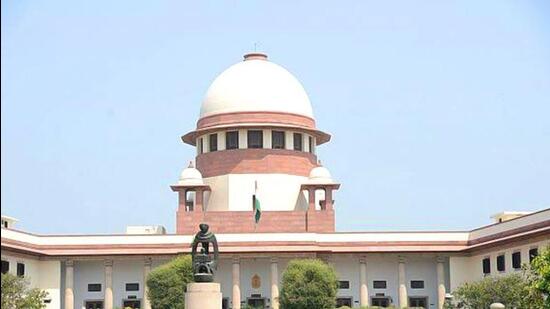
The court’s observation came while hearing an appeal filed by the Haryana government against the Punjab and Haryana high court’s stay order on 75% quota in private jobs for local residents. The law came into effect on January 15.
A bench of justices L Nageswara Rao and BR Gavai said, “Before we say anything on this petition, we are informed that similar legislation passed by Andhra Pradesh and Jharkhand is under challenge before the high court of Andhra Pradesh and Jharkhand. So essentially, there are three high courts considering the reservation for residents in the private sector.”
The Court asked solicitor general Tushar Mehta, appearing for the Haryana government, to take instructions on whether the state was open to this proposal. Before doing so, Court asked him to examine the state laws on the reservation and the corresponding proceedings pending with the respective high courts. The Court posted the matter for Monday.
The bench said, “If the matter is pending before other high courts, we can transfer it here and decide the question of law if all sides are willing.”
The law was passed by the Haryana Vidhan Sabha on March 2, 2021. It came into effect in the state on January 15, 2022.The Haryana legislation was challenged before the high court by the Faridabad Industries Association in December 2021.
Senior advocate Mukul Rohatgi, appearing for the association, agreed to take instructions in this regard while senior advocate Dushyant Dave, who appeared for another industry association in the state, endorsed the Court’s view.
Dave said, “The matter requires consideration whether such a decision by the state can have a constitutional backing or does it sow seeds of disintegration.”
Meanwhile, the solicitor general agreed to speak to the concerned states and get information about the laws in question and the status of proceedings before the high courts. He objected to how the February 3 order passed by the P&H high court stayed the law without hearing the state.
“There is rampant lack of (job) opportunities for local candidates in the state. The state can restrict employment based on domicile as this restriction is not based on place of birth. A person may not be born in the state but who resides in the state will be eligible for employment under this law,” Mehta said.
He further stated that only a handful of employers are upset by this law as about 900 establishments have registered with the state to implement the law. More than 38,000 youths have also enrolled for employment on posts in the private sector where monthly salary does not exceed ₹30,000.
The P&H high court, while staying the law had said, “We have considered these arguments but the core issue is whether any state can restrict employment (even in the private sector) on the basis of domicile. In these circumstances, we stay the implementation of the Act.”
The Haryana law has 10-year validity and does not include establishments of the Central government, state government or any organisation owned by the Centre or state.
This law is similar to the one passed by Andhra Pradesh that was mentioned by the Court. The Andhra Pradesh Employment of Local Candidates in Industries/Factories Act, 2019 provides 75 per cent employment in private jobs across factories, industrial units, joint ventures, private ventures, private projects persons based on domicile. Even the Jharkhand State Employment of Local Candidates Act 2021 is modelled on similar lines.
Presently only three states in the country provide reservations for locals in private jobs even as other states such as Maharashtra, Madhya Pradesh and Tamil Nadu have made promises that have not translated into laws.


