India on Friday said the US administration’s freeze on green card filings by Indian IT majors such as TCS and Infosys goes against shared ambitions of both sides, even as it denounced US Vice President JD Vance’s description of Indian and other foreign professionals as “indentured servants” as unwarranted and deeply offensive.
The response from the external affairs ministry came hours after the Trump administration froze some Green Card filings by eight IT majors and launched probes into nine elite universities, widening a visa crackdown aimed at curbing fraud and US job losses. The move specifically targeted Cognizant, Infosys, Tata Consultancy Services, Wipro, HCL Technologies, Microsoft, Adobe and Capgemini.
The external affairs ministry noted in a statement that talent mobility adds value to the Indian and US economies, creating opportunities for Indians and equally helping US firms with cutting-edge talent, innovation, research, productivity, competitiveness, and job creation, besides creating shareholder wealth in the US.
Deep Dive
How does the US PERM suspension affect Indian employees at the targeted tech companies?
Which companies are affected by the US green-card filing suspension?
Why did India object to JD Vance calling foreign professionals “indentured servants”?
“This is therefore an area of tremendous mutual benefit for the two countries, and our expectation is that all stakeholders in this process can appreciate this fact,” the ministry said. “The steps announced by the US do not advance the shared ambitions of both countries.”
{{/usCountry}}“This is therefore an area of tremendous mutual benefit for the two countries, and our expectation is that all stakeholders in this process can appreciate this fact,” the ministry said. “The steps announced by the US do not advance the shared ambitions of both countries.”
{{/usCountry}}The Trump administration's action targeted the Permanent Labor Certification (PERM), a key employer-sponsorship mechanism that has allowed skilled foreign workers to gain permanent residency through their employment since 2005. Under PERM, which most employment-based green cards require, employers must show that a foreign hire will not hurt US workers' jobs.
The statement noted that the PERM programme is distinct from the H-1B visa programme, and said the suspension of PERM applications “does not, by itself, affect the validity of existing H-1B visas or the status of H-1B visa holders and their dependents”. However, the new move can have an impact on the permanent-residency or green card process of “eligible employees of the affected companies”, the statement said.
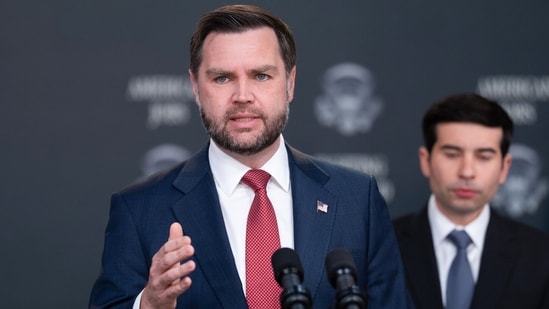
The Indian side also took exception to comments made by Vance at an event where the new curbs were announced. Vance's remarks suggested that foreign talent was no more than “indentured servants” whose hiring was resulting in the laying off of American workers.
“We believe that such descriptions are unwarranted and ignore the fact that Indian professionals in the United States are highly educated and skilled contributors to its economy and innovation ecosystem,” the statement said.
The external affairs ministry pointed out that the history of the US itself has been “shaped by generations of immigrants whose labour, enterprise and innovation have contributed to its growth and prosperity”. The statement added, “Resorting to terminology that carries painful historical and colonial legacy connotations is deeply offensive.”
The developments marked yet another low point in India-US relations during the second term of President Donald Trump. The US administration's decision last year to hit Indian exports with 50% tariffs sent ties to their lowest point in more than two decades. Though the two sides reached an understanding earlier this year on reducing the tariffs, they have struggled to finalise a bilateral trade deal, and recent remarks by Indian and US leaders have suggested an agreement is not imminent.
The twin actions by the Trump administration marked the broadest strike yet against skilled worker immigration programmes, potentially blocking a common path to permanent residency for thousands of foreign tech workers, including Indians.
While announcing the move against the eight tech firms, US labour secretary Keith Sonderling said: “We will not accept any new or process any pending permanent labour certification applications involving these companies.”
Vance added, “I’m sure that everyone here understands the game that is being played. Bring in indentured servants from outside the country, you lay off American workers and if you’re a corporation, you make a ton of money by undercutting the wages of American workers, replacing them with people who probably should not be in the United States of America to begin with.”
During his second term, Trump has widened efforts to reduce the number of foreign-born people in the US and to curtail their pathway to residence and citizenship.
The Trump administration has sought to disincentivise US employers from using the H-1B visa programme. In September 2025, Trump announced a $100,000 fee on new H-1B visa petitions, though it was subsequently blocked by a US court in June 2026. In August, the Trump administration proposed a fresh $103,265 H-1B visa fee that will apply to all petitions subject to the annual cap of 85,000.
Microsoft is the largest filer of PERM applications, according to Permtrack.app, which compiles US labour department disclosure data.
Indian IT firms such as Infosys, TCS, Wipro, HCL and Cognizant have long been among the largest users of H-1B visas. Amazon.com was the largest employer of approved H-1B beneficiaries in fiscal 2026, followed by TCS, Infosys, Apple and Microsoft, according to USCIS data.