Uttar Pradesh chief minister Yogi Adityanath has expressed confidence that the ruling Bharatiya Janata Party (BJP) will win the next year's assembly polls in the state easily. In fact, the chief minister said that the party will surpass its 2017 seat tally of 312 and win between 325 and 350 seats.
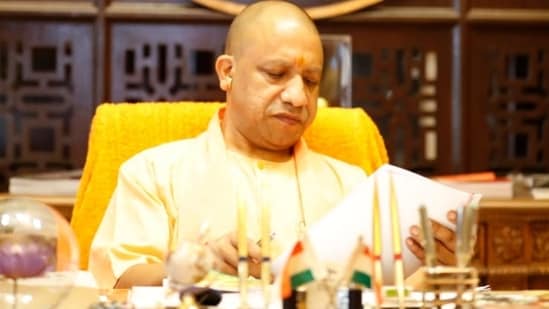
In an interview with Hindustan Times, Adityanath, 49, rattled off his government's record in terms of governance, economic development, and law-and-order to buttress his claim.
Adityanath is confident that he will overcome any anti-incumbency by focusing on his government’s record of governance and getting the caste equation right.
"I am totally confident about coming back. I understand the political dynamics of UP very well, as I have been in active state politics for the past 23 years. I am confident about the political understanding and maturity of UP electorate," he said.
On September 26, he expanded his cabinet, making room for seven more ministers in a move that he then described as achieving “social balance” and giving “representation to all sections of society”. Adityanath is also clear that the ongoing farmers agitation led by Bharatiya Kisan Union (BKU) leader Rakesh Tikait will have no electoral impact in western UP, an area that has been the BJP’s bastion in the past.
“It is quite clear that our rivals are funding the farmers’ agitation, which has an impact in only states where middlemen, or araathiyas, operate. In UP, the farmer is directly in touch with the government for procurement and compensation. Since the opposition has no other issue to flag, they are trying to fan this so-called farmer agitation.”
{{/usCountry}}“It is quite clear that our rivals are funding the farmers’ agitation, which has an impact in only states where middlemen, or araathiyas, operate. In UP, the farmer is directly in touch with the government for procurement and compensation. Since the opposition has no other issue to flag, they are trying to fan this so-called farmer agitation.”
{{/usCountry}}Still, analysts say that the BJP could suffer some damage in this area which is dominated by the Jat community, a dominant agrarian grouping that has been protesting against the three farm reform laws passed by the Union government last year.
The CM, who is the head of the Gorakhnath temple at Gorakhpur, also spoke of strides made in infrastructure (especially expressways and airports) and law-and-order.
Answering a question on the ability of a head priest to run a state as large as Uttar Pradesh, Adityanath said: “How can you cage or limit a bhagwa (saffron) wearing yogi to only religion? How I worship is my right. But for my country, for my society, what I have to do and how I have to do, is my prime responsibility. I have been working on this before I became the CM; only now my area of work has got enlarged. But I have never made an attempt to project myself as I believe in teamwork. I am working in the direction of rapidly developing my state and my country.”
While the BJP’s election campaign in the state is up and running, the opposition, which is fragmented, has been slow to get theirs going.
The opposition has a crisis of credibility, said Adityanath, but given the complexity of the state and the ever-changing caste equations, he is taking no chances - something evident in the recent cabinet expansion.