
 E-Paper



Over 30 injured in annual ‘Hingot’ Diwali fight in Indore. What is the tradition?
Around 35 participants were injured during the annual Hingot tradition in Indore. Out of this, two of them sustained serious injuries.

 Prefer HTon Google


Over 30 people were injured in the annual Hingot fight tradition in Madhya Pradesh's Indore on Tuesday evening. The Diwali tradition involves throwing firecrackers made of Hingot fruit at the opponent is celebrated every year.
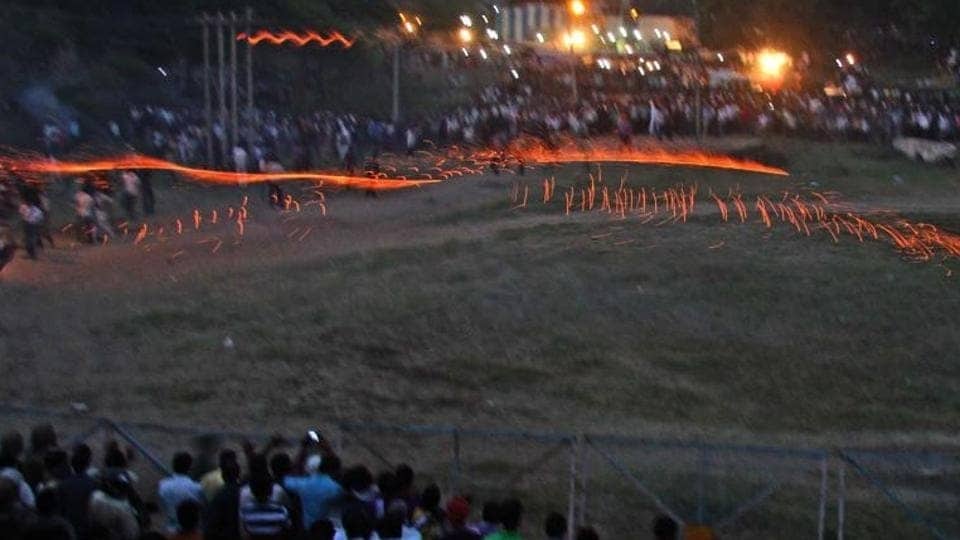
The tradition takes place at the Gautampura area of Madhya Pradesh’s Indore, where ‘warriors’ from Gautampura and the neighbouring village of Runji threw firecrackers made from Hingot, a fruit, at each other while the crowd cheered for their teams, news agency PTI reported.
Block Medical Officer Dr Vandana Kesari told PTI that around 35 participants were injured, out of whom two sustained serious injuries and were sent to a hospital in Depalpur. The doctor also informed that one of them suffered a broken arm while the others suffered a nose injury.
Personnel deployed at the venue
Arrangements were made ahead of the event with high nets and barricades erected around the ‘battlefield’ to protect the spectators from the flying firecrackers, Sub Divisional Police Officer Sanghpriya Samrat. Further, around 200 police personnel and 100 administrative personnel were also deployed at the venue along with fire engines and ambulances.
Also read: Watch: Donald Trump lights diya in White House, extends Diwali wishes to Indians
What is Hingot? Inside Diwali tradition
Hingot is a wild fruit which is the size of a gooseberry. As per tradition, the fruit is hollowed out, dried and filled with gunpowder to turn into a rocket-like firecracker, which is then thrown at the opponent. This annual fight takes place between the `Turra' group of warriors from Gautampura and the `Kalangi' group from Runji.
Also read: Diwali Ank: Celebration of words and lights gets another festive cover
The two groups stand opposite each other and launch burning Hingots. Despite people getting injured every year, including instances of death due to burn injuries, the administration has not banned the fight. Last year, seven people were wounded and 23 others received minor injuries during the Hingot fight.
According to the locals, the tradition goes back 200 years to the time when the Holkars ruled Indore, and is celebrated on the second day of Diwali. It is also believed that the local guerrilla warriors used to fire the Hingots at invading Mughal armies.


