At least 934 people are trapped or out of contact at 11 hydropower project sites and tunnels in Nepal’s Rasuwa and Nuwakot districts, two of the areas worst affected by Wednesday’s flash floods, according to data seen by HT.
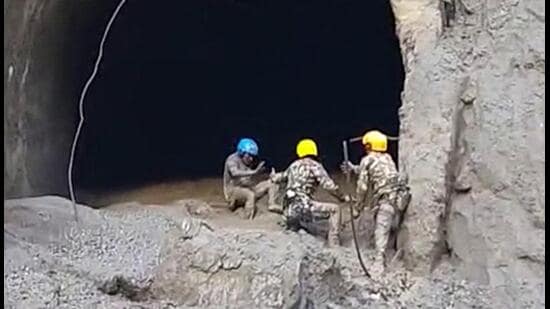
The trapped or missing workers include citizens of Nepal, India, South Korea and China, a Nepal energy ministry official said, adding that the number could exceed 1,000 as several of the affected projects are under construction and may have unregistered workers.
According to information available to rescuers, at least five of the 11 sites are under construction. This has led officials to suspect the number could be well over 1,000 because under-construction projects might also have unregistered workers. India sent its third flight with assistance and an 11-member team of medical and tunnel experts on Friday night.
Deep Dive
What is the current status of the rescue operations for those trapped in Nepal's hydropower sites after the floods?
Why is the number of missing and trapped workers at hydropower sites in Nepal potentially over 1,000?
How is the Nepalese government coordinating international rescue efforts for the flood victims?
Also read: 32 Canadians unaccounted for after Nepal floods: Foreign affairs minister Anita Anand
The official shared the latest available data, which showed that at the Upper Trishuli 1 (243 MW) Hydropower project, only 350 of the 576 people reported missing had been rescued until Saturday morning. There were 93 people uncontacted at the Rasuwagadi Hydropower project (111 MW), while 42 were reported missing at the Langtang Khola (20 MW) project. The Upper Trishuli 3B Hydropower (37 MW) project has reported at least 158 people missing, while the Upper Trishuli 3A project reported 42 missing.
{{/usCountry}}The official shared the latest available data, which showed that at the Upper Trishuli 1 (243 MW) Hydropower project, only 350 of the 576 people reported missing had been rescued until Saturday morning. There were 93 people uncontacted at the Rasuwagadi Hydropower project (111 MW), while 42 were reported missing at the Langtang Khola (20 MW) project. The Upper Trishuli 3B Hydropower (37 MW) project has reported at least 158 people missing, while the Upper Trishuli 3A project reported 42 missing.
{{/usCountry}}“We have information that at the Rasuwagadi Hydropower project (111MW), where 93 people were missing, 3 workers managed to escape. There are at least 2 Chinese nationals among the Indian and Nepalese workers at the project. It is an operational project, so these people were part of maintenance. The army has brought in experts and its personnel to conduct the rescue operation. They are digging through the debris to rescue the trapped people. Some firms are also managed by Chinese and South Korean personnel, so they are among those reported missing,” an official, who asked not to be named, said.
Nepal’s army spokesperson, Brigadier General Raja Ram Basnet, said the army has at least 15 choppers with at least 84 trained personnel, along with hundreds of rescuers available for the operation. “We won’t comment on the number of people trapped. The operation is ongoing at several hydropower project sites.”
Also Read: India rushes 62-tonne aid to Nepal as it walks the talk on ‘first responder’ role
According to the ministry data, the hydropower projects are run by different companies such as Nepal Water and Energy Development Company (NWEDC), Rasuwagadi Hydropower Company, Perfect Energy Development Private Limited, Trishuli Hydropower Company Limited and Nepal Electricity Authority.
The energy ministry official said that the Nepal government should take help from experts to rescue the workers in time. “We have information that at the Upper Trishul 3A project where 42 people were missing, the mouth of the tunnel has been blocked. It was an operational tunnel. We estimate that the number of people trapped is more than 1000 because there will be people not registered with the companies, especially at under-construction sites,” he added.
The Nepalese government has yet to ask for assistance from India, which is ready to send its NDRF personnel, who are experts in tunnel rescue. Congress President Mallikarjun Kharge has written to Union Home Minister Amit Shah to consider sending NDRF personnel. “The NDRF’s expertise and experience in responding to natural disasters can provide valuable support in efforts to save lives and bring urgent relief to those facing this immense tragedy,” he said.
To be sure, the Nepal government must first request assistance from the Indian government. NDRF officials said the Home Ministry has asked them to be on standby and prepare to fly anytime. The Indian government sent the NDRF to Nepal during the 2015 earthquake and has also sent rescuers to Turkey and Myanmar in recent years.
According to the latest data, the flash flood has killed at least 626 people, while 2,426 are reported missing. The missing include people of different nationalities, primarily from India, the US, UK, Australia, Ukraine, Malaysia, Canada and Singapore. The missing include at least 183 Indians, followed by 67 from the US and 61 from Ukraine.