When the French President’s diplomatic advisor Emmanuel Bonne landed in India for a strategic dialogue on January 7, one of the key asks from the Indian Air Force was that the Rafale fighter’s technology, especially its missile capability, be kept away from Pakistan.
India conveyed to Bonne that even though Dassault Aviation, manufacturer of Rafale fighter, is selling the omni-role platform Rafale to Qatar, Paris should ensure that no Pakistani-origin person is given access to the plane by Doha.
Paris hasn’t just assured India that Rafale technology, specially that related to the Meteor air-to-air missile will be kept out of reach of Pakistan, but also that it will no longer upgrade the Mirage 3/5 fighters or Augusta 90 B submarines in Islamabad’s military inventory. India sought these iron clad guarantees after it burnt its fingers during Pakistani Air Force retaliation on February 27, 2019, a day after the Balakot strike.
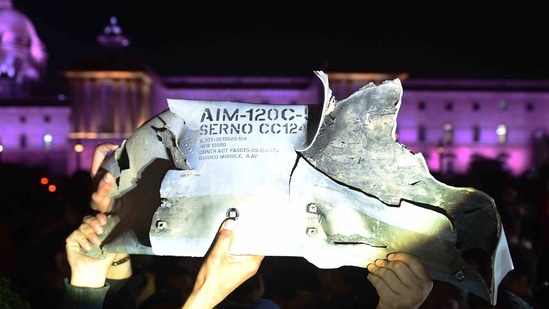
On that day, Pakistan reneged on its promise to the Americans that it would only use F-16 aircraft in the war against terror and not against India. It was an 75-km range air-to-air AIM-120-C-5 missile, fired from a Pakistani F-16, that brought down Wing Commander Abhinandan’s Mig-21 Bison interceptor on the Line of Control in the Rajouri-Mendhar sector.
According to former Air Force Chiefs and Air Marshals, had the Indian Air Force not practised with the premise that Pakistan would use F-16 and beyond visual range missiles against India, more Indian fighters would have been knocked down on that day. “We were very clear that Pakistan would use the F-16 against us and hence we practised to keep IAF fighters beyond what is called dynamic attack zone 1 and 2 or D-Max 1 and 2 of the AIM-120C air to air missile,” said a top IAF official who asked not to be named.
{{/usCountry}}According to former Air Force Chiefs and Air Marshals, had the Indian Air Force not practised with the premise that Pakistan would use F-16 and beyond visual range missiles against India, more Indian fighters would have been knocked down on that day. “We were very clear that Pakistan would use the F-16 against us and hence we practised to keep IAF fighters beyond what is called dynamic attack zone 1 and 2 or D-Max 1 and 2 of the AIM-120C air to air missile,” said a top IAF official who asked not to be named.
{{/usCountry}}D-Max-1 refers to a range where a missile can “secure a kill” provided the opponent doesn’t engage in manoeuvring, and D-Max-2, a no escape zone from the incoming missile even after “all manoeuvring”, added this officer.
The Pentagon had previously assured India that Islamabad would not use the F-16 or the missiles against India. It conveyed the message to India after New Delhi requested Washington to put a software lock on the missile so that it cannot be used against India.
The Indian concern over the long range missile was raised by Air Marshal AK Gogoi as Director General (Air Operations) with the Chairman of the US Joint Chiefs of Staff Mike Mullen in Washington in September 2010. It was raised again during the visit of Defence Minister Manohar Parrikar in August 2016 with US Defence Secretary Ashton Carter in no uncertain terms. But all this came to no avail two years ago. Not only did Pakistan use the missile (parts of which were recovered) against India on February 27, 2019, but it also glossed over the F-16 that Wing Commander Abhinandan shot down using a Russian R 73 missile.
Analysts say that the F-16 incident may have well forced the Indian Air Force to acquire the Meteor missile for Rafale. The no escape zone of this missile is way beyond the missiles carried by US or Chinese aircraft flown by the Pakistani air force.