
 E-Paper



Pakistan says India choked Chenab water flow jeopardising early Kharif crop season
Pakistan's Indus River System Authority (IRSA) advisory committee on Monday expressed deep concern over a sudden decrease in River Chenab inflows.

 Prefer HTon Google


Amid fears of military escalation over the Pahalgam terror attack, a Pakistani official said on Monday that India has stopped the flow of water through the Chenab River.
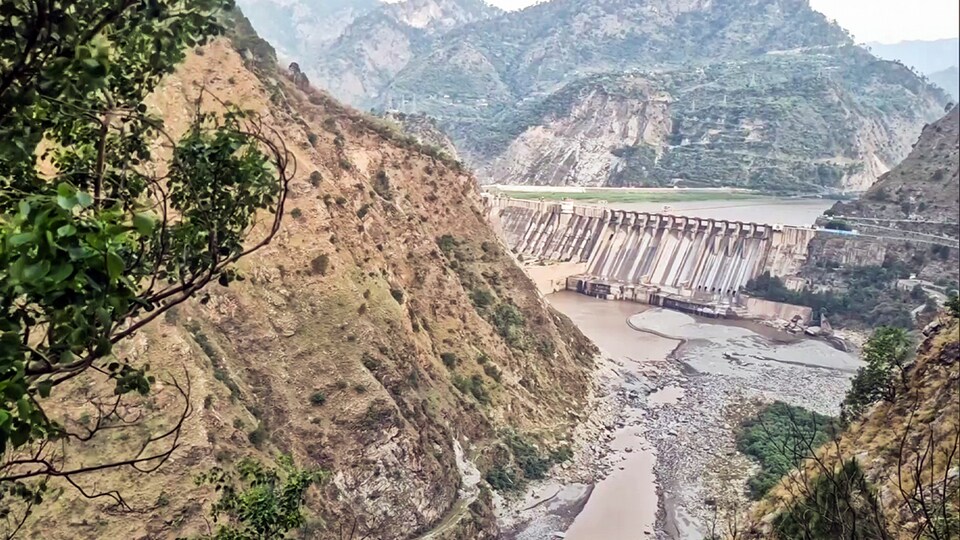
Following the terror attack in which 26 people – mostly tourists – were gunned down by terrorists near the picturesque Jammu and Kashmir town, India suspended the Indus Waters Treaty that governs the flow of water into Pakistan. Reacting to the move, Islamabad said any stoppage of water would be deemed an act of war.
Muhammad Khalid Idrees Rana, spokesman for Pakistan’s Indus River System Authority, told Bloomberg that India has reduced by almost 90% the usual volume it passes to Pakistan. He said Islamabad will be forced to slash water supplies to farms by a fifth if the flow remains curtailed.
“It's unprecedented,” Rana said, adding that India typically holds some water daily for electricity generation but releases it every few hours.
Also read: Pahalgam terror attack: What envoys said after UNSC meeting called by Pakistan
Salal, Baglihar dams gates closed
According to ANI, Indian authorities have closed all gates of the Baglihar Hydroelectric Power Project Dam on the Chenab River. All gates of Salal Dam on the river are also closed.
However, to ensure that there is not a significant effect on the marine wildlife, bits of water are being released from only one gate of the Salal and Balighar dams.
The Indus river system consists of Jhelum, Chenab, Ravi, Beas, Sutlej, whose usage rights were divided between India and Pakistan through the 1960 treaty. Pakistan depends on the river system for irrigation.
Also read: Why MHA ordered nationwide mock drills on May 7. Key measures states must follow
Pakistan's Indus River System Authority (IRSA) advisory panel on Monday expressed deep concern over a sudden decrease in River Chenab inflows at Marala. It said India's move will result in water shortages for early Kharif season.
"Indus River System Authority Advisory Committee (IAC) reviewed the water situation for the remaining months of "Early Kharif" (May - Jun 10) Late Kharif (Jun 11 - Sep) season. It was noted with concern unanimously that sudden decrease in river Chenab inflows at Marala due to short supply by India would result in more shortages in the Early Kharif Season," the Indus River System Authority (IRSA) said in a statement.
Also read: India cuts off water flow to Pakistan from dam on river Chenab
"IAC declared an overall shortage of 21 per cent for the remaining Early Kharif Season in case supplies in River Chenab remain normal. However, the situation would be monitored daily, and if the decrease continues in "River Chenab", the shortages would be revisited accordingly. The Late Kharif Shortages are expected to be 7 per cent," it added.
With inputs from ANI, Bloomberg


