E-Paper



Parliamentary panel slams Allahabad Uni over SC, ST exclusion, vacant reserved posts
A report was submitted by a 30-member panel led by BJP lawmaker Faggan Singh Kulaste in the Lok Sabha and laid on the table of the Rajya Sabha on Wednesday

 Prefer HTon Google


New Delhi: The Parliamentary Committee on the Welfare of Scheduled Castes (SCs) and Scheduled Tribes (STs) has pulled up the University of Allahabad for what it termed an “unfair” and “lackadaisical” approach towards reserved category candidates, expressing dismay over unfilled SC and ST vacancies, the rejection of 14 candidates as not found suitable (NFS) in the last three years, and the absence of any SC or ST representation in the university’s Executive Council.
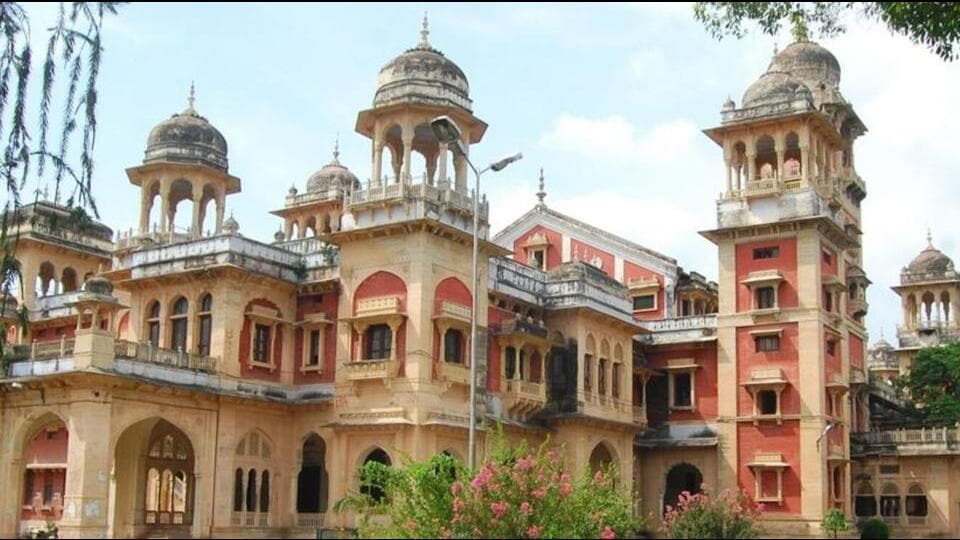
The committee called for structural reforms to address persistent representation gaps in faculty recruitment, governance and non-teaching posts.
According to the report submitted by a 30-member panel led by Bharatiya Janata Party (BJP) lawmaker Faggan Singh Kulaste in the Lok Sabha and laid on the table of the Rajya Sabha on Wednesday, SC and ST officials were absent from Allahabad University’s Executive Council (EC), the principal executive body that runs the university and implements its policies, in four of the last ten years.
The report described this as “systemic inequity” and “structural exclusion” of SC and ST communities from decision-making, shaping recruitment, promotions and grievance redressal, thereby undermining universities’ credibility as inclusive institutions.
The panel, in its report examining the role of autonomous bodies and higher education institutions in the socio-economic development of SCs and STs and the implementation of the reservation policy—with specific reference to the University of Allahabad—“strongly” recommended that the Union education ministry and the University Grants Commission (UGC) frame a policy to ensure mandatory SC and ST representation in the Executive Council of all central universities, calling it a “long-pending legitimate expectation” that must be met through “earnest efforts”.
The committee said the absence of SC and ST members in the EC allows reserved posts to remain vacant or be diverted, with unchecked NFS decisions undermining UGC norms.
It expressed concern that 14 SC and ST candidates were declared NFS in the last three years — including nine out of 28 faculty posts in one cycle — calling it a “lax attitude” to faculty recruitment towards SC and ST candidates that “undermines reservation policy and keeps reserved posts vacant”.
The committee said SC and ST candidates are often declared NFS despite meeting eligibility norms, rejecting the university and ministry’s claim of a “lack of sufficient suitable candidates” and flagging biased assessments by selection committees that deprive them of faculty positions.
To address this, the panel recommended mandatory reporting and review of all NFS decisions, requiring universities to place on record clear justifications for rejecting candidates. It also suggested reconstituting selection committees with greater representation of SC and ST experts, including at the chairperson level, and using permissible relaxations more proactively to fill reserved posts.
On faculty strength, the committee observed that out of 428 faculty appointments made over the last decade at Allahabad University, only 53 SC and 24 ST candidates — 12.3% and 5.6% respectively — were selected.
Stressing the urgency of corrective action, the panel directed that all existing vacant faculty posts be filled within three months and that no SC or ST faculty position should remain vacant for more than six months under any circumstances.
In non-teaching posts, the committee found shortfalls of two in Group ‘A’, eight in Group ‘B’ and 38 in Group ‘C’ posts, and criticised University of Allahabad for its “lackadaisical approach”. It called on the ministry to prepare a time-bound action plan and report progress to Parliament, warning that continued delays would defeat the very purpose of reservation in higher education.
The University of Allahabad is the fourth oldest and among the three most popular universities in India in terms of students’ choice for undergraduate admissions. It has 11 constituent colleges in Prayagraj, Uttar Pradesh.