
 E-Paper



Parties that opposed women’s bill 13 yrs ago back it now but with caveats
However, the Rashtriya Janata Dal (RJD), which had also opposed the bill 13 years ago, said it does not support it in its current form as it does not ensure “social justice”.


New Delhi:
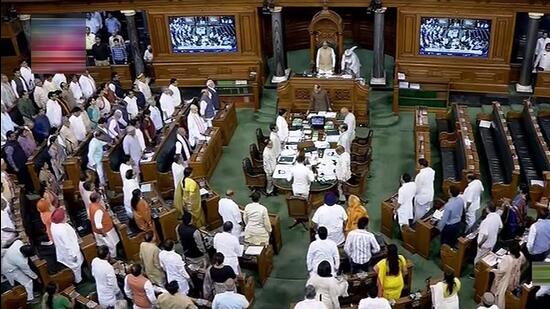
Three key heartland parties -- the Samajwadi Party (SP), Bahujan Samaj Party (BSP), and Janata Dal (United) or JD(U) -- that were instrumental in blocking an earlier iteration of the women’s reservation bill in 2010 appeared to back a fresh move to accord women quotas in national and state legislatures on Tuesday, albeit with caveats.
However, the Rashtriya Janata Dal (RJD), which had also opposed the bill 13 years ago, said it does not support it in its current form as it does not ensure “social justice”.
Law minister Arjun Singh Meghwal on Tuesday introduced the bill providing for 33% reservation for women in the Lok Sabha, state assemblies and the Delhi legislative assembly, with sub-quotas for women from scheduled castes and tribes.
The SP, which opposed the bill when it was introduced in 2010, supported it this time and sought reservation for backward groups and minorities.
“Women’s reservation should balance gender justice with social justice, incorporating a definite percentage of reservation for backward, Dalit, minority and tribal women,” party chief Akhilesh Yadav posted on X.
His wife and Lok Sabha member, Dimple Yadav, said the bill should have reservations for those at the bottom of the ladder. “Other Backward Classes (OBC) women should also be granted reservations within it,” she said.
In an interview with news agency ANI, SP leader Ram Gopal Yadav while raising the demand for reservation for backward groups in the quota said, “Even though they (Centre) won’t listen (to our demands)... we will support it (the bill)... we will continue to talk about reservation for backward people...,”
BSP supremo and four-time Uttar Pradesh chief minister, Mayawati, supported the bill and sought sub-quotas for OBCs and Dalits in the bill. However, she would support the bill even if her demands were not met, she added.
“Ideally, I would prefer the women’s reservation to be 50% instead of 33%, aligning with their numerical strength. Additionally, I would like a separate quota for Dalits and OBC women, over and above the existing reservation for these communities in Parliament and state assemblies,” she said.
She emphasised that a quota within a quota in the current bill was the need of the hour. “Nevertheless, even if our demands regarding the Women’s Reservation Bill are not met, we will still support the bill presented in Parliament and will ensure its passage because women across all communities lag behind compared to men,” she added.
Bihar chief minister Nitish Kumar of the JD(U) welcomed the bill and demanded that a national caste census be conducted alongside the delimitation process so that women from OBC and extremely backward castes also get the benefit of reservation.
“For this (implementing women reservation), the census work should be completed soon. The census should have been done in the year 2021 itself but it has not been done yet. Along with the census, caste census should also be conducted, only then women will get its true benefits. If caste census had been conducted, the system of reservation for women belonging to backward and extremely backward classes could have been implemented immediately,” Kumar posted on X. He asked the government to include backward and extremely backward women within scope of the women reservation bill.
RJD spokesperson Shakti Yadav said the party does not support the bill in its current form as it does little to help those from marginalised sections. “The bill is not going to bring social justice in its present form. This will only help privileged women,” he said.
Former Bihar CM and RJD leader, Rabri Devi, posted on X: “In the 33% reservation given in the Women’s Reservation Bill, seats have not been reserved for SC, ST, OBC women. ”
RJD’s Rajya Sabha member Manoj Jha said the bill should have quota within the quota for women from all deprived communities. “There is a lack of clarity on the bill still. Our concern in 2010 was that women from all sections should be empowered, and our concern today is the same,” he said.
In 2010, when the bill was introduced in the Rajya Sabha, the RJD, SP, JD(U) and BSP had opposed the it, saying that it will not provide representation to women from deprived communities.
(With inputs from Political Bureau and bureaus in Lucknow and Patna)


