...
...
Next Story

Photos, DNA matching: Indian embassy explains process to bring Nepal flood victims home

For foreign nationals, the process involves nine steps before the remains can be handed over to their respective countries.

Published on: Sep 1, 2026, 15:58:59 IST
Advertisement

The Indian Embassy in Kathmandu has issued details of the process for identifying and repatriating the mortal remains of victims of the recent flash floods in Nepal, which have claimed more than 1,000 lives.
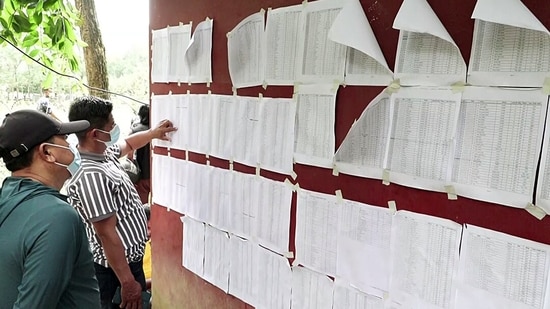
People check lists of rescued and missing persons to find information about their relatives amid ongoing rescue operations following the floods, in Bidur on Monday. (ANI Video Grab) (ANI Video Grab)

In a statement issued on September 1, the embassy said the details were provided by Nepali authorities as a follow-up to its August 29 press release on the identification of mortal remains of victims. For foreign nationals, the process involves nine steps before the remains can be handed over to their respective countries.

Also Read: Blasting hillsides, pumping oxygen: Inside the race to reach 600 trapped in Nepal's flooded tunnels

Deep Dive

What steps are involved in the process of repatriating the mortal remains of flood victims in Nepal?

The repatriation process involves nine steps, including documentation, recording photographs, post-mortem examination, verification of cause of death, establishment of identification, and DNA collection, among others, as specified by the Government of Nepal.

How does DNA matching help in identifying the mortal remains of flood victims in Nepal?

DNA matching is essential for identifying remains that cannot be recognized visually, especially when relatives can provide DNA samples. This process creates DNA profiles from both the remains and the relatives for accurate identification.

What should families do if they are unable to travel to Nepal for DNA testing of their missing relatives?

Families can opt to have their DNA tested in their home country and then send the results via email to Nepal Police. They can also provide blood samples through local hospitals to facilitate the identification process.
Powered ByAsk HT

What are the steps

As per the Government of Nepal, the following steps will be required for handing over the mortal remains of foreign nationals:

1.Documentation of mortal remains

3. Post-mortem examination

4. Verification of cause of death

5. Formal establishment of identification

6. Collection of fingerprints, DNA or forensic samples

7. Verification of the deceased's passport or ID

8. Completion of embassy/consular coordination

9. Completion of handover/release memo and receipt

The first four steps, documentation, recording photographs and details, post-mortem examination, and verification of the cause of death, will be carried out by Nepali authorities.

Check official advisory here:

What if families can identify the remains?

If relatives are able to identify the mortal remains through photographs and descriptions published on the Nepal Police website, the Embassy of India in Kathmandu will help coordinate with local authorities for the handover and repatriation process.

The Nepal government has temporarily interred a large number of mortal remains to prevent health risks. Identification of these remains will require DNA matching with first-degree relatives.

Also Read: Nepal rescue operation: Flash flood toll surpasses 950 as rescuers struggle through mud and debris

What about unidentified remains

Where identification is not possible, or where the mortal remains have been temporarily interred, the Nepal government will facilitate DNA matching.

Nepali authorities are collecting DNA samples from the mortal remains to create their DNA profiles. First-degree relatives of those reported missing can either send their DNA profiles by email to Nepal Police or provide blood samples along with preliminary information required by the authorities.

For assistance from the Indian Embassy, relatives can also copy their DNA profiles to the embassy's flood-support email address.

Further details on DNA profiling are available through the Nepal Police website and its helpline.

The Embassy of India has also provided three helpline numbers, with WhatsApp facility, for further assistance and enquiries: +977 985 131 6807, +977 970 910 7500 and +977 981 032 6117.

 
ABOUT THE AUTHOR
HT News Desk

Follow the latest breaking news, major developments and agenda-setting stories from India and around the world with the newsdesk at Hindustan Times. Operating round the clock, the desk brings together experienced editors, reporters and correspondents to deliver fast, accurate and contextual reporting across subjects that influence public policy, governance, business, society and international affairs. The HT News Desk covers politics, elections, government policies, the economy, business and markets, science and technology, the environment, law and order, infrastructure, education, climate issues and geopolitics, while closely tracking developments across states, institutions and global capitals. The team also leads coverage of major breaking news events, policy announcements, court proceedings, natural disasters, public emergencies and significant international developments. Reports published by the newsdesk are based on information gathered from reporters on the ground, official statements, government agencies, court records, regulatory filings, recognised institutions and other authoritative sources. Stories undergo editorial scrutiny and verification processes to ensure accuracy, fairness and relevance, and are updated as events evolve and additional information becomes available. Whether covering a key political decision in New Delhi, an economic policy shift affecting millions, a landmark court ruling or a major global event, the HT News Desk aims to provide readers with reliable, fact-based journalism that delivers not only the latest developments but also the context and analysis needed to understand their wider implications.

Get the latest India News, breaking headlines and real-time updates from across the country. Stay informed about politics, government policies, crime, weather major national developments and Karnataka Bandh LIVE.
SHARE THIS ARTICLE ON
Hindustantimes wants to start sending you push notifications. Click allow to subscribe