The Supreme Court on Thursday rejected a petition by an unidentified relative of Nikhil Gupta, an Indian national accused in a US court of plotting an assassination attempt on a Sikh separatist leader in New York, seeking consular access and further legal assistance to challenge his indictment and extradition to the US.
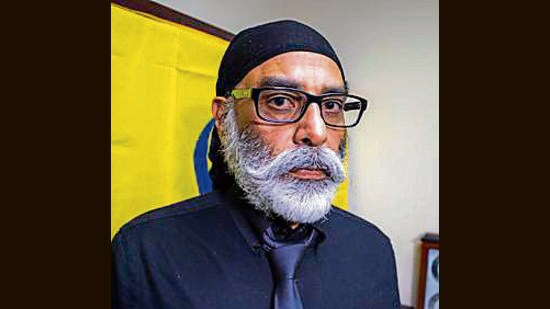
The court cited principles of “public international law and comity of courts” and said the matter is “extremely sensitive” with “serious ramifications”, and thus, it is only for the Government of India to decide “whether they wish to at all deal” with Gupta’s case or not.
Also read: SC rejects petition by kin of Nikhil Gupta indicted by US in Pannun murder plot: ‘Sensitive issue’
Gupta, charged by the US government of involvement in a conspiracy to kill Sikh separatist leader Gurpatwant Singh Pannun on American soil, has been in jail in Prague since he was detained in the Czech Republic six months ago. The 52-year-old, also known as Nick (Gupta), is detained in Prague’s Pankrac prison.
A bench of justices Sanjiv Khanna and Dipankar Datta held that an Indian court ought to show deference to the sovereignty of other countries and the legal system in the Czech Republic, under which Gupta was being tried.
{{/usCountry}}A bench of justices Sanjiv Khanna and Dipankar Datta held that an Indian court ought to show deference to the sovereignty of other countries and the legal system in the Czech Republic, under which Gupta was being tried.
{{/usCountry}}“We are not inclined to entertain this petition considering this is a matter relating to public international law and in view of the principles of sovereignty and comity of courts,” said the bench, even as it left it open for Gupta and his family to approach Indian government authorities.
During the hearing, the court repeatedly called the matter “sensitive”, making it clear that the issue is outside the jurisdiction of Indian courts, which can only concern itself with the compliance of the Vienna Convention.
“I don’t think we can give you any relief. We can’t... consular access is the only thing that he is entitled to under the Vienna Convention and he has already got it. This is a matter relating to public international law. We have to respect the sovereignty and jurisdiction of other courts,” said the bench.
It added that the petition before the court stated that Gupta was given consular access on two occasions. “This is a very sensitive matter and has its own ramifications. We don’t want you to say or comment on anything that is pending before a foreign court. The only thing you are entitled to is consular access. If you claim you haven’t got it or has been denied, you can approach the authorities,” the court told senior counsel CA Sundaram, who represented Gupta’s unnamed family member.
Responding, Sundaram argued that Gupta was granted consular access only for a day before the indictment and the extradition order, which was passed only a day earlier.
“I have been writing to the consular office and the ministry of external affairs but there has been no response. I am entitled to assistance to enable me to defend myself in whatever manner I can. I have been indicted improperly. And there has been a subsequent indictment superseding the previous indictment,” he said.
The bench asked Sundaram to refrain from commenting on the proceedings before the Czech court. “We cannot allow you to even touch that aspect. We aren’t concerned with the matters pending there and we are not going to comment on anything before another court,” it said.
Sundaram, on his part, said that all he wanted was legal assistance and consular access from the Indian government. “I need assistance to challenge the extradition order. That’s what I am not being given. I am only asking for legal aid from the government... Nothing more nothing less. I don’t even have access to an interpreter or translator,” he said.
“Consular access cannot mean just one meeting with the consular. It has to be regular access to help me legally fight my case,” Sundaram said.
But the bench remained indisposed: “It’s a sensitive matter. And you are governed by the law of the other country, and they will go by that. We are going to strictly go by the Vienna Convention, under which you admit you have been granted consular access”.
Last month, Czech justice ministry spokesperson Vladimir Repka had said that India’s judicial authorities have “no jurisdiction” in the case involving Gupta, adding the case is under the jurisdiction of the competent authorities of the Czech Republic.
Ministry of external affairs (MEA) spokesperson Arindam Bagchi, on December 21, acknowledged that “an Indian national” is currently in the custody of the Czech authorities pending a request for extradition to the US. “We have received consular access at least on three occasions,” Bagchi added at a press briefing.
US federal prosecutors have alleged that Gupta, alias Nick, worked on the directions of an Indian government employee, who described himself as a “senior field officer” responsible for intelligence, to arrange the assassination of US-Canadian citizen Gurpatwant Singh Pannun, a senior leader of the outlawed Sikhs for Justice (SFJ). Pannun has been declared a terrorist by India.
While the indictment filed in a US federal court in Manhattan on November 29 did not name the Indian official (it referred to him as CC-1) or the victim of the assassination plot, unnamed American officials have told the media that Pannun was the target.
The indictment that implicated the serving Indian government official for orchestrating the plot through Gupta, who, in turn, hired a hitman who turned out to be an undercover agent for US law enforcement. India responded by acknowledging that it had received inputs from the US and announced the constitution of a high-level investigation committee to examine the issue.
India will “look into” any evidence of allegations of a plot to kill a Khalistani leader on American soil but a “few incidents” will not derail US-India ties, Prime Minister Narendra Modi said in his first response on the issue in December, in an interview with the Financial Times.
US officials have said the issue has been discussed at the level of the national security advisers of the two countries, the heads of the respective intelligence agencies, the two foreign ministers, and even the heads of government, with the messaging from the US being consistent -- the potential of such activities to “permanently damage” the relationship, the possible “repercussions” on the bilateral relationship, the need for accountability in this case and an “assurance” that it wouldn’t happen again.
The indictment filed against Gupta in a Manhattan court alleges the Indian official had described the plot to target Pannun as a “priority” two days after another Khalistani leader, Hardeep Singh Nijjar, was gunned down near a gurdwara in the Canadian town of Surrey on June 18.
Gupta, who was arrested in the Czech Republic on June 30 at the request of the US, was allegedly working with the Indian official to ensure the dismissal of a drugs-related criminal case against him in India, the American indictment contended. The US has approached the Czech government for Gupta’s extradition.