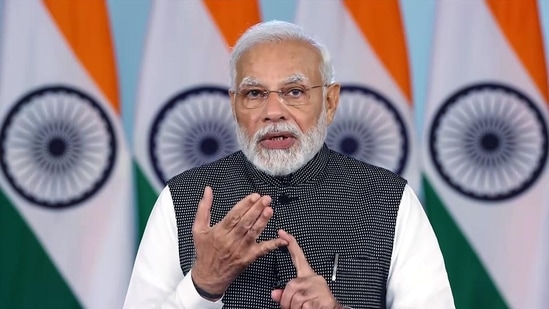
Prime Minister Narendra Modi will attend the Grand Finale of the Smart India Hackathon 2022 on Thursday via video conferencing. Smart India Hackathon is an initiative taken up by the government to promote innovation and problem-solving capacity among Indian youth. Problem-solving covers the issues of society, organizations, and government.
Here are 5 things to know about Smart India Hackathon 2022:
Smart India Hackathon
Smart India Hackathon was initiated to inculcate innovation into more students, and also to improve problem-solving mindset. Students work on pressing problems that are commonly faced in our daily lives.
First Smart India Hackathon in 2017
The first edition of the Smart India Hackathon was held in 2017 and the number of registrations went up to 7,500. During the first four editions, SIH2017, SIH2018, SIH2019, and SIH2020 successfully invited innovations and many young minds thinking out of the box, with many engineering students from all over the country.
Participation
From school students to Ph.D., students of all ages can participate in two categories of Smart India Hackathon. In the Junior category, school students from 6th to 12th class can participate and generate out-of-the-box ideas while in the Senior category, regular students of HEI’s pursuing “Graduate/Post-Graduate/Ph.D” can showcase their talent.
Participants in SIH2022
A total of 29,600 participated in SIH 2022. More than 15,000 students and mentors are traveling to the 75 nodal centers to take part in the SIH 2022 grand finale. Students from over 2,900 schools and 2,200 higher education institutions are participating.
Competitions in SIH2022
{{/usCountry}}A total of 29,600 participated in SIH 2022. More than 15,000 students and mentors are traveling to the 75 nodal centers to take part in the SIH 2022 grand finale. Students from over 2,900 schools and 2,200 higher education institutions are participating.
Competitions in SIH2022
{{/usCountry}}Finalists of SIH2022 cleared various problem solving and out-of-the-box thinking contests like, Optical Character Recognition (OCR) of Temple inscriptions and translations in Devanagari Scripts, IoT-enabled risk monitoring system in Cold Supply Chain for perishable food items, etc.