E-Paper



Look beyond academics, spot behavioural changes and help: PM Modi to teachers
PM Modi urged teachers to look beyond academic performance, spot behavioural changes and help children deal with drug addiction and excessive screen use.

 Prefer HTon Google


Prime Minister Narendra Modi on Friday urged teachers to look beyond students’ academic performance and remain attentive to changes in their behaviour and everyday lives, particularly warning about drug addiction and excessive screen use. He also called on teachers to preserve childhood innocence, nurture curiosity and instil the “dignity of labour.”
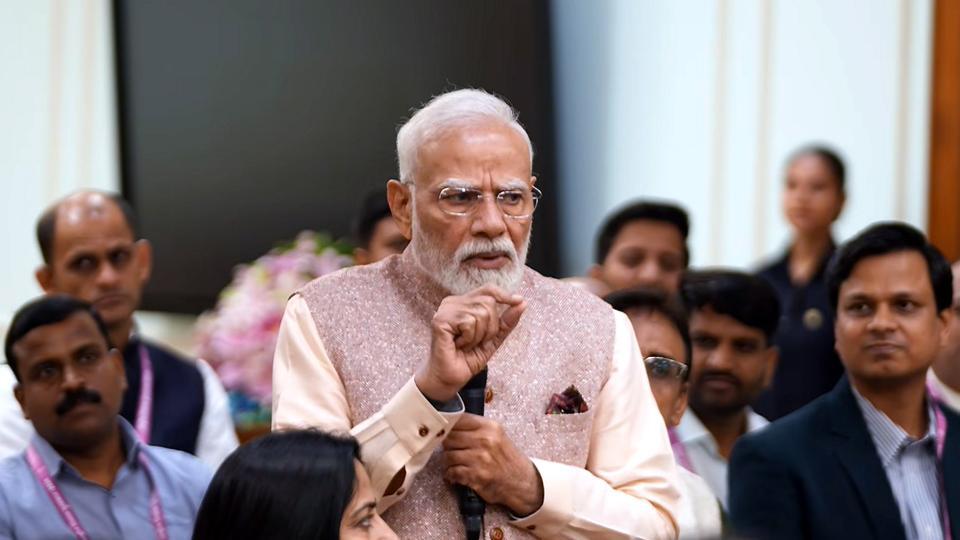
Modi was interacting with winners of the National Teachers Awards at his residence at Lok Kalyan Marg on Friday evening, a day before Teachers’ Day. The interaction comes at a time when teachers are increasingly being called upon to address challenges affecting children beyond formal classroom learning.
This year, 82 teachers and educators have been selected for the National Teachers Awards. They include 48 school teachers, 21 teachers and faculty members from higher educational institutions and polytechnics, and 13 skill trainers from the Ministry of Skill Development and Entrepreneurship, according to a Prime Minister’s Office (PMO) release issued on Saturday.
Deep Dive

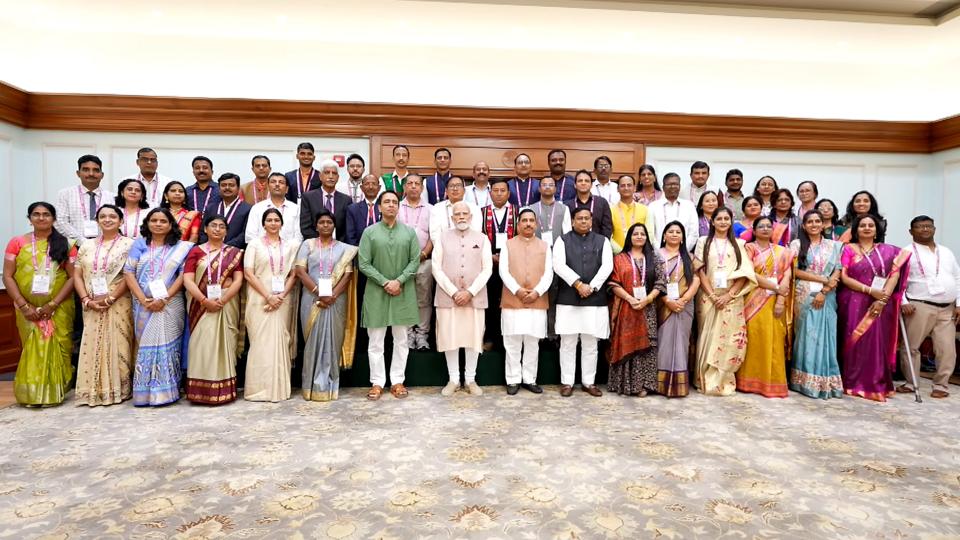
During the interaction, the awardees shared experiences and innovations they have adopted to make classroom learning more engaging and effective.
The PMO said Modi emphasised that teachers need to look beyond academic performance and be attentive to changes in children’s behaviour. Referring to the gradual reduction of the traditional joint-family structure, he said teachers have an increasingly important role in children’s lives and should observe them closely, identify problems and provide personal attention wherever required.
On drug addiction, Modi called upon teachers to “remain alert to changes in children, identify the cause and help such children overcome the habit”, according to the release. The message puts greater responsibility on teachers to recognise behavioural changes early and help students dealing with harmful influences.
Modi also stressed that “preserving the innocence of childhood” is an important role for teachers. He said children have the same basic nature and curiosity and that teachers can make a significant contribution to their development by nurturing and appropriately channelising that curiosity.
Excessive screen time was another concern highlighted by the Prime Minister. He urged teachers to speak to parents about how much time their children spend on screens and whether they continue using mobile phones late at night. The PMO said he suggested that children could gradually move away from excessive screen use by developing an interest in “sports, physical games and creative activities.”
Modi also linked the role of teachers to the National Education Policy, stressing the importance of taking children outside classrooms and connecting them with real-world skills and different forms of work. He asked teachers to go beyond imparting knowledge from the syllabus and help inculcate values such as the “dignity of labour” among children.
For Professor Vinay Chamola of BITS Pilani, the interaction was particularly significant because of the Prime Minister’s emphasis on respecting every profession.
“What struck me most was the warmth of the interaction and his genuine curiosity about the different ways teachers were helping students learn — through models, competitions, digital platforms and other innovative approaches,” Chamola said.
He said one message that stayed with him was Modi’s emphasis on the dignity of every profession. Children, he said, can develop biases about different kinds of work from what they see around them, and teachers have a role in helping them respect every profession and pursue their interests without such prejudices.
Professor Avlokita Agrawal of IIT Roorkee said the interaction was among her most memorable experiences and demonstrated the importance being given to teaching and learning.
“It is indeed one of the most memorable moments. Despite the busy schedule of the honorable PM, he has taken time to meet the teachers; this clearly shows the priority that he gives to teaching and learning,” she said.
For Agrawal, the Prime Minister’s emphasis on stakeholder engagement for sustainable development was particularly relevant to her own work. “I already try to engage society and people, and with this message, it makes me even more motivated and determined to do it more rigorously through my teaching,” she said.