In a democracy, citizens must use their liberties to constantly question the authorities in power and not be complacent about any encroachment of their rights, said Supreme Court judge Justice S Ravindra Bhat.
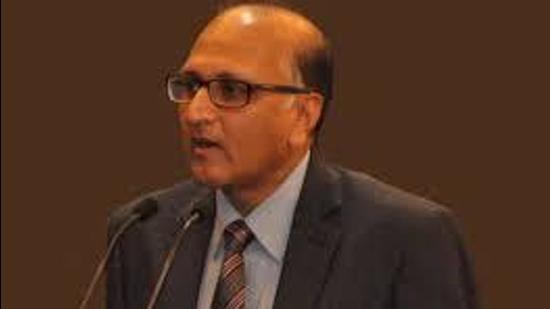
Speaking at an online event on Sunday on the topic “Role of Judiciary in Governance”, Justice Bhat said at a time when the world is passing through a pandemic and its painful and traumatic consequences, it is all the more important for people to cherish liberties and question the moves and policies which displace the liberties that the Constitution guarantees.
Justice Bhat said, “We gained our freedom at a great cost. Every Indian therefore has to use his liberties to constantly question the actions of those in power because democracy gives no tickets to free meals. It is for us to assert and guard liberty and not be complacent about any encroachment.”
In the context of the Covid-19 pandemic, he said, “Today the world is reeling under the painful and traumatic consequences of the Covid-19 pandemic disrupting lives and livelihoods, leaving behind destruction, despair and impoverishment. It is more important for people to cherish liberties and constantly question, through every legitimate channel, the moves and policies which undermine the democratic government and displace the liberties that the Constitution guarantees.”
The judge was addressing the first anniversary celebrations of an organization called “Connecting Governed, Governing and Governance” having former Chief Justice of India (CJI) KG Balakrishnan as one of its patrons.
{{/usCountry}}The judge was addressing the first anniversary celebrations of an organization called “Connecting Governed, Governing and Governance” having former Chief Justice of India (CJI) KG Balakrishnan as one of its patrons.
{{/usCountry}}The judge also gave his personal views on the topic of reservation and the need for placing a time cap on quota benefits. Justice Bhat said, “Reservation, at least in regard to scheduled castes, scheduled tribes and most backward classes is essential and we cannot put a time limit on it.”
Expressing his personal view, he said, “I would say it is not possible that we should do away with it (reservation) as long as society is unequal and people are socially and educationally backward. So long as the society is unwilling to cast off the shackles of caste, these quotas are needed because they underline empowerment.”
Justice Bhat emphasized that in a democratic way of governance, citizens should be prepared for imperfections. That’s where the role of courts come in. “The rule of law through democracy is a continuing work-in-progress where people’s scrutiny is paramount and courts are part of the dialogue,” the Supreme Court judge said, giving an illustration that a person may have a fundamental right to get a ration card or change his date of birth. But if people don’t get justice internally, there is no other way than to go to court.
Even on the limits of freedom that legislature or executive places on its citizens, Justice Bhat highlighted the need for laws to clearly define limits and not sound vague. Giving instances of what constitutes an obscene publication, an incitement that is likely to affect communal harmony, or the extent of regulation permissible at any given point of time, the judge said, “These are very important in governance, because unless you know what you can speak and what you cannot speak, it is very easy for the state to criminalize any content.”
The broad role played by the judiciary in governance operates in two ways. First, by protecting people’s fundamental rights and constitutional ethos by ensuring transparency and accountability to the rule of law. And secondly, interpreting new-age laws and filling policy gaps in existing norms.