
 E-Paper



Radio-tagged Amur falcon heads for Northeast India from China
The falcon Longleng, named after a Nagaland district, was radio-tagged in October 2016 by WII scientists as part of a project to study the flight route of these long-distance migratory birds and the environmental patterns along the route.

 Prefer HTon Google


A radio-tagged female Amur falcon (Falcon amurensis) named Longleng which had reached her breeding area in northern China in May for the third time since in 2016, is on her way to her roosting sites in Northeast India, a Manipur forest department official said.
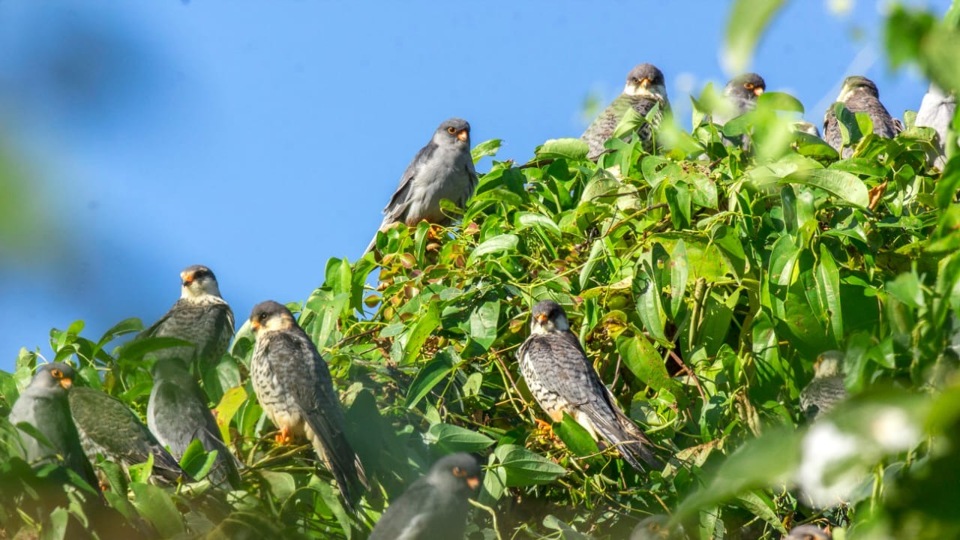
“As per Wildlife Institute of India(WII) scientists, Longleng was around Shanghai in China some five days ago (on way her way to Northeast),” said a forest official who is currently working for wildlife conservation, when asked about the whereabouts of the radio tagged Amur falcon.
Longleng, named after a Nagaland district, was radio-tagged in October 2016 by WII scientists as part of a project to study the flight route of these long-distance migratory birds and the environmental patterns along the route.
A crude measure of the distance the falcon has flown from her breeding grounds in Northern China to her wintering grounds in South Africa (after passing her various roosting sites in Indian sub-continent) since 2016 tagging is said to be more than 120,000 km.
In November last year, ‘Longleng’ and ‘Tamenglong’, another Amur falcon, flew non-stop for five days covering 5,700 km to reach a stop-over site in Somalia. Contact with Tamenglong was lost contact after it reached Zambia in December last year.
Meanwhile a five-member WII team including two well trained birds trappers have arrived in Manipur and started camping in Tamenglong district to welcome their annual winged guests.
“All the scientists came here on October 18,” said a key functionary of Rainforest Club Tamenglong, a non-profit organization engaged in conservation of environment and wildlife in the district.
The WII team is preparing for radio satellite tagging of five Amur falcons this year. “We are waiting for the falcons to arrive,” said WII Scientist Suresh Kumar who has so far radio tagged 10 Amur falcons.
But the arrivals of the falcons are late this year, according to forest officials. “No big congregation (of the birds is found) in any roosting sites (in Tamenglong),” the official said. “So the radio tagging may be possible in the last week of October or first week of next month.”
Earlier this month, the Tamenglong district administration banned all air guns and asked residents to deposit them to authorities to protect Amur falcons which visit the region every winter in large flocks to eat termites and insects.


