
 E-Paper



Cabinet clears GOBARdhan scheme to boost compressed biogas production 10-fold
The ₹23,731 crore GOBARdhan scheme aims to boost compressed biogas production 10-fold by converting agricultural and organic waste into clean fuel.

 Prefer HTon Google


The Union cabinet on Thursday approved a ₹23,731 crore national scheme to accelerate domestic Compressed Biogas (CBG) production, strengthen energy security, and promote rural livelihoods by converting organic waste into clean fuel.
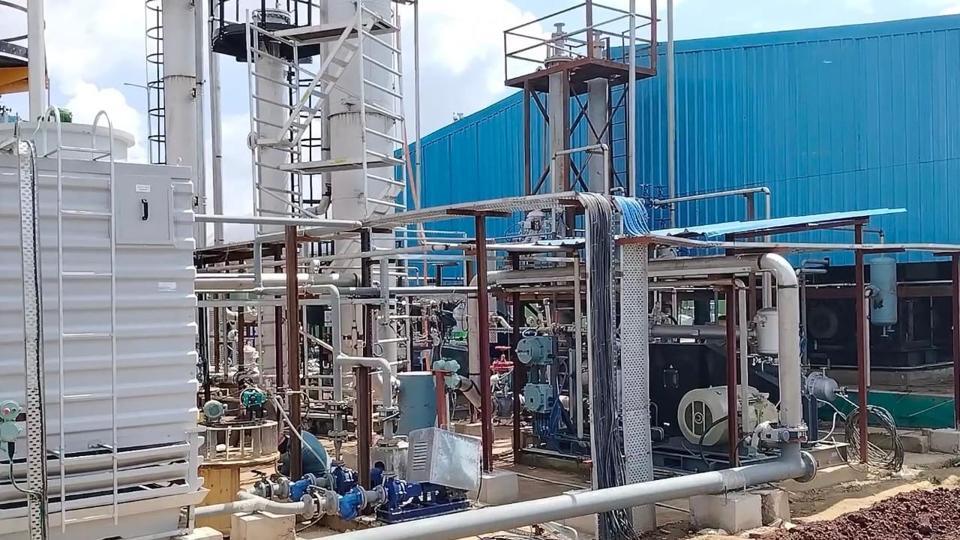
According to an official release, the GOBARdhan (Galvanising Organic Bio-Agro Resources Dhan) scheme, the national circular bioenergy scheme, will be implemented from the financial year 2026-27 to 2035-36. Administered by the ministry of petroleum and natural gas, it seeks to convert agricultural residue, cattle dung, sugar industry waste, municipal organic waste, and other biomass into compressed biogas and organic manure to enhance rural incomes.
The government said the scheme is expected to increase domestic CBG production nearly tenfold, attract significant private investment, and reduce India’s dependence on imported fossil fuels.
What is CBG?
Compressed biogas is purified biogas produced from organic waste such as crop residue, cattle dung, food waste, and municipal waste. After purification, it is chemically similar to natural gas and can be supplied through existing gas pipelines or used as transport fuel in compressed natural gas (CNG) vehicles.
Besides producing renewable fuel, CBG plants also generate organic manure as a by-product, creating an additional revenue stream while helping manage agricultural and municipal waste.
Six pillars of the scheme
The scheme, through its six “growth engines”, seeks to address the key bottlenecks facing the CBG sector through six interventions.
First, it provides assured demand by requiring city gas distribution entities to procure compressed biogas to meet the government’s mandatory CBG blending obligation, which has been fixed at 3% in FY2026-27, 4% in FY2027-28, and 5% from FY2028-29 onwards for transport CNG and domestic piped natural gas.
To improve project viability, the government has also introduced an administered procurement price of ₹2,110 per million British thermal units (MMBtu) for CBG, providing producers with long-term revenue certainty under a pricing framework that will remain in place for at least 10 years.
The scheme further provides capital assistance of up to ₹2 crore per tonne per day (TPD) of installed production capacity for eligible greenfield CBG plants, while brownfield projects expanding capacity will also qualify for support. The assistance will cover not only the core biogas plant but also infrastructure for feedstock aggregation, organic manure processing, and value addition, according to the release.
To address evacuation constraints, the government, through the scheme, will support the development of pipeline infrastructure connecting CBG plants to trunk gas pipelines and city gas distribution networks, reducing transportation costs and improving access to markets.
Recognising financing as another challenge, the scheme introduces a dedicated credit guarantee mechanism to encourage banks to lend to eligible MSME-based CBG projects by reducing lending risks and collateral requirements.
It also establishes a dedicated CBG Ecosystem Challenge Fund to support district-level planning, biomass resource mapping, feedstock aggregation, technology adoption, capacity building, awareness programmes, and the development of local value chains.


