
 E-Paper



Rahul Gandhi urges civil society groups to join Bharat Jodo yatra
Describing his upcoming yatra as ‘tapasya’ (devotion), Gandhi said “we will continue to walk in the yatra irrespective of the size of crowd”.

 Prefer HTon Google


Congress leader Rahul Gandhi on Monday opened the doors for civil society organisations to join the Bharat Jodo yatra, the first pan-Indian march of the party in Independent India which is slated to begin from Kanyakumari on September 7. The yatra will retain its political flavour but will not be a Congress affair, as demanded by a large section of civil society organisations in a meeting with Gandhi on Monday.
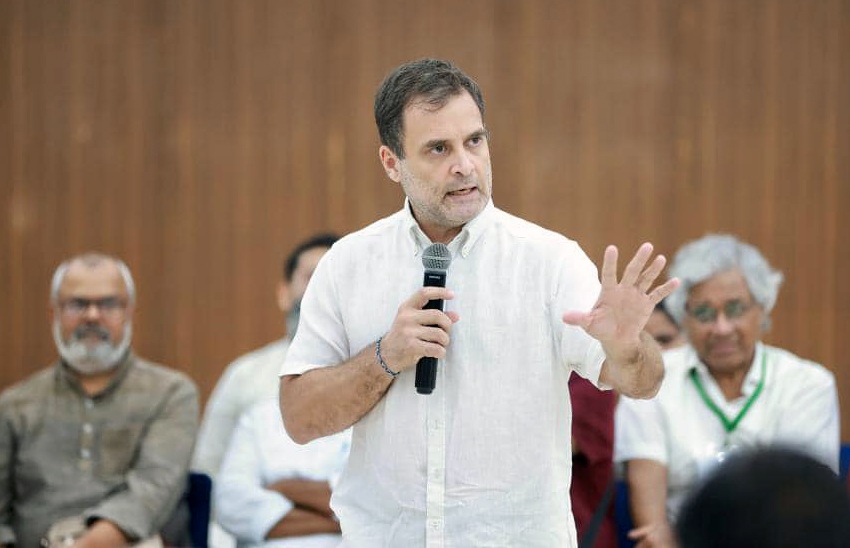
Describing his upcoming yatra as ‘tapasya’ (devotion), Gandhi said “we will continue to walk in the yatra irrespective of the size of crowd”.
Also Read| Ashok Gehlot's take on next Congress chief: 'If Rahul Gandhi doesn't…
According to a number of leaders, Gandhi also mentioned how the BJP returned to power even after being defeated in state elections and that several institutions such as the Enforcement Directorate (ED) and Central Bureau of Investigation (CBI) are compromised. He said there is a need to go to the people as they are the real masters.
Civil society members shared several ideas. A section of these groups promised “unconditional support”, prompting Gandhi to quip that they must not do so, while others demanded the yatra should be political but not a party affair.
Gandhi maintained that the yatra, for him, was ‘tapasya’ (devotion) and not just politics. The former Congress president also indicated a larger role for the civil society and said he sees “India’s future” in them when a participant tried to suggest that Gandhi is the future of India.
Also Read| Cong urges civil society members to join ‘Bharat Jodo Yatra’, Rahul holds talks
Briefing the media, the Congress’s communications chief, Jairam Ramesh, said in the interaction with about 150 civil society organisations drawn from 21 states, “Rahul Gandhi identified three fundamental pillars of the Bharat Jodo Yatra: the economic pillar, the social pillar and the political pillar”.
“The country is facing very grave challenges on account of inflation, unemployment, concentration of economic wealth, growing regional disparities, on account of social polarisation on religion, caste, dress, food, language and on account of political challenges that we face on account of growing use of the Centre and the Centre’s institutions, the complete weakening of the states, local bodies, panchayats, and nagar palikas,” Ramesh said.


