Widespread rain and thunderstorm activity is likely over central and west India today followed by rain and thunderstorms over the western Himalayan region, according to India Meteorological Department (IMD).
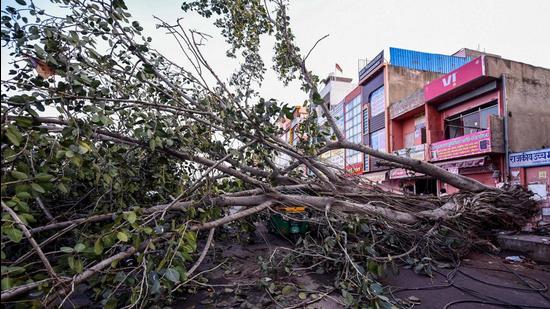
A cyclonic circulation is lying over Madhya Maharashtra and its neighbourhood and there is another cyclonic circulation over southeast Madhya Pradesh. Under their influence, isolated rainfall with thunderstorm and lightning is likely over east Madhya Pradesh, Vidarbha, Chhattisgarh, Madhya Maharashtra , Marathwada, Konkan and Goa today.
Also Read | MP, UP sign Ken-Betwa pact: Here’s why it alarmed environmentalists
A fresh Western Disturbance is likely to affect the western Himalayan region from March 27. Under its influence, scattered to fairly widespread rainfall or snowfall with thunderstorm and lightning is likely over Himachal Pradesh and Uttarakhand and thunderstorm, lightning, hail and gusty winds are likely over Jammu, Kashmir, Ladakh, Gilgit, Baltistan and Muzaffarabad.
The maximum temperatures are likely to rise by 4-6 degrees Celsius (°C) over northwest India and by 3-4°C over west India after 48 hours.
Meanwhile, the cooling effect of La Niña, a global weather pattern, has started waning, according to the IMD, which said that it may completely turn neutral during April, resulting in a harsh summer.
La Niña is associated with the cooling of Pacific waters. A La Niña year generally receives good rainfall and temperatures are lower than normal.
{{/usCountry}}La Niña is associated with the cooling of Pacific waters. A La Niña year generally receives good rainfall and temperatures are lower than normal.
{{/usCountry}}“La Niña is often associated with lower temperatures in India. But that is now unlikely during the rest of the summer and monsoon months. But the actual weather conditions will depend on local synoptic features. For example, the interaction of westerlies and easterlies over central India is currently causing thunderstorm activity and temperatures have dropped. But overall, we can say La Niña will phase out gradually,” said DS Pai, senior climate scientist at IMD.