The Supreme Court collegium on Monday evening recommended Chhattisgarh High Court judge Sanjay Kumar Agrawal as the full-time chief justice of the Rajasthan High Court, a move that comes amid an escalating controversy over allegations of “corruption”, “nepotism” and “favouritism” levelled against the high court’s acting chief justice Sanjeev Prakash Sharma by Supreme Court judge Justice Sandeep Mehta.
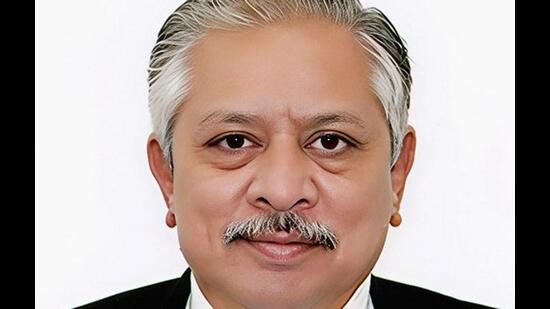
The recommendation came on a day Justice Sharma opted out of judicial work until September 5, as lawyers in Jaipur and Jodhpur stepped up protests demanding that he be removed as acting chief justice and a regular chief justice appointed.
Justice Agrawal was elevated as an additional judge of the Chhattisgarh High Court in September 2013.
The collegium comprised Chief Justice of India Surya Kant and justices Vikram Nath and BV Nagarathna.
The recommendation to appoint Justice Agrawal as chief justice of the Rajasthan High Court comes as the controversy over Justice Sharma’s functioning is being considered at the institutional level.
Justice Mehta, in three letters to CJI Kant Kant dated August 2, 10 and 17, repeatedly urged the appointment of a regular chief justice from another high court and sought Justice Sharma’s transfer out of Rajasthan.
{{/usCountry}}Justice Mehta, in three letters to CJI Kant Kant dated August 2, 10 and 17, repeatedly urged the appointment of a regular chief justice from another high court and sought Justice Sharma’s transfer out of Rajasthan.
{{/usCountry}}Justice Mehta has alleged that Justice Sharma misused his powers as master of the roster, selectively shifted cases from other benches to his own court and passed orders that raised “serious question marks” over the integrity of the decision-making process. He has also accused the acting chief justice of favouring influential and rich litigants and described the cumulative conduct as amounting to “brazen misuse of powers” that “smack of corruption”.
In his August 10 letter, Justice Mehta cited two cases as “living proof” of what he described as Justice Sharma’s attempt to “hit longer sixes” ahead of his retirement on September 26. One concerned “priceless lands” in Udaipur, while the other involved a mining magnate whose delayed appeal, according to Justice Mehta, was improperly registered and heard by Justice Sharma’s bench.
Justice Mehta has also levelled allegations of nepotism and favouritism, alleging that Justice Sharma backed the elevation of the daughter-in-law of a senior advocate and went out of his way to support lawyers close to him. He has further alleged vindictive treatment of judicial officers and questioned several administrative decisions concerning the Jodhpur principal seat.
The Supreme Court judge also claimed that judges of the Rajasthan High Court expressed “anguish” to him over Justice Sharma’s conduct and alleged that the acting chief justice frequently threatened colleagues with retaliatory transfers by invoking his alleged proximity to the CJI.
In his August 17 letter, Justice Mehta alleged that Justice Sharma delayed the inauguration of the new Jodhpur District Court building despite it being operationally complete for about a year, saying the resulting loss to the institution was “unpardonable”.
Justice Mehta also criticised the functioning of the high court under Justice Sharma, alleging that a full court meeting on July 31 was used to push the designation of around 96 advocates as senior advocates without a uniform criterion.
According to his letter, the proposal could not ultimately be passed after other judges resisted it. He further questioned the organisation of a three-day conference in Jaipur, alleging that almost ₹80 lakh was spent from the public exchequer while the Jodhpur principal seat remained without a functional court for two working days and around 20 to 22 district judges were nominated to attend the event.
In response, a statement issued by CJI Surya Kant on August 26 said that he and other collegium members have taken note of Justice Mehta’s concerns but stressed that allegations against a sitting judge must be dealt with through the established institutional mechanism. The statement added that the concerned judge must be given an opportunity to respond and that allegations cannot be treated as findings merely because they have been made. CJI Kant had further said that he and the other members of the collegium were already working on appointments of regular chief justices to the remaining high courts.
The row triggered protests by lawyers at both Jaipur and Jodhpur. The Rajasthan High Court Lawyers Association on Monday announced a complete strike till September 6, demanding that Justice Sharma be divested of his administrative charge and a regular chief justice appointed. The association also decided to send representations to the CJI and President Droupadi Murmu.
At Jaipur, police were called to the high court premises to disperse protesting advocates, while lawyers at Jodhpur also raised slogans and demanded action against the acting chief justice.
Following an emergency general house meeting, the lawyers’ association said the situation was “against the sanctity of justice”. Its president, Dilip Singh Udawat, said the lawyers had unanimously concluded that they needed to raise their voices.
Justice Sharma, meanwhile, opted out of judicial work from Monday. A modified roster issued under his endorsement said he would not sit on any bench till September 6, with matters earlier assigned to his bench distributed among other benches. The high court website attributed the change to the “non-sitting of Hon’ble the acting chief justice”.
Justice Sharma has been serving as acting chief justice for more than 10 months following Justice S Shriram's retirement as chief justice in September 2025.
Justice Mehta had repeatedly urged the collegium to appoint a regular Chief Justice from another high court, arguing that the prolonged arrangement had adversely affected the institution.