
 E-Paper



Red fort blast: NIA chargesheets 3 more persons, including absconding doctor
Officials said the accused persons have been charged under various sections that deal with terror charges in UAPA and BNS

 Prefer HTon Google


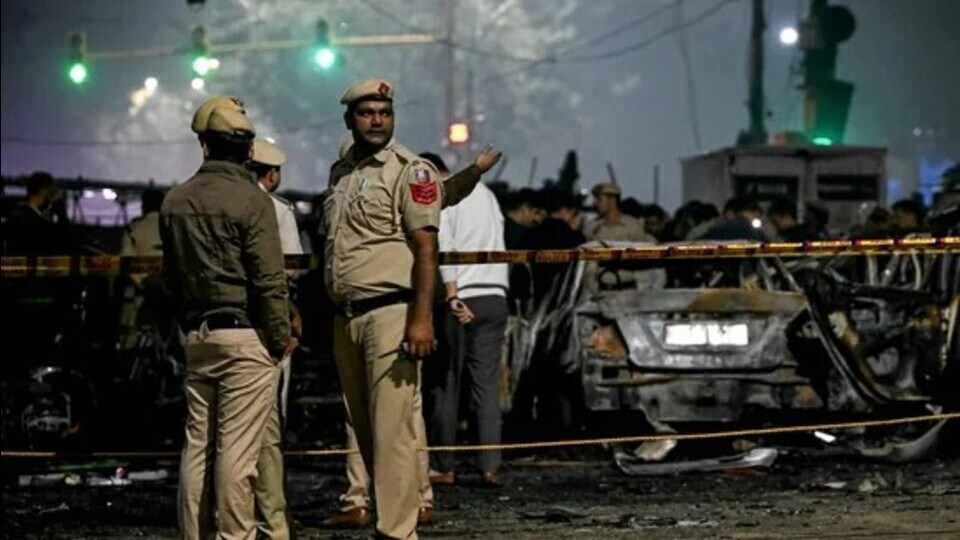
The National Investigation Agency (NIA) filed a second charge sheet against three more persons in the November 2025 car bomb explosion near Delhi’s Red Fort including an absconding doctor, and two overground workers (OGWs) of terror groups, the agency said on Saturday.
One of the key persons named in the second chargesheet, Muzafar Ahmad alias Faraz, pediatrician (MBBS, MD), is absconding. The other two are Zameer Ahmad Ahangar and Tufail Ahmad Bhat.
The first charge sheet was filed on May 14 naming 10 accused.
The federal anti-terror probe agency in a statement said that Muzafar Ahmad was the founding member of al-Qaeda affiliated Ansar Ghazwat-ul-Hind (AGuH) and also a “prime architect” of the bomb blast conspiracy, in which 12 people including the bomber - Dr Umar un-Nabi - were killed.
Earlier, four doctors including his younger brother - Adeel Ahmad Rather - were charged among 10 people in the previous charge sheet.
“Absconding accused Muzafar Ahmed has been identified as the elder brother of co-accused Dr Adeel Ahmed Rather (arrested) and a founding member of AGuH Interim - an offshoot of al-Qaeda. NIA investigation revealed Muzafar Ahmed to be one of the prime architects, along with co accused Umer, Muzammil Shakeel, Adeel Rather, and Mufti Irfan, of the conspiracy that led to the deadly vehicle-borne improvised explosive device (VBIED) blast,” NIA said in its statement.
“Muzafar Ahmed attended the secret Eidgah meeting at Srinagar in June 2022, during which the terror module AGuH ‘Interim’ was established,” the agency said, adding that he was “deeply involved in the manufacture, testing and safekeeping of TATP-based improvised explosive device (IEDs) at a clandestine IED facility run by Dr Umer un-Nabi and and Muzammil Shakeel at Al-Falah University in Faridabad’.
A non-bailable warrant has been issued against him and efforts are being made to trace him, the agency said.
NIA said that Zameer Ahmad Ahanger worked for this offshoot and was “actively in touch with handlers”, and “acted as a courier for arms, ammunition, and cash for the terror module”.
Also Read:Red Fort blast part of al-Qaeda affiliated group’s ‘Heavenly Hind’ operation, says NIA chargesheet
The third accused, Tufail Ahmad Bhat, is a former OGW of the Lashkar-e-Taiba (LeT) and worked as its “arms supplier”.
“Bhat had procured one AK-47, one Krinkov rifle, one pistol, magazines and live ammunition through dead drops orchestrated by a handler, and delivered them to the deceased bomber Dr Umer un-Nabi for ₹3 lakh,” NIA said.
Officials said the accused persons have been charged under various sections that deal with terror charges in Unlawful Activities Prevention Act (UAPA) and Bharatiya Nyaya Sanhita (BNS).
Earlier, in May, the agency said that the operation primarily planned by a group of self-radicalised medical professionals was called ‘Heavenly Hind’.
“Under the umbrella of the newly constituted outfit, they launched ‘Operation Heavenly Hind’ aimed at overthrowing the democratically established Indian government and imposing Sharia rule. They recruited new members, actively propagated the violent Jehadi ideology, stockpiled arms and ammunition, and manufactured explosives on a large scale using commercially available chemicals. They also fabricated and tested various types of IEDs,” the agency said in May.
AGuH was formed in July 2017 by Zakir Rashid Bhat alias Zakir Musa, once a close aide of Burhan Wani, after parting ways with Hizbul Mujahideen. In the initial days, the AGuH coordinated with other outfits in Jammu and Kashmir, but a continuous crackdown by the security forces led to its activities coming to an end. Officials in the intelligence community said AGuH was not widely accepted in Kashmir. After the killing of Musa by the security forces in May 2019, it became defunct.
NIA on Saturday said that its probe is continuing in the bomb blast.


