The Supreme Court on Friday quashed the criminal proceedings against Leader of Opposition Rahul Gandhi over his remarks describing Hindutva ideologue Vinayak Damodar Savarkar as a collaborator of the British, noting that the prosecution lacked the sanction required under law.
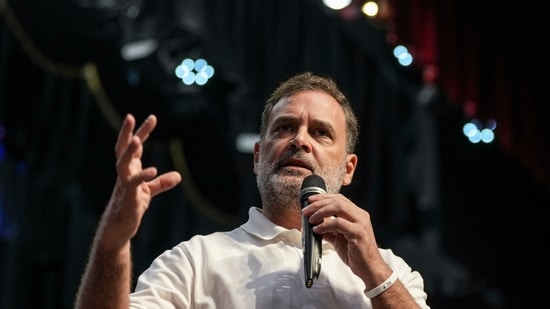
A bench of justices Dipankar Datta and Sheel Nagu allowed Gandhi’s plea challenging the summons issued by a Lucknow magistrate, after noting that the Uttar Pradesh government’s affidavit did not disclose that the requisite sanction had been granted for prosecuting him.
“Sanction is required. But there is no sanction. If there is no sanction, there is no case. You have to follow the law,” the bench said.
“We have heard learned counsel for parties. In affidavit filed by respondent State of UP, there is no disclosure of sanction having been granted. In such view of matter, orders passed by Magistrate shall be quashed,” held the bench.
The row over Gandhi's remarks
The decision brings to an end the criminal proceedings arising from remarks made by Gandhi during his Bharat Jodo Yatra in November 2022, in which he had referred to Savarkar as a “servant” or collaborator of the British and said that he had received a pension from the colonial government.
Gandhi was facing proceedings under Sections 153A (promoting enmity) and 505 (public mischief) of the Indian Penal Code (IPC) on a complaint filed by advocate Nripendra Pandey.
{{/usCountry}}Gandhi was facing proceedings under Sections 153A (promoting enmity) and 505 (public mischief) of the Indian Penal Code (IPC) on a complaint filed by advocate Nripendra Pandey.
{{/usCountry}}Prior sanction from the central government or the state is mandatory to prosecute a person under Section 153A of the IPC, which penalises promoting enmity between different groups on grounds of religion, race, place of birth, residence, or language.
The proceedings had reached the Supreme Court after a prolonged legal battle in Uttar Pradesh. Pandey had initially approached the additional chief judicial magistrate (ACJM) seeking registration of an FIR against Gandhi over his remarks. The ACJM dismissed the complaint in June 2023, but the complainant challenged the decision before the sessions court, which remanded the matter to the magistrate.
The Lucknow magistrate subsequently summoned Gandhi in December 2024, holding that his remarks had prima facie spread hatred and ill-will in society. Gandhi then approached the Allahabad High Court seeking quashing of the proceedings.
On April 4, 2025, the high court declined to entertain his plea, holding that Gandhi had an alternative statutory remedy of approaching the sessions court in revision against the summoning order. This prompted Gandhi to move the Supreme Court.
The top court had initially stayed the trial proceedings in April 2025. During the proceedings, however, the bench had taken strong exception to Gandhi’s remarks against Savarkar and cautioned him against making further statements concerning freedom fighters.
“You have a good point on law and you will get a stay. But any further statement by him will be taken up suo motu. No words on our freedom fighters. They gave us freedom and we treat them like this?” the court had said.
A mention of former PM Indira Gandhi's letter
The bench had also referred to a letter written by Gandhi’s grandmother and former Prime Minister Indira Gandhi praising Savarkar and reminded Gandhi of the historical context surrounding the freedom fighter.
The Supreme Court subsequently continued the interim protection while seeking responses from the Uttar Pradesh government and the complainant.
In July 2025, the bench had extended the stay after the Uttar Pradesh government opposed Gandhi’s plea, alleging that he had deliberately spread hatred by describing Savarkar as a British “servant”. The State had argued that the allegations, supported by investigation, brought Gandhi’s conduct within the ambit of Sections 153A and 505 IPC.
Gandhi’s counsel, however, continued to challenge the very maintainability of the criminal proceedings and the ingredients of the offences alleged against him.