E-Paper



Retrospective green clearance weakens framework: Experts
Legal and environmental experts said the ruling reopens a contentious debate around whether violations can be regularised after damage has already occurred.

 Prefer HTon Google


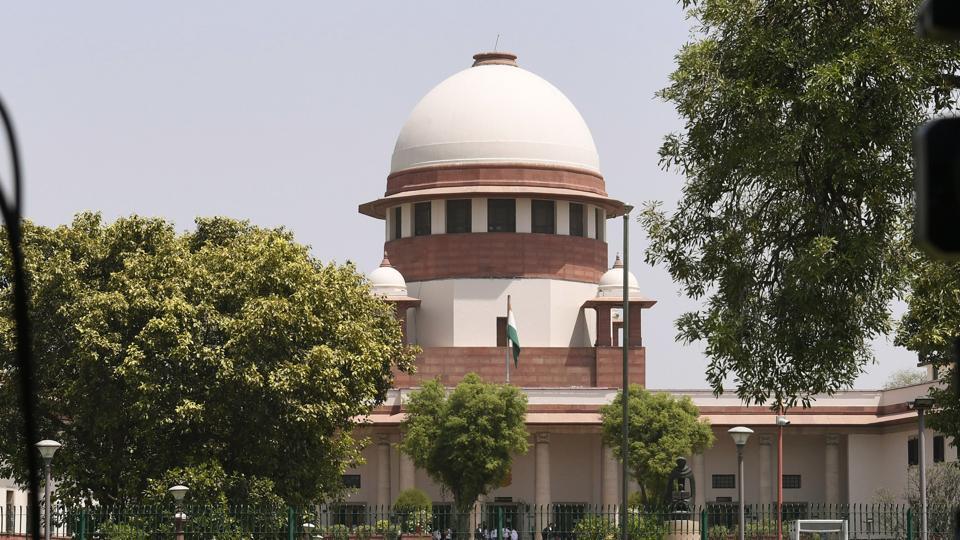
Following the Supreme Court’s decision — by a 2-1 majority — to recall its May 16 judgment barring ex-post-facto environmental clearances (EC), legal and environmental experts said the ruling reopens a contentious debate around whether violations can be regularised after damage has already occurred. While the majority cited judicial discipline and binding precedent to justify the recall, environmentalists warned that the underlying issue remains unresolved and fraught with environmental risks.
Debadityo Sinha, lead, climate and ecosystems at Vidhi Centre for Legal Policy, clarified that the May ruling has not been undone on merits but merely recalled for a larger bench to examine. Sinha said an ex-post facto EC fundamentally weakens the entire framework meant to ensure a project is evaluated before any work begins.
“Securing an EC is designed as a safeguard to decide whether a project should be allowed at a particular place at all, taking into account the ecology, its biodiversity, and the risks of permanent environmental harm. It goes far beyond pollution control; thus. EC exists to answer the fundamental question: Is the project feasible for the particular site?,” Sinha said, stating even though the order has been recalled on technical grounds — that it should be considered by a larger bench — it was crucial this interim period is not misused to push through destructive projects.
“In this context, the Vanshakti judgment played an important corrective role….It pushed back against the growing pattern of fait accompli, where projects start work first and seek clearances later,” he said, stating India cannot afford to lose more ecosystems and livelihoods because of administrative shortcuts or regulatory capture. “What we choose to protect today will define what remains for tomorrow,” he added.
The Supreme Court’s recall order restores, for now, the 2017 notification and 2021 office memorandum that permit post-facto approvals in certain situations. But several experts said these mechanisms remain environmentally regressive regardless of procedural legality.
“There may exist one or two exceptions, but in most cases, the damage is enough to not warrant or allow an EC afterwards,” said a retired IFS officer, on condition of anonymity. “Retrospective ECs serve no real purpose as the process of securing an EC exists for a reason. It indirectly promotes loopholes and destruction,” the official said.
Environmental lawyer Ritwick Dutta, founder of Legal Initiative for Forest and Environment (LIFE), also criticised the concept of post-facto approvals. “Such clearances are contrary to every single principle of environmental jurisprudence. It violates the rule of law itself. So in that sense, there are no two ways about it. However, this is not a reversal, but a recall for a larger bench to hear the matter again,” Dutta said, stating status quo returns until a fresh judgement is passed now. “This does allow developers to secure a retrospective EC in the time being,” he said.
Environmental activists, however, said the recall risks reopening the very loopholes environmental groups have spent years challenging. Activist Bhavreen Kandhari said the majority judgement can give an open license once again – for the time being, to violate and then appreciate the violation too. “This was already happening but once again becomes the rule, which is a dangerous precedent. We hope the fresh bench speaks up on the issue and ensures such clearances do not happen,” she said.