When Lal Chander of Tanda gram panchayat received ₹1.1 lakh in 2017, under the government’s rural housing scheme, little did he know that after a few days the entire sum would have to be returned.
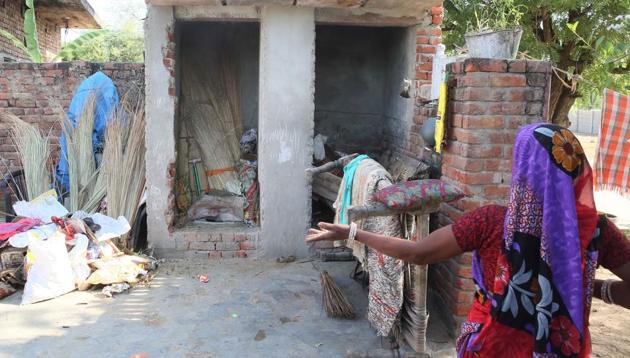
As the NDA government embarked on an ambitious journey to make houses for all poor people, it has also started a rare move to recover money from fake and ineligible beneficiaries of the Pradhan Mantri Awas Yojna (PMAY), which aims to give money to people to build a home with a toilet.
In India’s most populous state, Uttar Pradesh, the Centre has been able to recover over ₹6.5 crore from almost 8,500 ineligible beneficiaries in the past two-and-a-half years.
“Around 8,500 beneficiaries have been found ineligible due to different reasons. Most of them were found to already own a pucca house and they have refunded more than ₹6.5 crore,” Union rural development secretary Amarjeet Sinha said.
Officials added that similar exercises were carried out in other states, but the recovery was negligible, indicating that not many fake or ineligible beneficiaries found their way to the list of recipients.
{{/usCountry}}Officials added that similar exercises were carried out in other states, but the recovery was negligible, indicating that not many fake or ineligible beneficiaries found their way to the list of recipients.
{{/usCountry}}In some states, the audit is yet to begin. “In Madhya Pradesh, the state administration had conducted such a scrutiny. There, the local authorities had even announced a cash reward of ₹5,000 to anyone who can give information on ineligible beneficiaries,” added Sinha.
A rural ministry official maintained that during the previous regime, the master list of beneficiaries was created without much scrutiny — the reason why people, who already had houses or were otherwise rich, could still add their names for this scheme.
According to the rules, PMAY, or the housing for the poor, is aimed to cater to poor people who are either homeless or have a kuccha house.
A former UPA minister maintained that during their time, too, there were checks and balances. He also pointed out that gram panchayats had a big role in identifying beneficiaries back then, and often there were allegations of corruption at the grass-roots level.
Economist Reetika Khera, however, maintained that “the government should clearly answer how the sanctions for these houses got the government’s approval in the first place.”
“The recovered amount of ₹6.5 crore may be a small portion of the total budget for PMGAY for Uttar Pradesh in the last two years.
But the more important question is, how did the government determine that the large number of people were not actual beneficiaries?” asked Khera.
The amounts returned range from ₹10,000 to ₹110,000.