New Delhi: Russian oil, which accounts for a third of India’s total imports, remains the most cost-effective option on the global market, and Moscow has consistently honoured its commitments amid attempts to disrupt this energy cooperation, Russian ambassador Denis Alipov said on Thursday.
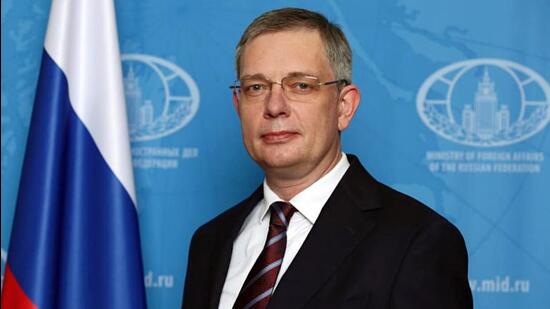
Alipov’s remarks came hours after US President Donald Trump claimed Prime Minister Narendra Modi had told him that India will stop buying Russian oil. Alipov further contended that President Vladimir Putin’s visit in December for an annual India-Russia Summit is an opportunity to further elevate cooperation and strengthen coordination on the global stage.
India has faced increased pressure from Trump over its procurement of Russian oil and military hardware as the US president steps up efforts to stop the Russia-Ukraine war. On Wednesday, Trump described Modi as a “friend” but said he wasn’t happy with the Indian leader for buying oil from Russia.
Alipov, who was addressing an event marking the 25th anniversary of the India-Russia strategic partnership, described Russia as India’s “most reliable energy partner” and made a case for even closer cooperation in defence, trade, connectivity, and technology. He also pushed for reviving the Russia-India-China (RIC) dialogue to build a greater Eurasian partnership.
“Russian oil accounts for around one-third of India’s total hydrocarbon imports,” Alipov said, praising the Indian government for ensuring access to affordable energy for its citizens.
{{/usCountry}}“Russian oil accounts for around one-third of India’s total hydrocarbon imports,” Alipov said, praising the Indian government for ensuring access to affordable energy for its citizens.
{{/usCountry}}“Russian energy remains the most cost-effective option on the global market, and Russia has consistently honoured its commitments while showing flexibility in developing alternative logistics and payment systems in the face of attempts to disrupt this cooperation.”
Also Read: India responds to Donald Trump’s comments, says ‘diversifying energy purchases’
India ramped up the purchase of discounted Russian oil soon after the US and its European allies imposed sanctions on Russia over the invasion of Ukraine in February 2022, ignoring pressure from the West. However, India-US ties have come under unprecedented strain in recent months over Trump’s 50% tariffs, including a 25% punitive levy over Russian oil purchases. This was accompanied by fresh pressure from Trump on India to cut its procurement of Russian energy and military equipment on the ground that this helps fund the war in Ukraine.
Alipov, however, said the India-Russia strategic partnership is a “stabilising force in global affairs and a powerful driver of economic growth,” and the “uninterrupted and mutually beneficial” nature of the relationship makes its “upward trajectory irreversible.” He added, “This kind of relationship is in increasing demand worldwide as we collectively navigate an era of unprecedented geopolitical turbulence.”
Russia became India’s fourth largest trading partner in 2024, with two-way trade exceeding $70 billion. Russia is also a leading supplier of energy, fertilisers, and agricultural products. “To reduce risk in our economic partnership, we have developed independent payment mechanisms based on national currencies and established alternative connectivity routes,” he said.
Alipov noted that about 70% of India’s military equipment is of Russian origin and its effectiveness was demonstrated during Operation Sindoor, which India launched against Pakistan in May in retaliation for the Pahalgam terror attack. This cooperation has moved from a traditional buyer-seller model to full technology sharing and joint production of BrahMos cruise missiles, Su-30MKI jets, and T-90 tanks.
While offering the local production of the Su-57 fifth-generation fighter, Alipov said discussions were underway on drones, anti-drone systems, advanced radars, and other force multipliers. “This cooperation is unique because it is rooted in battlefield experience that Russia willingly shares with its Indian partners,” he said.
Alipov raised the issue of Western sanctions, noting that India doesn’t officially recognise them but pointing out that “segments of the Indian business community still exercise excessive caution even when secure national currency-based transactions and special economic zone opportunities exist.”
He also criticised the Global North for imposing “neo-colonial unilateral approaches, including legal sanctions and tariffs,” as part of a reluctance to accept a multipolar world, and said such actions have increased the importance of platforms such as BRICS and the Shanghai Cooperation Organisation (SCO), which promote pragmatic cooperation and help reduce external dependencies.
With Putin set to travel to New Delhi in early December for a summit with Modi, Alipov said the event will celebrate the 15th anniversary of the India-Russia strategic partnership being elevated to a special and privileged relationship in 2010. “This milestone will provide an excellent opportunity to further elevate our cooperation and strengthen our coordination on the global stage for the shared benefit of our two nations,” he said.