The Supreme Court verdict opening the doors of the Sabarimala temple in Kerala to women of all ages, ending a centuries-old ban on the entry of women of menstruating age, is set to throw a string of challenges before the Travancore Devaswom Board (TDB), which manages the hilltop shrine.
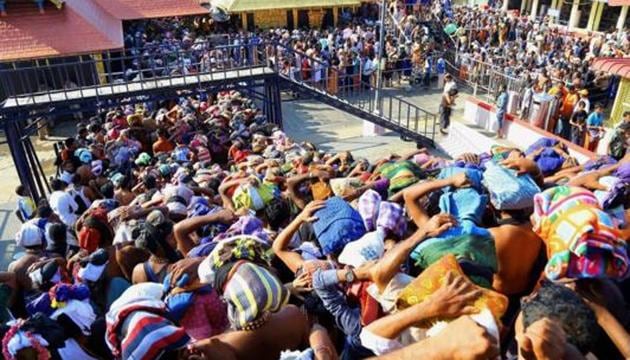
Women devotees’ safety and crowd management are the two key issues worrying administrators of the shrine, nestled in the sprawling Periyar Tiger Reserve in the Western Ghat mountain ranges.
TDB officials say it is unlikely that women believers from Kerala will suddenly break custom and gatecrash the temple following the SC’s verdict on Friday, but they expect activists and devotees from other states to congregate when the shrine opens for the monthly ‘pooja’ on October 18 for the first time after the ruling.
A Constitution bench led by chief justice of India Dipak Misra, in a 4:1 verdict, held that restrictions on the entry of women in religious places for physiological reasons lowered their dignity. CJI Misra, and justices RF Nariman, AM Khanwilkar and DY Chandrachud ruled against the restriction, declining to accept it as an established practice of a denominated religious group, and said it was a form of untouchability.
“We are aware of the new challenges. Since the temple is in the midst of a forest, the main problem is paucity of land. We have to build separate resting and queue complexes for women. We have already asked the forest department for some additional land. We will make an excellent season this time,” said TDB president A Padmakumar, adding that the state government had pledged its support to TDB.
{{/usCountry}}“We are aware of the new challenges. Since the temple is in the midst of a forest, the main problem is paucity of land. We have to build separate resting and queue complexes for women. We have already asked the forest department for some additional land. We will make an excellent season this time,” said TDB president A Padmakumar, adding that the state government had pledged its support to TDB.
{{/usCountry}}During the peak, three-month pilgrimage season (November to January), at times the queue to the temple begins from Pambha, the base camp that is 5km away, and it typically takes 8-10 hours to reach the sanctum sanctorum. And 75 devotees need to ascend the 18 divine steps that lead to the sanctum within a minute. At times policemen standing on both sides of steps literally pull devotees to the top.
“During rush hours, devotees move like a pack of sardines, one upon the other, at a snail’s pace. I can’t imagine the presence of women in this crowd. Either they have to introduce separate queues or different timings for women; otherwise many complaints may come up,” said M Radhakrishnan, a regular at the temple.
From Pambha, devotees have to trek through a steep 3km mountain path to the Neeli Mala; after this starts another 1km incline to Appachimedu and a 1km plain path to the temple queue complex. Every season, 50-60 people die trekking due to cardiac arrest despite a number of oxygen parlours being located on the way.
Devotees say specially trained policemen deployed in large numbers along the trekking route play a key role in avoiding stampedes and other accidents. Sufficient numbers of women officers will now have to be deployed. “It is a big challenge for police also. Top officials will meet frequently and arrange dry runs soon. We have to trace hiccups before the season starts,” said state police chief Loknath Behra.
In the 2017 season, 37.5 million visited the temple, TDB statistics show.