The Supreme Court on Monday agreed to examine the correctness of Madras high court orders permitting the lighting of the Karthigai Deepam at a stone pillar near a dargah atop the Thirupparankundram hill in Madurai, while declining to suspend the operation of the judicial directions at this stage.
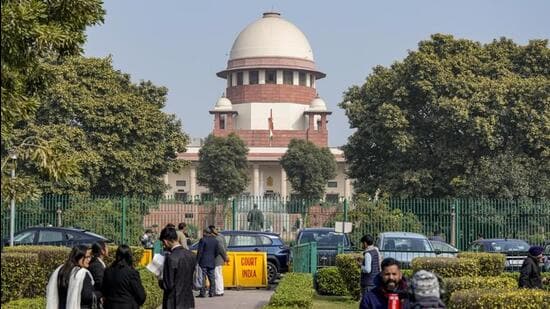
A bench of justices Aravind Kumar and Vipul M Pancholi issued notice on the Tamil Nadu government’s appeal challenging the high court’s December 2025 and January 2026 orders, directing the respondents to file their replies within six weeks. The state was granted two weeks thereafter to file a rejoinder.
The court, however, refused the state’s request for an interim stay of the high court orders.
During the hearing, the bench also questioned the Tamil Nadu government over the delay in actively pursuing the appeal after filing it in June. “If this situation had cropped up in January 2026, when this order came, what were you doing all this time?” asked the bench.
The state attributed the delay to the time taken to translate voluminous records before the matter could be effectively pursued.
When the state expressed concern over contempt proceedings pending before the Madras high court for alleged non-compliance with its earlier directions, the Supreme Court asked it to mention the issue before the concerned division bench of the high court instead of seeking interim protection from the apex court.
{{/usCountry}}When the state expressed concern over contempt proceedings pending before the Madras high court for alleged non-compliance with its earlier directions, the Supreme Court asked it to mention the issue before the concerned division bench of the high court instead of seeking interim protection from the apex court.
{{/usCountry}}The counsel appearing for the respondents opposed the appeal, contending that the state had filed the special leave petition but failed to prosecute it for nearly seven months and was now seeking urgent consideration only because of a change in the political dispensation.
According to the respondents, the state had also relied on the pendency of the Supreme Court proceedings to resist the contempt proceedings before the high court.
The appeal has been filed by the Hindu Religious and Charitable Endowments (HR&CE) Department after the Tamilaga Vettri Kazhagam government led by chief minister C Joseph Vijay assumed office.
The state has challenged the Madras high court’s directions permitting the Arulmigu Subramania Swamy Temple Devasthanam to light the Karthigai Deepam at the Deepa Thoon, a stone lamp pillar situated about 50 metres from the Sikander Badusha Dargah atop the Thirupparankundram hill.
The controversy arose after devotee Rama Ravikumar sought permission in October 2025 to light the traditional lamp at the Deepa Thoon. After the temple administration informed him that the festival would continue to be celebrated at its customary location near the Uchi Pillaiyar Temple, he and other devotees approached the Madras High Court.
On December 1, 2025, justice GR Swaminathan directed that the Karthigai Deepam be lit at the Deepa Thoon in addition to the existing venue, observing that doing so would honour Tamil tradition and reaffirm the temple’s title over the property. A division bench substantially upheld the direction on January 6, while restricting the ritual to a small official team, with the number of participants to be decided in consultation with the Archaeological Survey of India and the police. Members of the public were barred from accompanying the team.
In its appeal, the state has argued that the high court effectively created a new religious practice unsupported by any established custom, Agama prescription, temple record, inscription or historical material. It has maintained that for over 150 years the Karthigai Deepam has been lit at the Deepa Mandapam near the Uchi Pillaiyar Temple and never at the Deepa Thoon.
The petition further contends that while Article 25 guarantees the right to worship, it does not confer a right upon individual devotees to alter or introduce temple rituals, and that courts ought not to interfere in matters concerning religious ceremonies and established practices.