The Supreme Court on Tuesday quashed a preventive detention order issued under the National Security Act (NSA) against an individual in connection with the November 2024 Sambhal violence, and imposed a cost of ₹10 lakh on the Uttar Pradesh government.
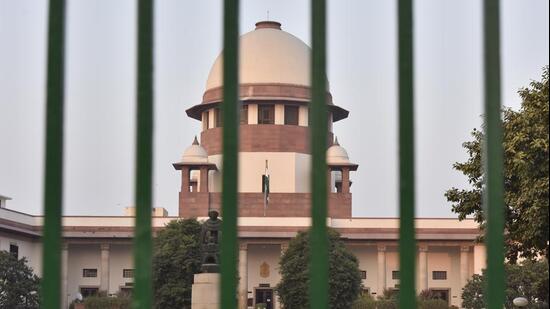
A bench comprising justices Dipankar Datta and Sheel Nagu set aside the detention order issued in October 2025 by the Sambhal district magistrate, ruling that a confessional statement cited by the state authorities could not serve as the sole justification for keeping a citizen under preventive detention.
“The power of detention was illegally exercised by the authorities. The detaining authorities did not consider the appropriate material. The order of detention issued on October 13, 2025 is quashed and a cost of ₹10 lakh is imposed on the state,” the bench said.
The ruling came on a petition filed by Mulla Afroz, who was detained following violence during a court-ordered survey of the Shahi Jama Masjid in Sambhal on November 24, 2024. Four people were killed in the resulting clashes.
The Sambhal civil judge ordered the survey on November 19, 2024, in a suit filed by Hindu petitioners claiming that Sambhal’s Shahi Jama Masjid was built over a temple.
{{/usCountry}}The Sambhal civil judge ordered the survey on November 19, 2024, in a suit filed by Hindu petitioners claiming that Sambhal’s Shahi Jama Masjid was built over a temple.
{{/usCountry}}Advocate Divyesh Pratap Singh, who appeared for Afroz, said the petitioner was illegally detained on January 17, 2025, and was coerced into making a police confession under threat of a staged encounter. He said the police implicated him solely on the basis of the alleged confession made in police custody, and the police claimed to have seized a .32 bore pistol at his instance to implicate him in the murder case. But as per the forensic report, the man whom the petitioner was accused of murdering died due to injuries sustained by a .315-bore firearm.
While Afroz was in custody, the Sambhal DM passed a detention order under Section 3(2) of the NSA Act, 1980, on October 13, 2025. Afroz filed representations and petitions under the law to the state and central governments, but they were rejected. On November 8, 2025, the state government confirmed the detention order and directed that he remain detained until October 12, 2026. Afroz filed a Habeas Corpus Writ Petition before the Allahabad high court which was rejected on June 8 this year, prompting him to approach the top court.