Chief Justice of India (CJI) Surya Kant on Thursday said the Supreme Court may take up on the judicial side the issue of closure of Delhi Metro stations, particularly the Supreme Court metro station, if the authorities fail to find a solution to the difficulties being faced by lawyers and court staff in reaching the court.
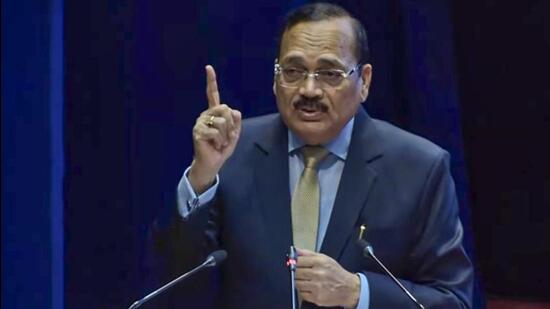
The CJI said he had already issued administrative directions to the authorities to explore a solution and expressed hope that the issue would be resolved by lunchtime, failing which the court would consider judicial intervention.
The assurance came after Supreme Court Bar Association (SCBA) president and senior advocate Vikas Singh mentioned the issue before a bench led by the CJI at the commencement of proceedings.
Drawing attention to the inconvenience caused to members of the Bar, Singh said the closure of the Supreme Court metro station by the police had severely affected access to the court complex. He suggested that instead of a blanket closure, lawyers and registry officials could be permitted to use the station after verification through their Supreme Court proximity cards and screening at the exit points.
“We have instructed the authorities and solutions are being explored. If no solution comes up by the lunchtime, we will intervene otherwise,” the CJI responded.
{{/usCountry}}“We have instructed the authorities and solutions are being explored. If no solution comes up by the lunchtime, we will intervene otherwise,” the CJI responded.
{{/usCountry}}Justice Kant added that he had also issued an administrative circular directing that no adverse orders be passed in cases where lawyers were unable to appear because of the commuting difficulties arising from the closure of metro stations.
When Singh suggested that the matter could be taken up judicially if the administrative efforts did not yield results, the CJI agreed.
“Yes, by lunch if something does not happen... we will look into this,” he said.
Also Read: PM Modi announces fast-track courts for paper leak cases: ‘Those harming youth won’t be spared’
The development comes amid heightened security arrangements in the national capital following protests by supporters of the Cockroach Janta Party (CJP), prompting the Delhi Metro Rail Corporation (DMRC) to shut 16 metro stations, including Supreme Court, Rajiv Chowk, Central Secretariat, Mandi House, ITO and Khan Market, until further orders citing security concerns.
The station closures have disrupted access to the Supreme Court for litigants, lawyers and court staff, with members of the Bar raising concerns over delays in attending court proceedings.
On Wednesday, the Supreme Court had declined to entertain an oral plea seeking suo motu intervention into allegations of police excesses during the ongoing protests, with the CJI observing that the court did not have the time to examine videos of the incidents. Separately, the Delhi High Court agreed to hear two public interest litigations seeking an independent inquiry into the alleged use of excessive force by the police during the protests and directed the authorities to preserve video footage and other records pending further consideration.