The Supreme Court on Monday posed sharp questions to Justice Yashwant Varma over his challenge to an in-house judicial inquiry that found “strong inferential evidence” of his “covert or active control” over sacks of charred currency recovered from his official residence in Delhi, asking why he participated in the proceedings if he believed the process to be unconstitutional and tainted.
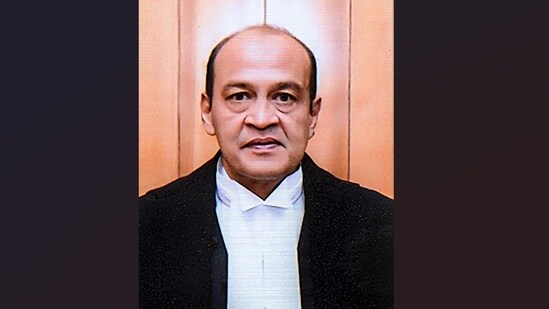
A bench of Justices Dipankar Datta and AG Masih expressed reservations about both the procedural casualness of Justice Varma’s petition and the timing of his legal challenge, noting that he could have approached the court earlier instead of waiting for the inquiry panel to conclude its findings and the then Chief Justice of India (CJI) Sanjiv Khanna to forward a recommendation for his removal.
“You are a constitutional authority. You cannot say you didn’t know. You could have immediately come to us and raised all these points,” the bench told senior advocate Kapil Sibal, who appeared for Justice Varma.
The bench also asked whether the judge had “taken a chance for a favourable outcome” by engaging with the in-house panel and only turning to the top court once the findings went against him. “Why did you appear before the committee and not challenge it then and there?” the bench asked, adding: “If this (the report) is of no worth, what are you challenging?”
The observations came as the top court began hearing Justice Varma’s writ petition challenging the May 3 findings of the in-house judicial committee and the subsequent May 8 communication by then CJI Khanna to the President and Prime Minister recommending Parliament initiate impeachment proceedings.
{{/usCountry}}The observations came as the top court began hearing Justice Varma’s writ petition challenging the May 3 findings of the in-house judicial committee and the subsequent May 8 communication by then CJI Khanna to the President and Prime Minister recommending Parliament initiate impeachment proceedings.
{{/usCountry}}The panel was constituted following a fire on March 14 at Justice Varma’s official residence in Delhi, where sacks of charred currency were allegedly found. At the time, he was serving as a judge of the Delhi High Court.
The bench began the hearing by pointing out multiple procedural lapses in the filing of the petition. “This petition should not have been filed so casually,” said Justice Datta. “There are three respondents. Union of India was not required. Registrar of the confidential cell is not required. You only required the Secretary General of the court. And there your copy shows it as ‘Registrar General’. It shows the casual approach.”
Sibal acknowledged the oversight and said corrections would be made.
While asserting that the in-house procedure violated constitutional safeguards under Article 124(5), Sibal argued that a judge’s conduct cannot be examined or acted upon without a prior impeachment motion in Parliament, citing the 1991 Constitution bench ruling in Sub-Committee on Judicial Accountability Vs Union of India.
“The procedure adopted in this case has violated the constitutional scheme. The report was made public even before the process for removal began. The video showing the charred cash was released on day one. The man stood convicted then and there…and what is he asked in the inquiry? ‘Where is the cash from? Why did you not object to your transfer?’” Sibal added.
But the bench pushed back: “Where are you getting this from?”
Sibal replied that the panel’s report was now in the public domain, to which the court noted that the report was not annexed with the petition. “If you want us to go through the report, you should have annexed it. You want us to read it and then ask questions? That’s not fair,” the bench said.
The bench reiterated that the in-house inquiry was based on an established Supreme Court judgment and that the constitutional process for removal remains under Parliament’s domain. “In-house procedure is pursuant to a judgment. If you have any qualms against the judgment, there are other remedies,” the bench said.
It also questioned why Justice Varma was aggrieved by CJI Khanna’s intimation to the President and Prime Minister, especially when the in-house report itself does not trigger any legal consequence unless followed up with a formal parliamentary motion under the Judges (Inquiry) Act.
“What is the worth of this report? There will have to be independent evidence under the Judges Inquiry Act. If this is of no worth, what are you challenging?” asked the court.
To Sibal’s submission that the communication to the President and PM was unconstitutional, the bench clarified: “Why do you think that sending it to the President is wrong? The President is the appointing authority for the judges of constitutional courts. Since the President acts on aid and advice of the PM, it was sent to the PM. Sending it to them doesn’t mean the CJI is persuading Parliament to act.”
On the issue of whether the judge’s conduct could be tested under general principles of judicial ethics, the bench said: “It can also be misbehaviour under the Bangalore Principles.” When Sibal retorted that this does not warrant removal, the court responded: “One does not know.”
Bangalore Principles of Judicial Conduct is a global framework for judicial ethics adopted in 2002. The Bangalore Principles act as a guiding framework to ensure judicial neutrality and ethical conduct. Indian courts have occasionally invoked these principles in disciplinary contexts, particularly when evaluating allegations of judicial misconduct, as seen in cases of public speeches or actions that may compromise the perception of judicial impartiality.
The bench posted the matter for hearing next on July 30, asking Sibal to file the in-house inquiry report and correct the memo of parties.
During the hearing, the court also took up a parallel plea by advocate Mathews Nedumpara seeking a criminal probe into the alleged recovery of charred cash. The bench was critical of the way facts were presented in that petition as well.
“Your petition is worse in so far as verification of facts is concerned. It reads as if you were present when the fire broke out and cash was recovered. What is true to your knowledge and what is derived from other sources? That has not been clarified,” it said. This plea, too, will be taken up on July 30.
The political process for Justice Varma’s impeachment has begun, with 145 Lok Sabha MPs and 63 Rajya Sabha MPs submitting notices in Parliament for his removal on July 21, the opening day of the monsoon session.
Earlier, the three-member in-house panel, comprising then high court chief justices Sheel Nagu, GS Sandhawalia, and Justice Anu Sivaraman, concluded its findings on May 3. Though it found no direct evidence linking Justice Varma to the charred currency, the report stated that his conduct “belied the trust” reposed in a constitutional judge and warranted impeachment proceedings.
Varma has denied all wrongdoing, terming the case a conspiracy, and in a letter to CJI Khanna on May 6, rejected the latter’s suggestion to resign or opt for voluntary retirement. He was divested of judicial work and transferred back to his parent high court in Allahabad soon after the fire.