The Supreme Court on Tuesday refused to interfere with the sanction granted for the prosecution of former National Stock Exchange (NSE) managing director and chief executive officer (CEO) Chitra Ramakrishna’s under the Prevention of Corruption (PC) Act in the NSE co-location case, while allowing her to raise before the trial court the question of whether she was performing a “public duty” and could be treated as a public servant.
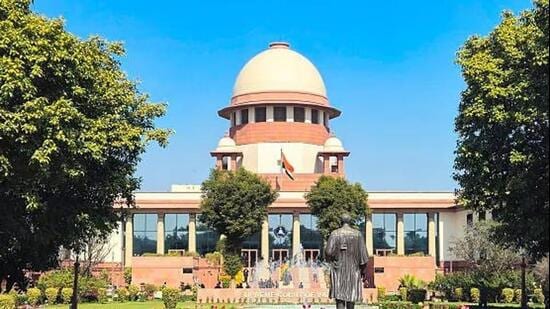
A bench of justices JB Pardiwala and K Vinod Chandran disposed of Ramakrishna’s challenge to a Delhi high court order upholding the sanction, saying the issue of whether she was performing a public duty could be raised during the trial.
The Delhi high court had in July held that the NSE performs a public duty because of its vital role in the economy and financial markets, and that Ramakrishna, by virtue of her position as its managing director and CEO, could not be completely separated from the functions discharged by the exchange.
The high court accordingly rejected her plea to quash the sanction granted by the NSE board for her prosecution under the PC Act. It also held that whether Ramakrishna was actually in charge of the NSE’s day-to-day functioning and policy decisions, including the acts or contracts referred to in the chargesheet, were matters to be established through evidence at trial.
{{/usCountry}}The high court accordingly rejected her plea to quash the sanction granted by the NSE board for her prosecution under the PC Act. It also held that whether Ramakrishna was actually in charge of the NSE’s day-to-day functioning and policy decisions, including the acts or contracts referred to in the chargesheet, were matters to be established through evidence at trial.
{{/usCountry}}The Supreme Court’s order came in the case arising from the NSE co-location controversy, in which the Central Bureau of Investigation (CBI) has alleged that certain brokers were given preferential access to the exchange’s servers between 2010 and 2014.
According to the CBI chargesheet, Ramakrishna, while heading the NSE, facilitated a system susceptible to manipulation that enabled certain brokers to obtain preferential access to the exchange’s servers. The agency has also alleged that she abused her position in appointing and fixing the remuneration of Anand Subramanian as chief strategic adviser to the managing director.
Also Read:Leopard poaching case: SC to urgently hear Wildlife SOS chief’s plea
Ramakrishna challenged the sanction on the ground that her duties were confined to managing the NSE’s business and corporate governance and could not be elevated to the level of a public duty under the PC Act.
She also argued that the sanction was invalid because the NSE board had itself maintained that neither the exchange nor its employees were “public servants” under the PC Act. He contended that the board, having taken that position, could not subsequently grant sanction for her prosecution under the same law.
The plea further argued that the authority competent to remove Ramakrishna as managing director and CEO was the NSE’s shareholders and not its board, making the sanction granted by the board legally unsustainable.
The Centre opposed the challenge, arguing that Ramakrishna occupied a position with a significant bearing on public interest and financial markets and that the functions performed by her consequently amounted to a public duty.
The CBI, meanwhile, submitted that it was not necessary to determine whether the NSE itself was a public authority. The relevant question, according to the agency, was whether Ramakrishna performed a “public duty” and consequently fell within the definition of a “public servant” under the PC Act.
The high court also rejected Ramakrishna’s contention that the statutory definitions of “public servant” and “public duty” were vague and violated Articles 14 and 21 of the Constitution. It held that the inability to frame an exhaustive definition covering every possible situation did not make the provision vague or unconstitutional.
The co-location controversy surfaced in 2015 after a whistleblower alleged that some NSE members obtained early access to the exchange’s trading system because their servers were located on the exchange’s premises, allegedly with the involvement of certain exchange officials. The matter was subsequently probed by the Securities and Exchange Board of India, following which the CBI registered a case in 2018.
The CBI filed its chargesheet in 2022 against Ramakrishna and Subramanian under provisions of the PC Act and the Indian Penal Code. It alleged that Ramakrishna shared information about the switching-on time of NSE servers and facilitated access to the latest and least-crowded servers for certain brokers. It also accused her of arbitrarily appointing Subramanian and repeatedly increasing his remuneration without the approval of the NSE’s nomination and remuneration committee.